NC settles Barnes farmworker death case with reduced fine following autopsy
AI-generated summary reviewed by our newsroom.
- State cut Barnes Farming's fine from $187,500 to $3,750 after autopsy findings
- Settlement removed 'willful' safety violation, required new worker safety measures
- Autopsy cited rare tumor as cause; heat exposure could not be totally excluded
This spring, the N.C. Department of Labor eliminated the most substantial safety violation it initially levied against Barnes Farming Corp. in connection to the 2023 death of farmworker José Arturo Gonzalez Mendoza.
As part of a settlement approved May 6, the state slashed fines for Barnes Farming from $187,500 to $3,750 — a 98% reduction — and deleted the “willful” citation it had issued the prominent agricultural employer for failing to remove recognized hazards from its Nash County farm.
Family-run since the 1960s, Barnes Farming owns more than 20,000 acres and boasts being the world’s largest sweet potato producer. Under the settlement, it agreed to send field supervisors to occupational safety training, review its heat-stress prevention policies, and drop public records-related litigation against the state.
“We are confident that this agreement promotes worker safety,” NCDOL spokesperson Andy Lancaster wrote in an email Monday.
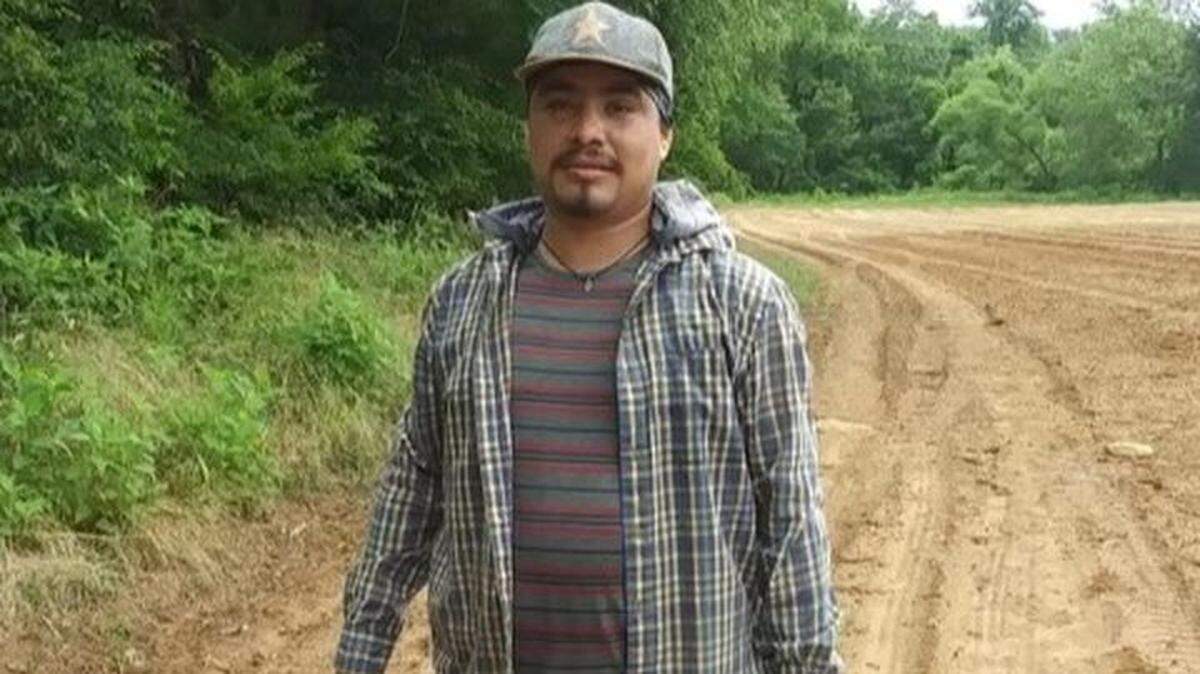
Gonzalez Mendoza was a 30-year-old Mexican migrant worker on a temporary H-2A agricultural visa when, on Sept. 5, 2023, he died of an apparent heat-related illness while harvesting sweet potatoes at the Barnes commercial farm in the town of Spring Hope, about 40 miles east of Raleigh. He had arrived in Eastern North Carolina from Central Mexico only 11 days earlier.
The state investigation and Barnes Farming’s overall operations have experienced several twists, first after Gonzalez Mendoza’s autopsy cast doubt on his perceived cause of death, and most recently with the July 12 death of Johnny Barnes, the company’s president and husband of state Sen. Lisa Barnes, a Nash County Republican.
Barnes died of “complications from an illness,” his attorney, James Payne, told The News & Observer.
In a statement to The N&O, the Barnes family called Johnny “a man of unwavering conviction” and alleged the original state investigation was “amplified by voices with political motives.”
Initial findings and surprising autopsy
The state inspected Barnes Farming on Sept. 6, 2023, the day after Gozalez Mendoza collapsed.
According to NCDOL investigators, he remained unconscious as the local heat index rose to 93 degrees Fahrenheit. When Nash County emergency services arrived, they noticed Gonzalez Mendoza exhibited “signs of heatstroke,” including “dry, hot skin” but cold fingers and toes. He had suffered cardiac arrest and was pronounced dead at 11:37 a.m.
In March 2024, NCDOL charged Barnes Farming with a “willfully serious” safety violation that carried a maximum $156,259 penalty after determining “employees were exposed to heat-related hazards associated with working in hot environments.”
Investigators found employees had one scheduled five-minute break during a six-hour workday, took these breaks in a bus without air conditioning, and drank water from under a spigot due to a lack of cups. NCDOL’s initial investigation stated Barnes Farming did not give new migrant H-2A workers a period to acclimate to the heat, nor did the company train workers on “reporting emergencies, first-aid procedures, and procedures for dealing with symptoms of heat-related illnesses.”
State investigators also concluded Barnes Farming did not follow certain heat-related safety practices that the company had previously agreed to implement. These practices were outlined in a 2020 settlement the company reached with NCDOL after a workplace safety complaint uncovered a “serious” violation at the farm.
“Willful” is NCDOL’s most grievous safety charge. North Carolina declares this violation when it finds employers exhibited knowing or indifferent attitudes toward serious workplace hazards. The state issues these violations infrequently; in 2023, the North Carolina Occupational Safety and Health Division office in Raleigh charged only two other employers with willful violations, an N&O analysis found. Last year, this local office made only one willful charge.
This is compared to the few thousand violations state inspectors find annually.
NCDOL levied two more “serious” citations against Barnes Farming in March 2024, including for exposing workers “to a lack of timely emergency medical care.” These additional charges carried a combined $31,250 penalty.
Barnes Farming appealed the violations. That May, the company formally denied nearly all of the state’s findings, including that Barnes Farming hadn’t followed its 2020 safety settlement.
The assumption of Gonzalez Mendoza’s death as heat-related was further challenged when a state-certified autopsy concluded last year that the worker had died from a cardiac event linked to an undiagnosed rare neuroendocrine tumor called pheochromocytoma.
“You cannot exclude weather totally,” Dr. Anuradha Arcot, the Jacksonville, N.C.-based pathologist who examined Gonzalez Mendoza, told The N&O in October. “But there was no dehydration to the point that only that would have caused the decease.”
Arcot said pheochromocytoma symptoms can resemble heatstroke.
What the settlement said
Payne, the attorney for the late Johnny Barnes, declined to speculate about the role the autopsy report played in North Carolina retracting its willful violation against Barnes Farming.
Under their settlement, which was reached through mediation and approved by the North Carolina Safety and Health Review Commission, NCDOL and Barnes Farming are instructed to respond to press inquiries by saying they have “mutually resolved the matter via a settlement agreement in a way that both parties believe promotes worker safety.”
But the Barnes family, not the business, did provide comment. “In recent years, our family faced a painful chapter,” their statement read, in part. “After the sudden death of one of our seasonal guest workers, serious allegations were made before the facts were fully known.”
Barnes Farming ultimately agreed to pay $3,750 for not drafting adequate emergency action plans, which the business is obligated to correct. Both parties also agreed to remove a provision of their 2020 safety settlement, which required “implementation of a screening program to determine any causal factors that may affect the employee’s heat susceptibility.” Each side agreed this rule “was unclear as written.”
Mediation between the state and business occurred as Barnes Farming worked to exit receivership, a court-appointed process for businesses with financial troubles. The company had entered receivership last year after failing to pay loans totaling around $40 million. Barnes Farming representatives say the business has since exited receivership. Leading the farm after Johnny’s death will be his son Joshua, the third Barnes generation to head the operation.
NCDOL gained a new leader this January when Luke Farley replaced fellow Republican Josh Dobson as commissioner. Most North Carolina workplace safety investigations, across recent administrations, have ended in settlements.
Lowering fines in exchange for enhanced safety commitments facilitates faster fixes, the state argues. Employers aren’t made to fix hazardous conditions until after an investigation is concluded, and this can more than a year. Lancaster, the NCDOL spokesperson, said more than 95% of OSHA cases are resolved via settlement.
“(Barnes Farming) has accepted a comprehensive set of heat-stress prevention and worker-training measures,” he wrote. “And the Department will follow up to verify full implementation.”
The state has recently adjusted other “willful” violations after settlements. Last year, it lowered a $64,500 fine by roughly half for a company named Green Recycling Solutions, following an investigation into a workplace death. But the state doesn’t always lower penalties; the two other companies to receive “willful” violations from the Raleigh OSH office in 2023, besides Barnes Farming, had their violations downgraded to “serious” but still had to pay the maximum $156,259 fine.
Baldemar Velasquez, president and founder of the Farm Labor Organizing Committee, which represents farmworkers in the Midwest and North Carolina as part of the AFL-CIO, said the fact that the state eliminated employer violations is not, by itself, cause for concern.
“There’s a lot of hit and miss when it comes to doing these investigations,” he said. “But everybody’s just trying to do their best to make sure people are in compliance.”
Velasquez said many violations may go undetected as the number of inspectors is insufficient to cover the amount of farmland in North Carolina. Issues, he noted, are often only uncovered after complaints or newsworthy incidents occur.
NC Reality Check is an N&O series holding those in power accountable and shining a light on public issues that affect the Triangle or North Carolina. Have a suggestion for a future story? Email realitycheck@newsobserver.com
This story was originally published July 28, 2025 at 7:30 AM.