Why are ‘brown ladybugs’ all over my NC home? How to keep them away
AI-generated summary reviewed by our newsroom.
- Kudzu bugs invade North Carolina homes each fall seeking warm overwinter sites.
- They cluster on light-colored siding, enter through gaps, then overwinter indoors.
- Homeowners should seal gaps, trim vegetation and apply labeled residual treatments.
They may look a bit like ladybugs, but these little insects aren’t nearly as welcome.
Kudzu bugs, also known as globular stink bugs, due to the odor they give off when crushed, have become an unwelcome guest across North Carolina each fall.
Sometimes mistaken for “brown ladybugs,” these tiny pests gather on homes and invade walls as they search for a warm spot to spend the winter.
Originally from Asia, kudzu bugs first appeared in the U.S. in 2009 and have since spread rapidly across the Southeast, according to the N.C. State Extension.
Here’s what to know about when they show up, what they do and how to keep them out of your home.
What time of year are kudzu bugs most active?
Kudzu bugs are most active in urban areas late summer and fall, when their preferred host plants are declining, Chris Hayes, an extension associate of structural pest management at NC State University who specializes in educating the pest management industry on critter habits, told The Charlotte Observer.
“They become a major issue in the fall when it starts to get colder,” Hayes said.
They feed and lay eggs well into fall, then as temperatures drop, they look for sheltered places to overwinter, according to the N.C. State Extension. In the spring, as things warm, bugs that survived inside walls or homes emerge and move back to plants.
What do stink bugs look like?
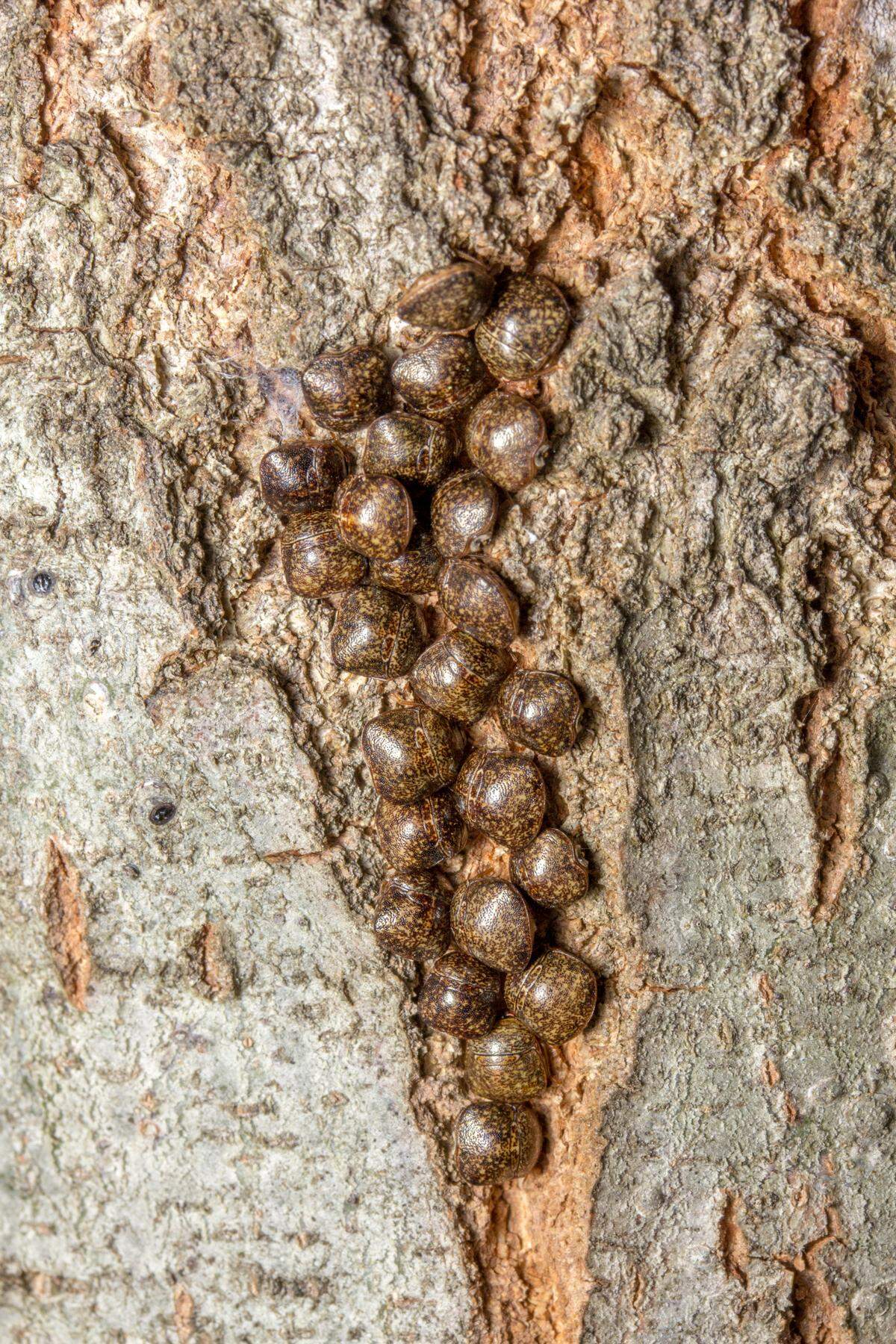
Adult kudzu bugs measure roughly a fourth of an inch in length, or “a little bigger than a peppercorn,” Hayes said.
They’re somewhat oblong in shape and olive-green with brown speckles, according to Hayes, who noted that they closely resemble another familiar pest.
“They look like a beetle, like a hard shell, but they’re not. They’re a bug. So that means they’re not closely related to things like ladybugs, even though they will invade your home, very similarly to how ladybugs invade your home,” he said.
Are kudzu bugs the same as stink bugs?
No. Though kudzu bugs are sometimes referred to as globular stink bugs, they differ in a few key ways.
The kudzu bug is smaller and more rounded in shape, unlike the shield-shaped, mottled brown form of many stink bugs, according to the N.C. State Extension.
Unlike typical stink bugs, which feed on fruits, vegetables, and ornamental plants, kudzu bugs prefer legumes – especially kudzu.
Both can emit a foul odor when disturbed, but their behavior and seasonal patterns differ: kudzu bugs congregate on siding, walls, and light-colored surfaces in fall as they seek overwintering shelters, according to the N.C. State Extension, whereas many stink bugs cluster in attics or wall voids later in the year.
Where are kudzu bugs typically found?
When they’re not feeding on kudzu or soybeans in the spring or summer, kudzu bugs gather on light-colored surfaces, such as siding or fascia boards, and use gaps around boards, windows and siding to enter homes.
“They love warm, undisturbed areas around the home,” Hayes said. “So, if you have cream painted areas or wood or anything like that, they will congregate around those areas, sometimes in really large numbers.”
Hayes explained that kudzu bugs will gather in areas outside a home first, before they find a way inside.
“That could be soffits. It could be windows that aren’t properly sealed. It could be areas where there’s a hole in the structure that you don’t know about.”
Are kudzu bugs harmful to people or pets?
No, Hayes said. Kudzu bugs are not known to bite or transmit disease to humans.
“If a dog ate one, they probably wouldn’t like the taste,” Hayes said. “Same for a cat. But they’re not poisonous.”
Kudzu bugs are considered nuisance pests, which means “they show up in large numbers, and they’re annoying,” said Hayes.
How to prevent kudzu bugs in your home
Pest control companies are a good line of defense against kudzu bugs, but homeowners who prefer to take on the issue themselves can apply liquid residual products or “wettable powders” to surfaces where they may congregate, Hayes said.
“You would want to treat areas like exterior door jams in your home,” he added. “The exterior side of windows and window sills are a great place to treat.”
Homeowners can also consider treating the upper boards along the edge or trim of roofs, but they should be cautious when doing so, Hayes said.
“When you’re treating up there, you have to be really (careful)…that it doesn’t get into your eyes, your nose, your mouth, on your skin or drift somewhere you don’t want it because you’re spraying high.” said Hayes, adding that a pest control company could be helpful in treating those areas.. “And even more importantly, you want to make sure that the product you’re using is labeled for that type of application.”
Other methods to prevent kudzu bugs in your home, according to Georgia-based pest control company PF Harris, include sealing any entry points to your home, such as caulking gaps and weatherstripping windows and doors, and monitoring nearby vegetation and removing it if necessary.
This story was originally published October 6, 2025 at 11:33 AM with the headline "Why are ‘brown ladybugs’ all over my NC home? How to keep them away."