Hummingbirds are migrating back to NC for spring. When to put out feeders
AI-generated summary reviewed by our newsroom.
- Migrating hummingbirds may arrive in North Carolina in late March or early April.
- To attract hummingbirds, planting native flowers is better than having a feeder.
- Hummingbird feeders should be clean and contain sugar water.
Migrating hummingbirds will soon arrive in North Carolina, to the delight of birdwatchers.
In the coming weeks, you may see the fluttering creatures around your feeder or flower garden. If you want to attract the birds, now is an ideal time to get your yard ready, The News & Observer previously reported.
“Ruby-throated hummingbirds can start showing up in North Carolina as early as late March, but the bulk of the birds will be there in April,” Emma Greig, then-leader of Project FeederWatch at the Cornell Lab of Ornithology, told The N&O in 2024.
“Some individuals do stay in the winter along the NC coast too, so there is always a chance of seeing a ruby-throat in the middle of winter. But this is not very common.”
Here’s what to know about the hummingbirds migrating to North Carolina and how you can create an inviting environment for them outside your home.
When will we see hummingbirds in NC?
In North Carolina, the most widespread hummingbird is the ruby-throated variety. Though many hummingbirds migrate south for the winter, some have been spotted in the state in colder months, Deanna Bigio, horticulture extension agent for the N.C. Cooperative Extension — Wake County Center, told The N&O in a Monday, Feb. 23 email.
Migrating hummingbirds start to make their journey back to North Carolina in late February or early March, arriving in time for the spring, according to the extension’s website.
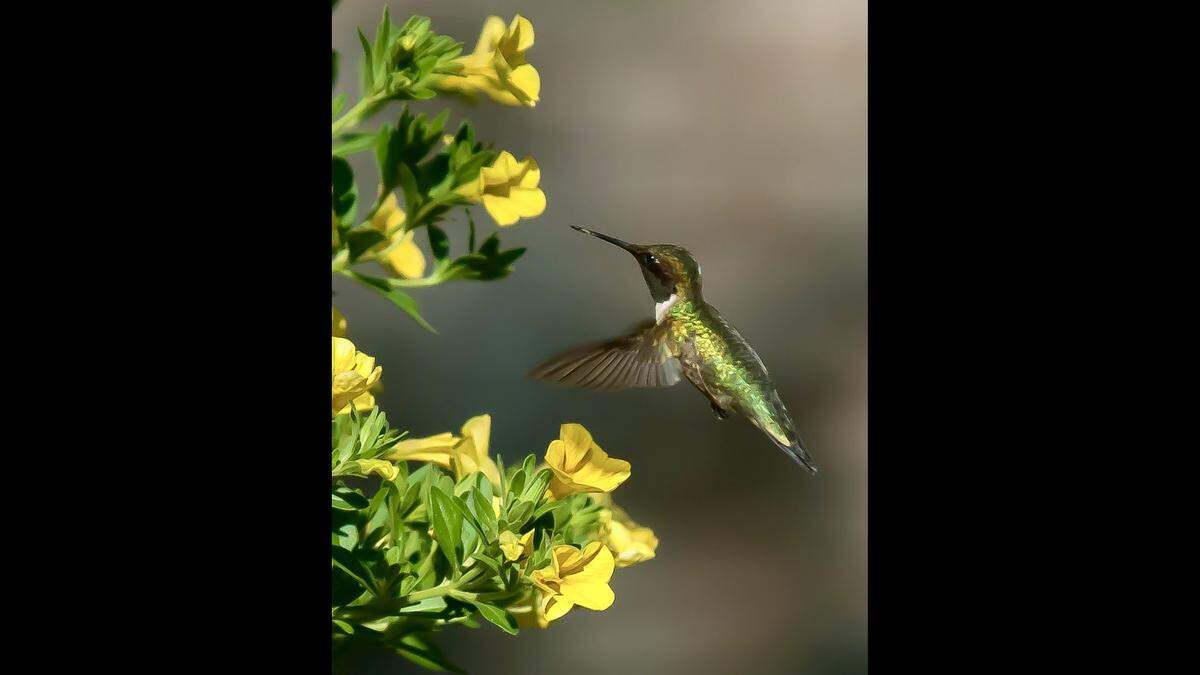
“Hummingbirds will return from Central America usually by early April,” Barbara Driscoll, co-chair of the bird friendly habitat committee for the New Hope Bird Alliance, told The N&O in a Friday, Feb. 20 email.
“It is a long and dangerous journey and they need to find food along the way. The males arrive first and set up territories and then the females arrive.”
How can I attract hummingbirds?
So, how can you have success with drawing hummingbirds to your yard? Here are the two main steps experts have shared with The N&O and on the National Audubon Society website:
- If you didn’t plant native flowers in the fall, check if your garden store has them available to plant this spring.
- Set up a hummingbird feeder in your yard.
The extension publishes lists of hummingbird-friendly plants on its website. Here are some examples experts told us about:
- Vines: Coral honeysuckle, crossvine, trumpet vine
- Shrubs: Mountain laurel
- Flowers: Beebalm, cardinal flower, columbine, jewelweed
“Typically those that have tubular types of flowers are attractive to hummingbirds,” Driscoll wrote. “Several of our native plants start blooming timed for when hummingbirds arrive.”
In addition to planting, you may want to leave out a hummingbird feeder. Here are tips from the extension’s website:
- Pick one that’s red, a color that hummingbirds like.
- Fill the feeder with a 4:1 ratio of tap water and dissolved white sugar.
- Clean the feeder at least one time per week with hot water and vinegar.
- Avoid spraying bug repellant near the feeder. Instead, put Vaseline on its hook to keep small critters away.
“Planting for them is better than providing feeders,” Susan Campbell, scientific director of the Cape Fear Bird Observatory and a research affiliate focusing on hummingbirds with the N.C. Museum of Natural Sciences, previously told The N&O. “When they’re feeding through plants, they get minerals and other things in plant nectar they really need.”
Portions of this story were previously published in The News & Observer.