Helene ravaged NC’s Nolichucky River, now an illegal mine is polluting it
AI-generated summary reviewed by our newsroom.
- Hurricane Helene hit historic Nolichucky flood levels and reshaped the gorge.
- Horizon 30 mined riverbank while claiming to supply railroad repairs.
- Inspectors closed the mine and found its restoration woefully inadequate.
Tessa and Leo Sharp figured things couldn’t get much worse than Hurricane Helene, which dropped up to 2 feet of rain across mountainous Mitchell County in September 2024.
The storm and resulting record flooding sent so much debris down the Nolichucky River, which runs near the Sharps’ home in the rural Poplar community, that it turned the 115-mile long world-class whitewater rafting destination into a treacherous obstacle course of trees and trash that volunteers still are picking clean 18 months later.
The river flows from Western North Carolina to eastern Tennessee, crossing through the Pisgah and Cherokee national forests on the way. It hit historic flood levels because of the storm. Water poured over the Nolichucky Dam at a rate twice the normal flow of Niagara Falls, according to researchers at East Tennessee State University. So much water plowed through so fast, it flattened mature trees and reshaped sections of the ancient Nolichucky Gorge, taking out roads and bridges and a 60-mile section of the CSX rail line that traverses the gorge.
But as bad as the storm was, the Sharps say, it’s almost been worse that a few months later, just as residents were beginning to believe their mountains might eventually recover, an illegal mining operation came in and — under the guise of digging stone and gravel to help the railroad rebuild — compounded the area’s problems.
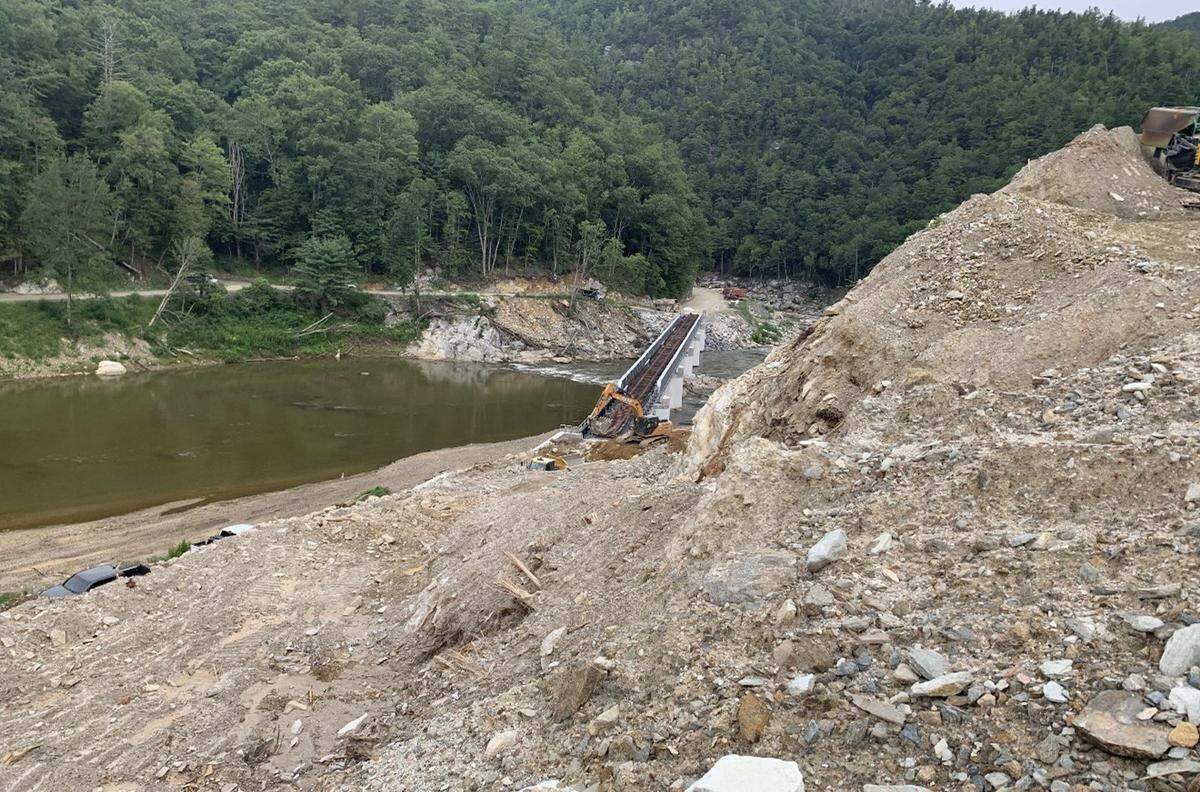
It’s not clear whether stone from the Horizon 30 mine was ever used to help repair the blown-out rail line, as the operators promised, or if the rock pulled from the open pit ripped into the east bank of the Nolichucky was sent somewhere else. Jonathan Stuckey, spokesman for CSX, said this week the railroad would not comment on whether it had received stone from Horizon 30.
When the rogue mine finally was forced to close last fall, inspectors say the restoration work on the site was woefully inadequate.
Locals now fear the mountain may forever bleed pollutants into the river that serves as the scenic backdrop to their lives. It also provides habitat for rare and threatened wildlife including the cryptic Eastern Hellbender and the endangered Appalachian Elktoe mussel; supplies drinking water for downstream communities; and is a source of income for countless river guides and rafting and paddling outfitters.
“Helene really took out all of the foliage and the trees and everything in the landscape that was surrounding the river,” Tessa Sharp said. That beauty was what drew the couple — both artists, he a disabled Navy vet — to the Poplar community in rural Mitchell County four years ago.
“The storm took all that away, and brought increased winds and higher chances of fire. And then the mine came in and kicked up all this dust that coated everything and got into the air that we breathed, and brought all the noise and stressed out the wildlife.”
“We used to have an active bald eagle nest right across the river from our house,” she said. “It’s been a complete change from what we knew.”
It started in the dark of night
The first time many local residents learned anyone would be hauling rock from this hilly community 37 miles from the Tennessee line off two-lane N.C. 197 was when the blasting started. That was in late January or early February 2025.
“They came in literally in the dark of night,” said Christy Thrift, who with her husband, Scott Thrift, runs N.C. Outdoor Adventures. The couple take tourists on adventuring, kayak, tubing and waterfall-rappelling trips through the woods and waterways of North Carolina, South Carolina and Tennessee. A favorite is the stretch of the Nolichucky close to where the mine was dug.
In North Carolina, the Department of Environmental Quality’s Division of Energy, Mineral and Land Resources oversees mining operations under the Mining Act of 1971. The law requires mines or quarries to be permitted; before the ground is broken, a plan must be in place for reclamation of the site when extraction is complete.
The DEQ says neither the property owners, brothers Theodore and Bruce Carter of Candler, nor the company that conducted the operation, Horizon 30 LLC, ever applied for a permit before the spotlights came on, the explosions started and heavy trucks began rumbling into and out of the site like noisy bees to a hive.
Horizon 30 is listed as being based in Allentown, Pennsylvania, and in Raleigh. Brent Fernandes of Turlock, California, is listed on documents as its CEO and Sean Chipman of Allentown as chief financial officer. Neither the Carters, Fernandes or Chipman could be reached for comment on the mine’s operations.
Digging without a permit or a plan
The state Department of Labor discovered the mine was operating without a permit when federal officials asked the department to conduct safety training at the site. Labor officials notified DEQ, which first visited the site on Feb. 6, 2025, and found workers building roads and removing dirt, according to state records. At that point, the work was taking place over about 4 acres.
That was the first time DEQ told workers to stop mining because the operation had no permit and no plan for site reclamation. But the digging didn’t stop, the state said.
.jpeg "NC DEMLR photo Carter Quarry mine site (Nolichucky).jpeg")
In March 2025, DEQ notified the Carter brothers and Horizon 30 that the mine was violating the mining act. In April, the operators filed an incomplete application for a mining permit for the site, and when the state visited later that month the operation had grown to 10 acres. Mining continued.
DEQ again ordered the operators to “cease and desist,” the state said, but mining continued.
DEQ visited again about a month later, near the end of May 2025, and found mining had expanded more. The department again told operators to stop. At that point, DEQ said, Fernandes, the CEO, told inspectors he had been talking with department officials weekly and had told them to just “fine him the $5,000 a day” for continuing to operate without a permit.
In June 2025, the state again told the mine’s operators to stop working, but mining continued.
The state filed a complaint against the operation under The Mining Act in July in Mitchell County Superior Court, seeking to force the mine to shut down.
DEQ inspectors returned to the site in August 2025 to find mining underway on as much as 30 acres of the 50-acre site. They again told operators to stop mining and initiate reclamation.
On Aug. 11, the court issued a preliminary injunction against the mine and ordered it to stop the removal of materials from the site. Two weeks later, the state denied the operators’ application for a mining permit because the mine had been out of compliance from the beginning.
In September 2025 the company submitted a reclamation plan for the site as officials said it should have done before mining began — at least seven months prior. Though the plan hadn’t been approved, the company said it already had been implemented.
But subsequent inspections by DEQ found the site had not been stabilized and that sediment, possibly containing toxic heavy metals commonly resulting from mining, was running into the Nolichucky River directly from the mine and through drainage pipes the company installed that emptied into the river. The sediment had formed an island reaching nearly halfway across the river, inspectors said.
DEQ directed Horizon 30 to install ground cover, repair slopes where gullies had formed and take other actions to stabilize the site and control sediment runoff.
In October, the company submitted a modified reclamation plan that addressed the state’s concerns, and in December, DEQ approved the plan.
Environmental groups say the work has not been done.
Environmental groups join the fray
In February 2026, the Southern Environmental Law Center filed a notice of intent to sue the mine’s operators in 60 days under the federal Clean Water Act, with support from the nonprofits MountainTrue and the Center for Biological Diversity. Jamie Whitlock, the Ashville-based lead attorney for the SELC, said the group would sue the operators for violating the federal Clean Water Act if proper repairs aren’t made to the site.
Whitlock said the destruction was a betrayal by the property’s North Carolina owners and those who ran the mine of a place and people who already had suffered enough.
“They’re just a bad actor,” Whitlock said. “They came into his small community and really just ravished it after it had already been basically destroyed by Helene.”
If issues at the mine aren’t addressed, Whitlock said, the SELC likely will file suit in April. The lawsuit will seek a civil penalty of up to $68,445 per day for each violation, attorney’s fees and costs, as well as an injunction against continued violations.
This story is available free to all readers thanks to financial support from the Hartfield Foundation and Green South Foundation, in partnership with Journalism Funding Partners, as part of an independent journalism fellowship program. The N&O maintains full editorial control of the work. If you would like to help support local journalism, please consider a digital subscription, which you can get here.