James Comey signals vindictive-prosecution challenge in NC seashells case
AI-generated summary reviewed by our newsroom.
- Attorneys asked to file one combined memorandum of up to 40 pages supporting dismissal.
- Comey's defense plans to claim the North Carolina indictment was selective and vindictive.
- He was indicted on April 28 on two felonies over a May 2025 seashell Instagram post.
Former FBI Director James Comey Jr.’s attorneys asked a federal judge Monday for permission to file an expanded brief in support of motions to dismiss the charges, arguing he was selectively and vindictively prosecuted.
Comey’s defense team wants to combine the planned motions into a single memorandum of up to 40 pages rather than file two separate briefs.
“This would permit Mr. Comey to present all of the relevant arguments and law in one memorandum, and avoid potentially rehashing issues in two separate memoranda,” states the filing signed by longtime Comey attorney Patrick Fitzgerald and his North Carolina counsel, Raleigh-based attorney Joseph Zeszotarski Jr.
The request comes ahead of the July 28 deadline for pretrial motions and signals that Comey intends to challenge the charges with this and other motions.
About selective and vindictive prosecution
The U.S. Constitution’s Fifth Amendment guarantees rights of due process and equal protection, requiring federal prosecutors to apply the law fairly.
Selective prosecution occurs when a prosecutor seeks a conviction based on “unjustifiable standards or characteristics rather than the merits of an actual, alleged crime,” according to Cornell Law School’s Legal Information Institute.
Those characteristics could include race, religion or political opinion.
To prove selective prosecution, Comey would have to show “that prosecutorial policy had both a discriminatory purpose and effect, generally including a showing that similarly situated individuals were not prosecuted,” states a brief on federal prosecutorial discretion by Cassandra Barnum, a legislative attorney with the Congressional Research Service, nonpartisan staff that provide legal and policy analysis to Congress.
Vindictive prosecution is when a prosecutor seeks a conviction of a crime in retaliation or to punish someone for exercising a legal right, such as free speech, according to Cornell’s legal institute.
Defendants alleging vindictive prosecution “must show that the charges were brought solely to penalize the exercise of such rights” and prove an improper prosecutorial motive,” Barnum wrote.
Comey’s team filed a motion alleging selective and vindictive prosecution to challenge a September 2025 indictment in Virginia that accused Comey of lying to Congress about leaks to the press. That case was dismissed after two months. A federal judge ruled that Lindsey Halligan, the interim U.S. attorney who had sought that indictment, was unlawfully appointed.

About James Comey’s North Carolina charges
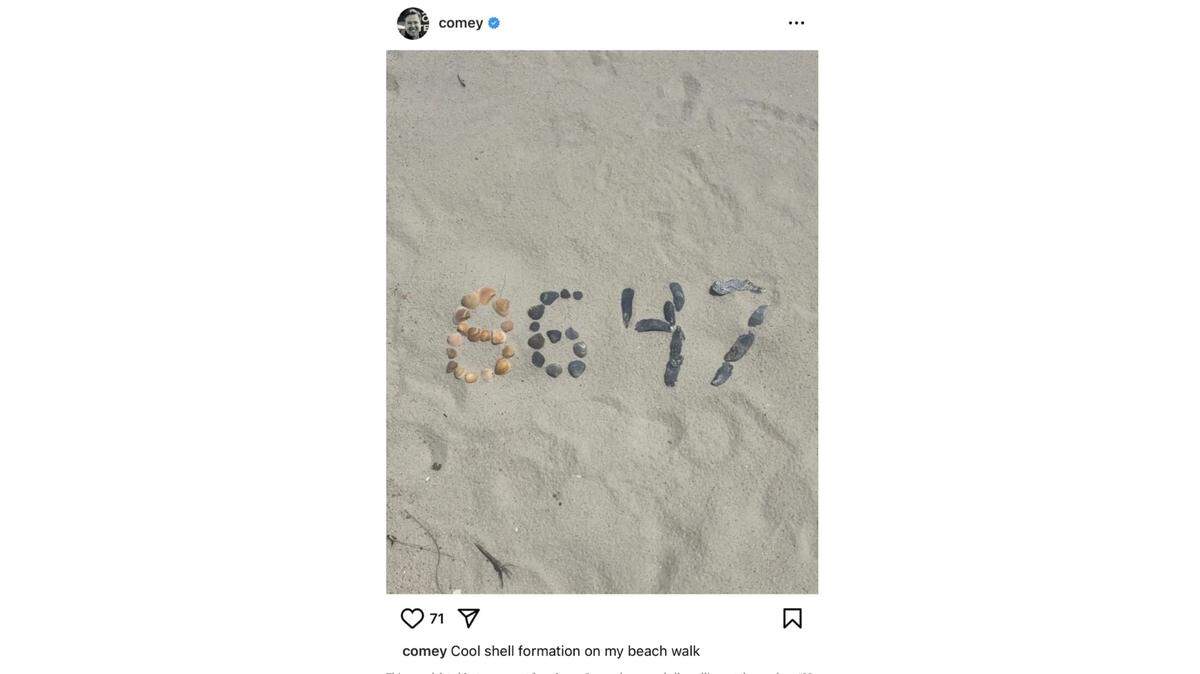
Comey was charged with two federal crimes in the federal Eastern District of North Carolina this year after posting on Instagram in May 2025 a photo of seashells arranged to read “86 47” on a North Carolina beach.
The Merriam-Webster Dictionary defines 86 as ejecting, dismissing, or removing a person from a place, or an item from a menu.
But Trump and his supporters alleged the numbers were a threat to kill the 47th president. Comey took the post down the same day he shared it, saying he wasn’t aware of the violent connotation.
Federal officials immediately began investigating the alleged threat, according to court documents.
On April 28, a federal North Carolina grand jury indicted Comey on two felony charges, accusing him of threatening the president with the post.
Comey’s arraignment, a hearing in which he would plead guilty or not guilty, is set for 10 a.m. Sept. 30 at the federal courthouse in New Bern. If the case proceeds to a jury trial, it is now scheduled to begin Oct. 21.