Bertha weakens to tropical depression as it dumps rain across the Carolinas
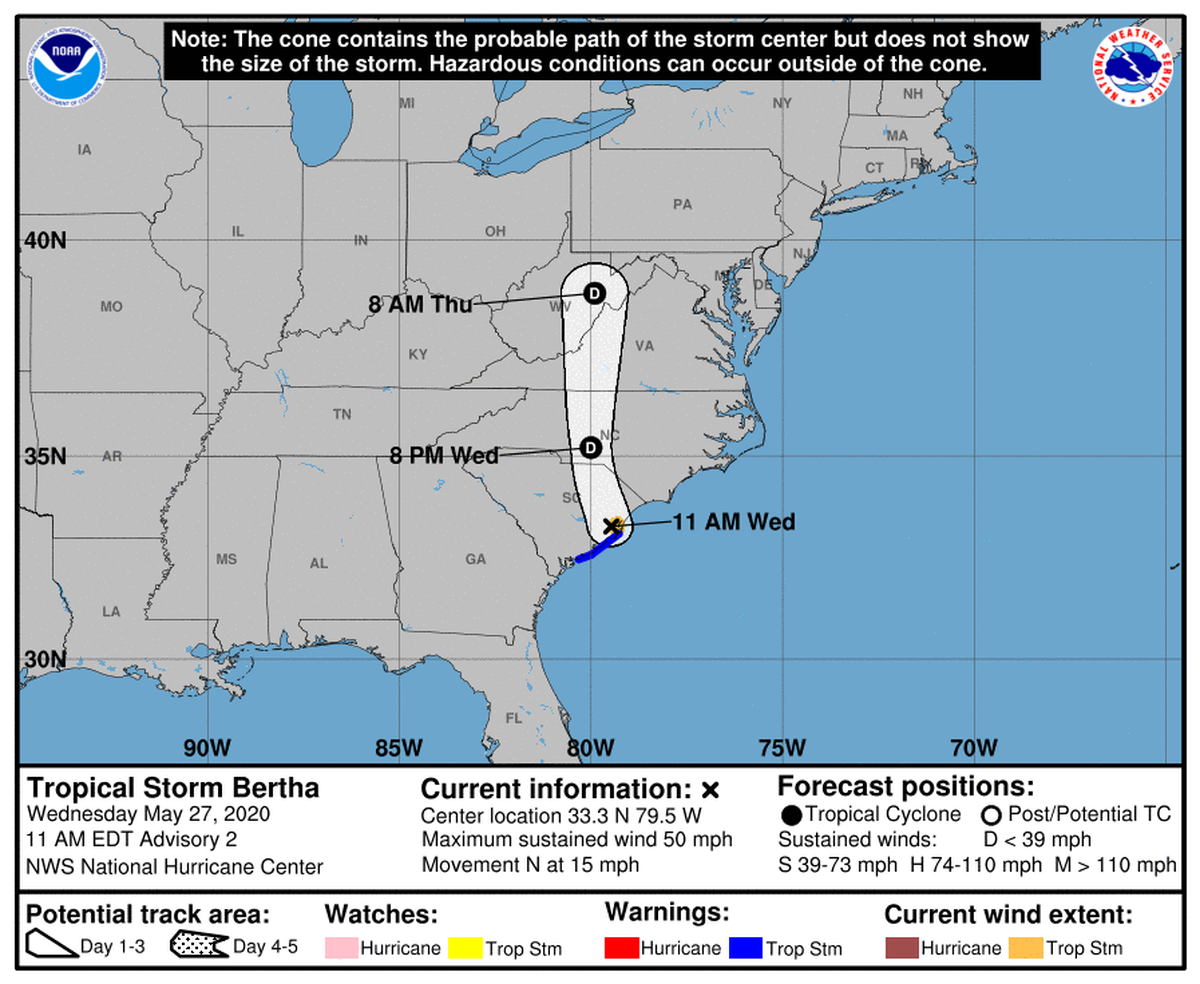
Tropical Storm Bertha, which made landfall over South Carolina on Wednesday morning, has weakened into a tropical depression.
The second named storm in the region in two weeks, Bertha has brought heavy rain to North Carolina and South Carolina.
As of 2 p.m., the storm had maximum sustained winds of 35 mph, according to the National Hurricane Center. It was centered about 65 miles north-northwest of Charleston and moving further inland at about 15 mph, according to an early afternoon update.
The storm’s path is forecast to turn to the north and track over North Carolina Wednesday night and into Virginia and West Virginia.
Bertha made landfall at about 9:30 a.m. 20 miles east of Charleston near Mount Pleasant, forecasters said. The storm had maximum sustained winds of 50 mph just before it made landfall, according to the National Hurricane Center.
A tropical storm warning issued for the South Carolina coast from Edisto Beach to the South Santee River was dropped Wednesday afternoon as the storm weakened and moved inland.
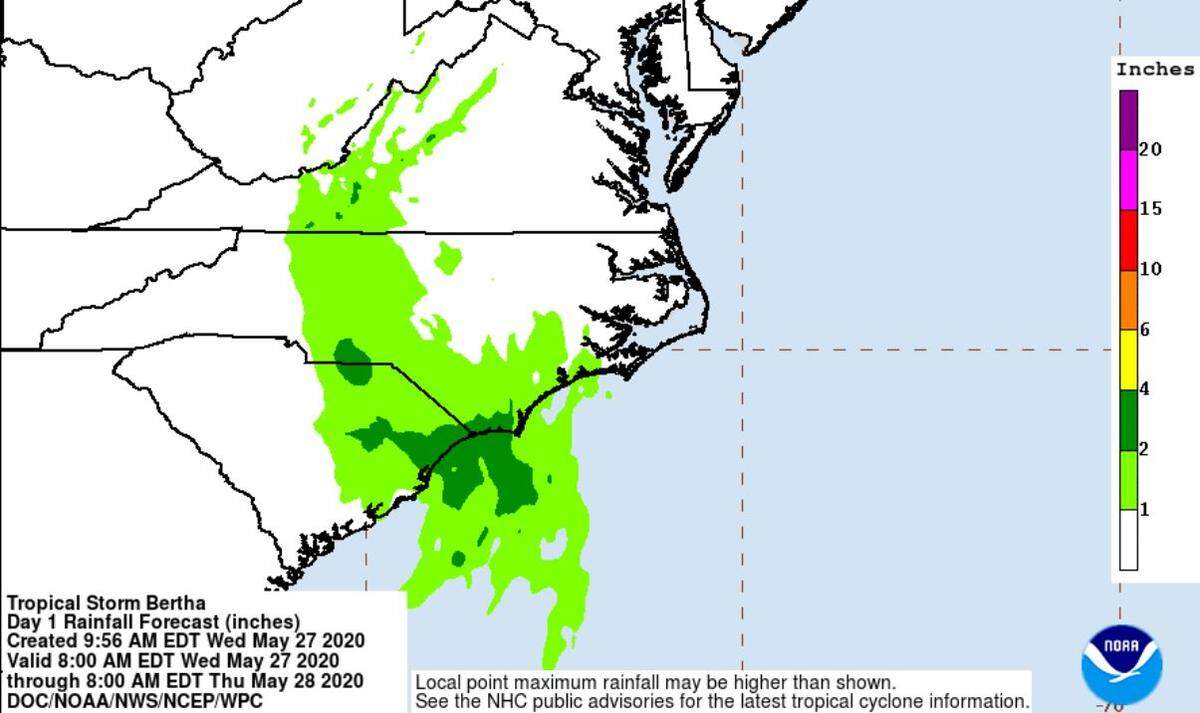
Forecasters expected the storm to bring heavy rainfall and possible flash flooding over coastal regions of the Carolinas. They predicted 2 to 4 inches of rain, “with isolated totals of 8 inches” across much of South Carolina and into North Carolina.
“Gusty winds could also produce rough marine conditions and life-threatening surf and rip currents along the coasts of Georgia and the Carolinas through today,” the Hurricane Center warned.
The system is also expected to bring 2 or more inches of rain to much of central North Carolina, prompting flood watches and warnings for much of the state.
The official 2020 hurricane season runs June 1 to Nov. 30, but this is the second named storm of the year so far. Tropical Storm Arthur hit North Carolina’s Outer Banks May 17.
Forecasters predict this hurricane season will be busier than normal with 13 to 19 named storms and six to 10 hurricanes with winds of at least 74 mph, according to the National Oceanic and Atmospheric Administration.
“NOAA’s analysis of current and seasonal atmospheric conditions reveals a recipe for an active Atlantic hurricane season this year,” acting NOAA administrator Neil Jacobs said during a call with reporters last week.
This story was originally published May 27, 2020 at 8:36 AM.