
Raleigh lowered Lake Johnson before this month’s storms. Did it prevent flooding?
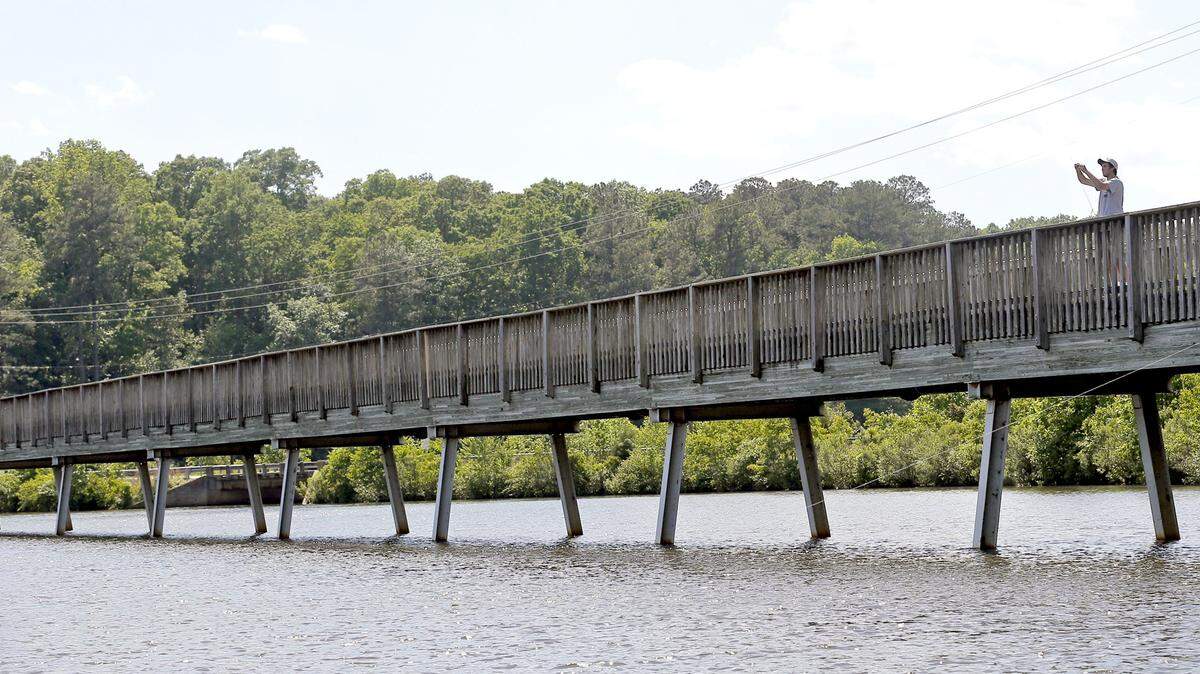
Lake Johnson was full following a wet December, so City of Raleigh officials were worried when forecasts in early January called for three rainfalls in a row punctuated by a large storm on Jan. 9.
Forecasts said those storms would drop between four and five inches of rain between Jan. 6 and 13.
“That’s a lot of rainfall, that’s a lot of runoff that we could potentially have,” Kelly Daniel, the City of Raleigh’s flood early warning system engineer, told The N&O.
To prepare, the city opened a gate at Lake Johnson and started releasing additional water from the reservoir, lowering the lake ahead of the coming rains. Here’s a look at whether the city’s decision reduced the risk of flooding, particularly in low-lying areas like the Rose Lane neighborhood in Southeast Raleigh.
Why does Raleigh lower Lake Johnson?
Lake Johnson empties into Walnut Creek, which then runs along the city’s southern edge.
When Lake Johnson is full, like it was in early December, an inch of rain can cause water to rush through its spillway and raise Walnut Creek by about a foot.
Lowering the lake ahead of the storm creates more room for the reservoir to hold stormwater running off of Cary and the northwestern side of Raleigh.
Raleigh officials typically release water from the lake ahead of tropical storms and other heavy systems, but the January storms came after a wet December.
A weather station at the Reedy Creek Field Laboratory in northwest Raleigh recorded 7.59 inches of rain in December. That made December the second-wettest month of 2023 at that station.
“Sometimes you can’t prevent flooding, but we wanted to minimize flooding as much as possible downstream on Walnut Creek, especially in the Rose Lane area where it can potentially flood that road that’s one way in, one way out,” Daniel said.
What happened in Lake Johnson?
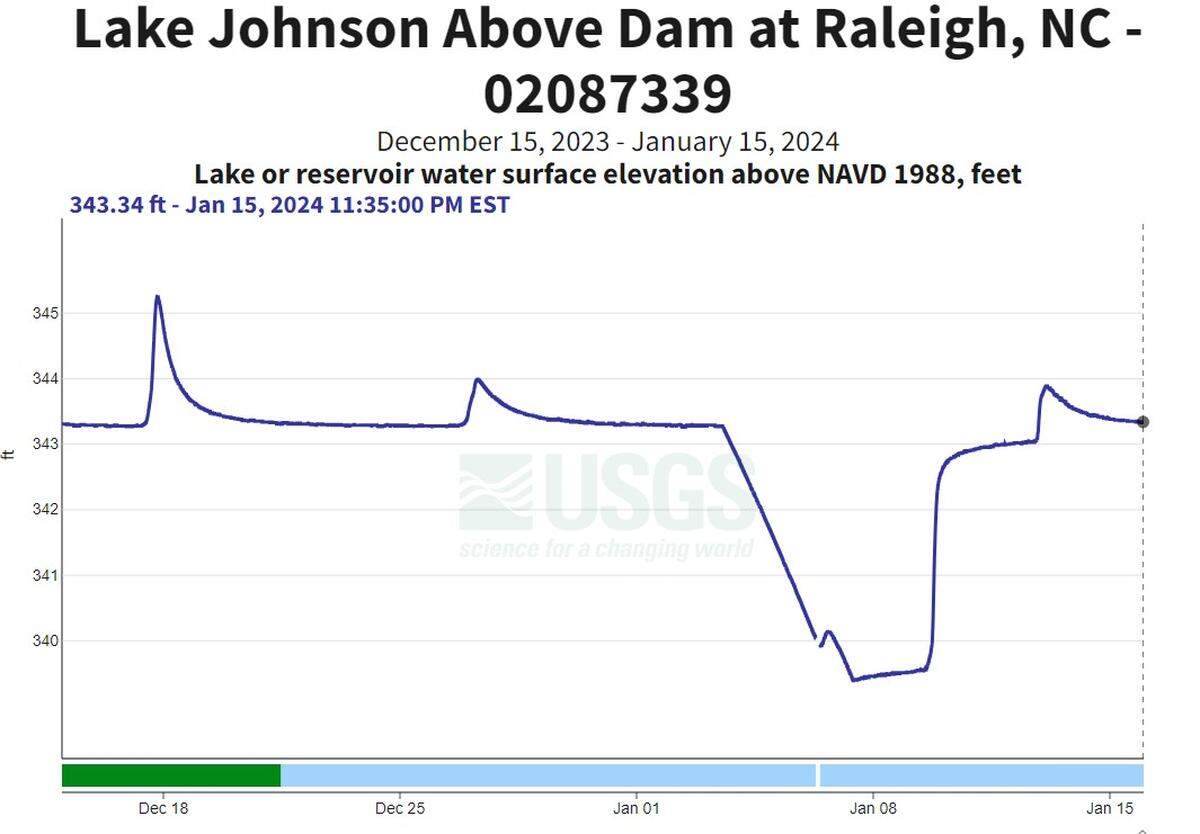
Raleigh officials started lowering Lake Johnson on Jan. 3, with the lake down more than three feet by the morning of Jan. 6.
They continued releasing through the first rainfall on Jan. 6, staying focused on the larger storm predicted for Jan. 9. At the Reedy Creek station, 0.92 inches of rain fell on Jan. 6.
On the morning of Jan. 7, with the lake now 3.9 feet below the level where water runs out of its spillway, officials stopped the release.
The larger storm on Jan. 9 dropped 1.98 inches of rain at the Reedy Creek weather station.
Typically, an inch of rain correlates to about a foot of water in Lake Johnson. But the Jan. 9 storm caused the lake to rise nearly 3.5 feet overnight.
That means the storm almost refilled the lake to the level it was before the city released water.
“The rain couldn’t soak into the ground because the ground was already saturated so we did get more runoff than normal. We were thankful we had lowered it,” Daniel said.
At that point, the lake was within a half foot of the spillway.
The third storm brought 0.95 inches of rain, on Jan. 12, more than was forecast. Lake Johnson rose about eight-tenths of a foot, and about half a foot of water went over the spillway.
“It worked out really well with the anticipation of the forecast and the amount we lowered it,” Daniel said.
What happened downstream?
The area where Rose Lane crosses Walnut Creek is particularly worrisome for city officials. The road is the only way in and out of a neighborhood, and water can quickly cross the road making it impassable for cars.
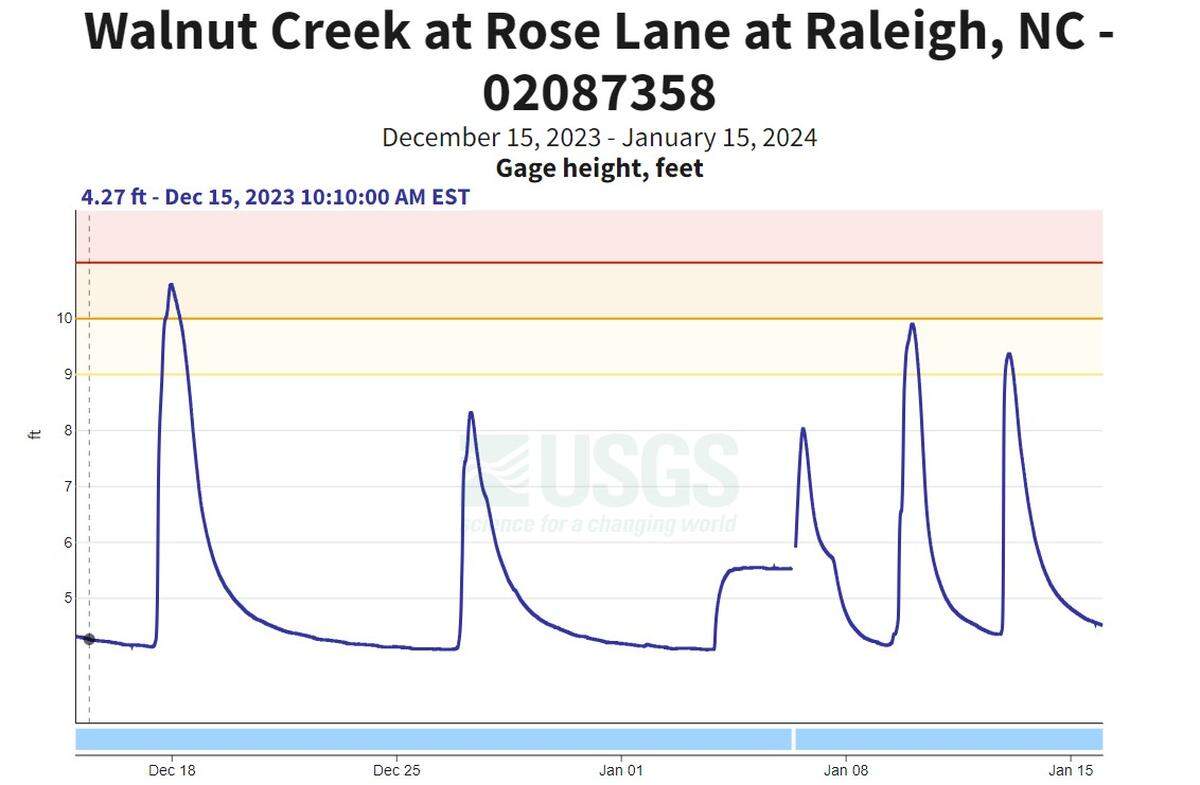
The U.S. Geological Survey has a stream gauge where the creek runs under the road. When the creek reaches 9 feet, Daniel said, it’s a warning; at 10, the creek is out of its banks; and at 11 feet there is typically water on the road.
After the city started releasing water from Lake Johnson, the creek rose from about 4.1 feet at Rose Lane to 5.53 feet by the early morning hours of Jan. 6.
City officials decided to keep releasing water even during the first rain storm that day.
“We knew it was going to be a small event,” Daniel said.
Walnut Creek reached 7.8 feet on the afternoon of Jan. 6 before dropping nearly all the way back to 4.1 feet by the morning of Jan. 9.
That meant both the water from the first storm and the water from Lake Johnson made it downstream before the larger storm arrived.
Then, as the heavier rain fell on the area, Walnut Creek rose swiftly. Between 8 a.m. on Jan. 9 and 2 a.m. on Jan. 10, the creek rose from 4.17 to 9.9 feet.
By the end of the storm, the water was within a foot of the roadway.
Walnut Creek rose again during the third rain event, reaching nearly 9.4 feet by the morning of Jan. 13.
What if the lake hadn’t been lowered?
Rose Lane would have been underwater if Lake Johnson hadn’t been lowered, according to Daniel. With a full lake, there would have been 2.5 to 3 feet of water going through the spillway, raising Walnut Creek.
Daniel said, “We believe that if we hadn’t lowered Lake Johnson, it (Rose Lane) would have definitely flooded.”
Daniel added that based on modeling conducted for the city he believes there would have been a foot or two of water on the road, potentially making it impassable for a day or more based on the wide floodplain in the area.
“Nobody would have been able to drive through it, anybody getting across it would have had to use a boat,” Daniel said.
This story was produced with financial support from the Hartfield Foundation and Green South Foundation, in partnership with Journalism Funding Partners, as part of an independent journalism fellowship program. The N&O maintains full editorial control of the work. If you would like to help support local journalism, please consider signing up for a digital subscription, which you can do here.
This story was originally published January 22, 2024 at 8:30 AM.