NC governments say they don’t need heat officers. Here’s what they’re doing instead.
By Adam Wagner and
Anna Roman
Allison Edwards, 10, pours water on Legend Hunt, 6, at Forest Hills Park on Monday, July 3, 2023, in Durham, N.C. Durham County public officials are trying to understand the resources residents have to respond to high temperatures.
Kaitlin McKeown
kmckeown@newsobserver.com
In some sunny, hot corners of the country local governments have crafted a new government role solely focused on protecting people from high temperatures.
Cities like Los Angeles,Miami-Dade County and Phoenix have hired chief heat officers to measure the impact heat is having on the people who live there and figure out how to better protect them from it. Miami’s effort was borne out of focus groups and surveys some community groups conducted to see what residents’ top concerns about climate change were.
“It wasn’t sea level rise and it wasn’t even hurricanes, even though Hurricane Irma hit them pretty hard. It was extreme heat because that’s what people were feeling now day in and day out,” Jane Gilbert, Miami’s chief heat officer, said in an interview.
Those impacts are felt by people working outside, when bus riders wait for their vehicle to arrive and in utilities bills when the air conditioning is running nonstop to keep homes cool, Gilbert added.
No North Carolina cities or counties have hired a chief heat officer, nor does the state have a full-time staff member dedicated solely to the problem. But steadily climbing temperatures here, including Raleigh’s hottest day on record, are forcing local governments and their counterparts in state government to focus more resources on responding to high temperatures.
At the state level, the N..C. Office of Recovery and Resilience has one staff member who serves as the organization’s lead on heat. Amanda Martin, NCORR’s chief resilience officer, said that staff member spends more than half her time working on heat-related issues right now.
Heat, Martin said, is “with us today and will be with us tomorrow in a much more serious way. The idea that there are people who just focus on heat all day is fantastic and it’s new.”
In Miami-Dade, Gilbert has worked to install 1,700 efficient air conditioning units in public housing, commissioned a study about which ZIP codes are more likely to see hospitalizations from heat and is working to lessen the concentration of heat in urban areas via an urban forestry plan.
“Anyone can have a positive impact on addressing extreme heat. There’s different levels you can have depending on government capabilities. I just encourage any government to take a serious look at what they can do,” Gilbert said.
NCORR worked with the N.C. State Climate Office, Chatham County officials and other partners earlier this year to draft a heat action plan toolkit. The document provides a template local governments can use to shape their response to dangerously high temperatures.
A plan for Chatham County
Chatham County’s version of a heat action plan runs 18 pages, explaining how county officials will prepare for heat season and then what they will do when temperatures reach heat advisory and heat watch levels.
The plan describes what resources are available to help low-income households access assistance for heating and cooling bills or to weatherize homes to help cut cooling costs. It also details when the county will open cooling centers and which community organizations need to open cooling centers of their own.
Chatham County officials acknowledge the plan likely isn’t perfect, but said they will keep talking to community groups about how it can be improved.
“We are expecting to find some gaps and improve on those as we go along,” said Anne Lowry, the county’s environmental health director.
This spring, one of those gaps involved pets. People can’t bring their cats or dogs to the public buildings that are traditionally used as cooling centers, someone noted at one of the heat season kickoff meetings. In response, the county turned to its Parks and Recreation department, which now offers a misting station under a pavilion at Southwest District Park on hot days.
Still, neither Lowry nor Emergency Services Director Steve Newton believe that Chatham County needs to hire a staff member who focuses solely on heat. The county’s departments and partner agencies work well together, they said, weathering challenges from the COVID-19 pandemic to storm responses to heat waves.
“Right now it’s manageable to the degree that we can manage it, that we’re able to manage it. We’re not saying that we can turn the climate around and make it not hot,” Newton said.
Martin, the state resilience officer, views the response to high temperatures as a kind of entry point for local officials to think about mitigating heat in more systemic ways. Planting trees, providing fans to residents or putting reflective coating in the hottest corners of cities are all actions that need to be taken well before temperatures start to rise in order to soften the impacts.
“That foot in the door to working on heat is thinking about the short-term things that they might already be doing but don’t have a plan for,” Martin said.
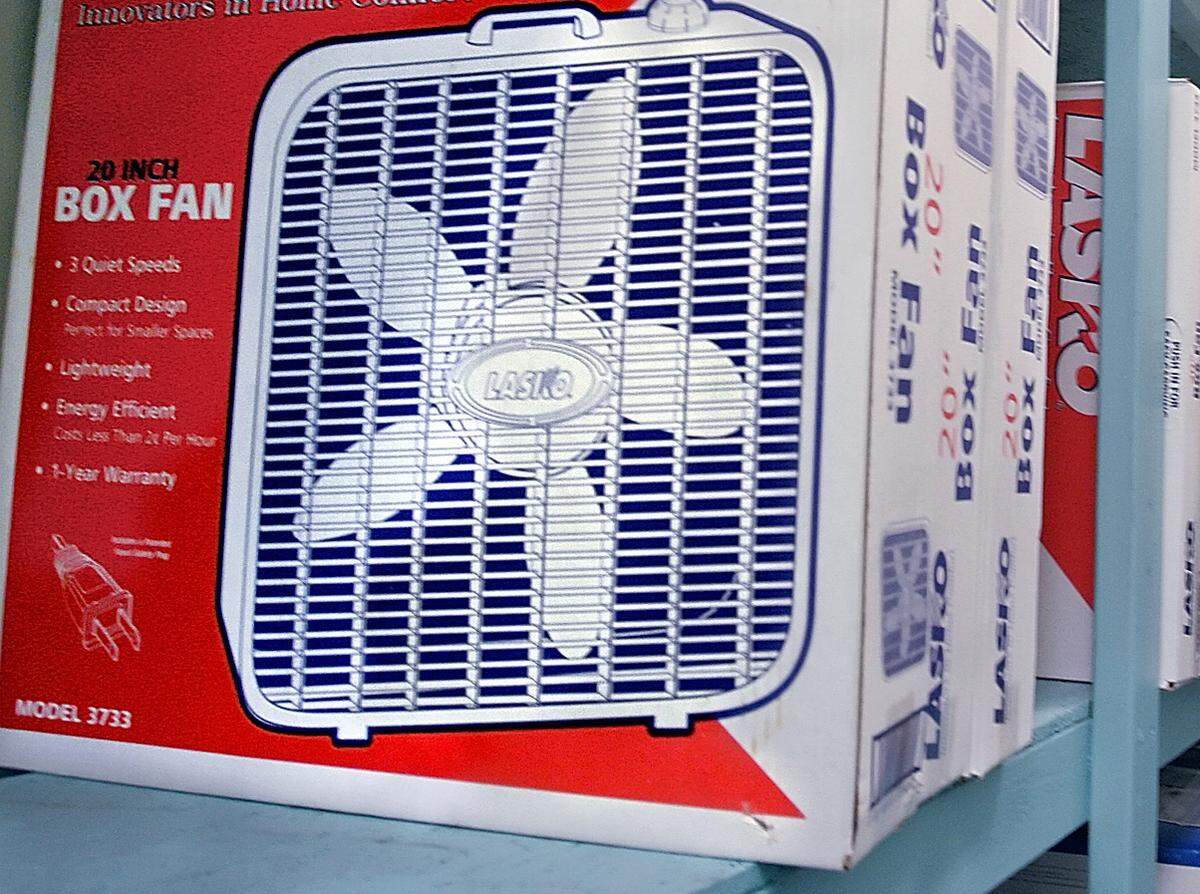
The Chatham County Heat Action Plan includes several community resources. Those include box fans that are available to those 60 years old or older at Center for Active Living locations in Pittsboro and Siler City. SETH PERLMAN AP file photo
Raleigh’s approach to heat
The city of Raleigh doesn’t have a heat officer or office, but its Office of Sustainability addresses heat and other climate-related challenges. That office is over a decade old and charged with implementing the city’s “community climate action plan,” a plan to not only lower the city’s greenhouse gas emissions but also address climate equity and “building community resilience” to the impacts of climate change.
A heat office is an emerging topic that’s popped up in cities across the country, said Megan Anderson, sustainability director for the city. It’s not something the city is considering now because the work is currently done in the Office of Sustainability.
Heat and flooding are two of the biggest climate impacts to the city of Raleigh, she said, adding the city has excellent partners with other city departments and with the state.
“Even at the state level, we’re really lucky,” Anderson said. “We have access to the state climatologist who lives in Raleigh and the Office of Resilience. A lot of these groups that we’re working with at the state level, and there’s a lot of leadership there.”
Part of that heat work is using heat data to make changes throughout the city. In 2021, Raleigh and Durham sought volunteers to map urban heat islands to determine what parts of the city were hotter than others. Since then, the city has used that data in its planning processes.
“There are a lot of issues where we’re trying to help protect people in the short term, give them information and education and provide places for them to go cool off,” Anderson said.
That data can be used when building new public amenities like community centers and splash pads, is being used to decide where to plant 1,000 trees along city streets and which streets receive special pavement coatings that are cooler than regular asphalt.
“We can’t just blanket everywhere at one time,” Anderson said. “So we’re making sure we’re prioritizing the people that need it the most first.”
That’s the people who may not have air conditioning in their homes or vehicles, or who have to walk several blocks along a street to wait at a bus stop.
“The climate is changing,” Anderson said. “It’s going to be a problem for more and more people. And as energy costs are rising, there’s a (lack) of housing affordability. We’re trying to educate people and to really try to make sure they understand what they can do to mitigate heat in the short term.”
It’s advice the city is taking itself.
Some city park maintenance staff and trash collectors are starting their shifts earlier in the morning to avoid working in the heat of the day.
Not ‘one-size-fit-alls’ in Durham County
Like Raleigh, Durham County doesn’t have a staff member solely focused on heat but is still thinking of it as part of a larger approach to climate resilience.
“I could potentially see a position just focused on resilience but that’s a lot broader than just heat,” said Tobin Freid, the county’s sustainability manager. In addition to heat, the county is focused on flooding, drought and wildfires, particularly the particulate matter carried in their smoke.
Still, Freid said Durham County has an Americorps member working on resilience who is spending a large portion of her time on heat. That includes passing out information about the risks from high temperatures, but also interviewing community members and conducting surveys to gather information about what people do and don’t have at their disposal to deal with hot temperatures.
“It’s much more effective, in this heat, to talk to people about the heat than it was in March when it wasn’t quite as hot,” Freid said.
With heat, Durham County pays close attention to the impacts of redlining, the historic practice of discriminating by denying loans to certain people, including Black people, in order to prevent them from buying homes in some neighborhoods.
Durham County’s 2020 Community Health Assessment reported that heat risk is greater in the eight U.S. Census tracts that were historically redlined. Those included Hayti, East Durham and Franklin Village.
In those parts of the city, neighborhoods have fewer street trees and more pavement, the report found, resulting in temperatures that average 7 degrees hotter than areas that weren’t subjected to redlining. They also have more nonwhite residents living below the federal poverty line, unable to afford a car or struggling to keep the air conditioning running.
Information gathered by the Americorps member could be key, Freid said, to increasing resilience to heat in those neighborhoods and others.
“It’s not one-size-fits-all for each individual or each household, and it’s also not for each neighborhood,” Freid said. “There’s some neighborhoods who really, really need trees who don’t have any, and that would help a lot. There are other neighborhoods where a lot of people take the bus and they really need bus shelters.”
This story was produced with financial support from the Hartfield Foundation and Green South Foundation, in partnership with Journalism Funding Partners, as part of an independent journalism fellowship program. The N&O maintains full editorial control of the work. If you would like to help support local journalism, please consider signing up for a digital subscription, which you can do here.
Anna Roman is a service journalism reporter for the News & Observer. She has previously covered city government, crime and business for newspapers across North Carolina and received many North Carolina Press Association awards, including first place for investigative reporting.
Adam Wagner covers climate change and other environmental issues in North Carolina. His work is produced with financial support from the Hartfield Foundation and Green South Foundation, in partnership with Journalism Funding Partners, as part of an independent journalism fellowship program. Wagner’s previous work at The News & Observer included coverage of the COVID-19 vaccine rollout and North Carolina’s recovery from recent hurricanes. He previously worked at the Wilmington StarNews.