Did high NC temps really break a record? Weather experts debate RDU readings
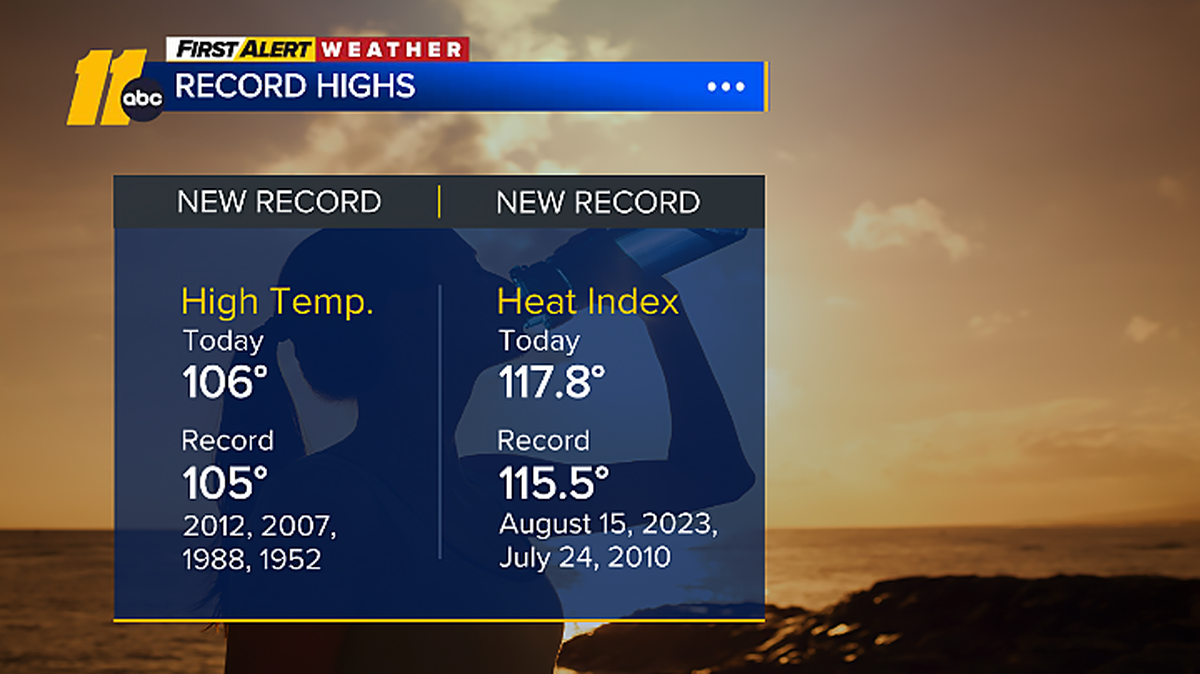
Raleigh-Durham International Airport hit a record-high temperature last week of 106 degrees, but the ensuing argument over what — if anything — the number means has been even more heated.
The National Weather Service’s announcement of the record high was quickly used to both support and refute scientific evidence of climate change, and the online debate also has touched on issues of urban development, government reliability and the superlatives from which humans draw bragging rights.
Where does the number come from?
When weather officials cite readings from RDU Airport, they’re talking about a weather station at the airport that’s part of the Automated Surface Observing Systems (ASOS) program. That’s a joint effort of the National Weather Service, the Federal Aviation Administration and the Department of Defense, all of which use information gathered at the station to make forecasts and warnings.
These originally were placed at airports by aviation officials because even small changes in the weather can affect flight safety. The other federal agencies piggy-backed with the FAA to gather data and save money.
At RDU, the weather station sits in a utility building near the end of one of the runways, said Jonathan Blaes, meteorologist-in-charge for the National Weather Service in Raleigh. The station is not on pavement but over a gravel base in an otherwise grassy area. The temperature sensor is in a well-ventilated area, sheltered from direct sunlight and meeting the FAA’s other requirements for getting standardized data.
How hot was it on July 5?
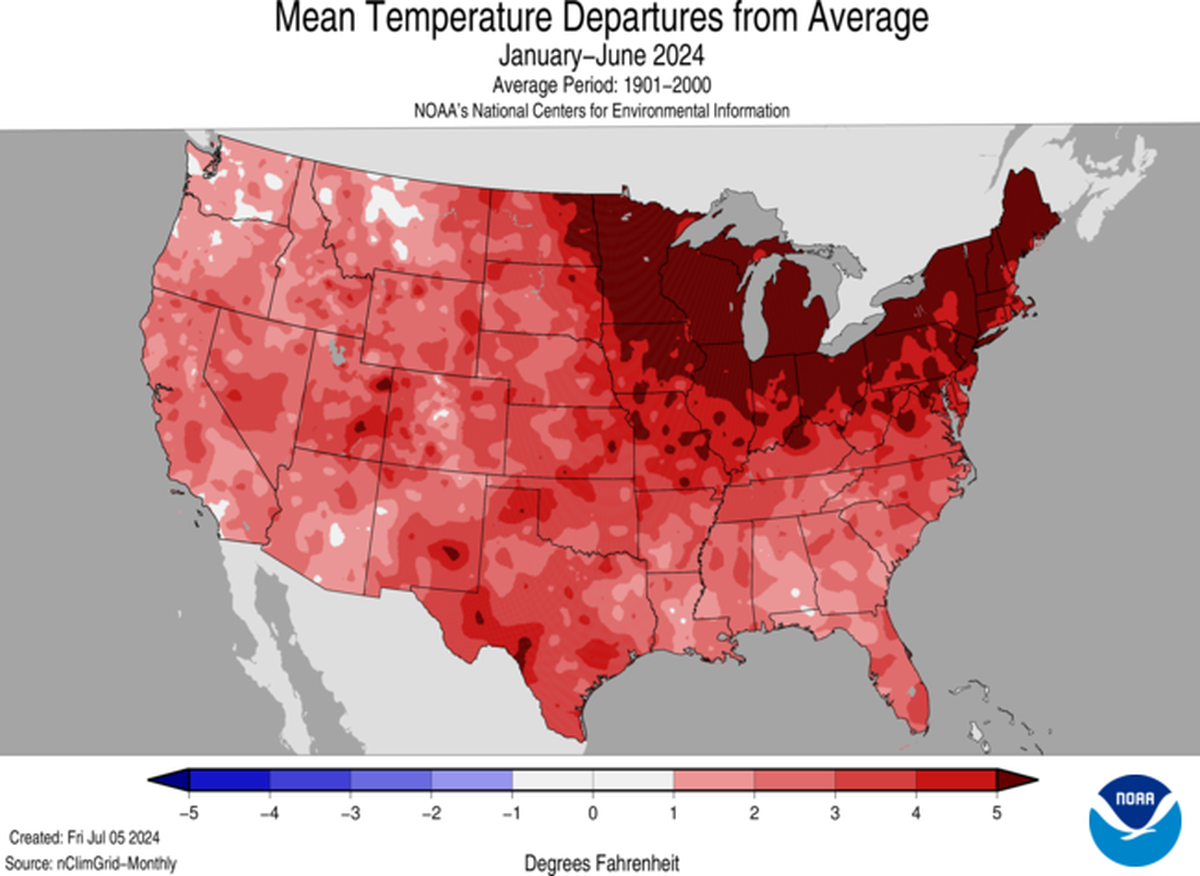
Meteorologists had been expecting the temperature to spike at RDU on July 5. The National Oceanic and Atmospheric Administration predicted this summer will be one of the hottest on record, and historically, the highest temperatures in central North Carolina each year have come in early July.
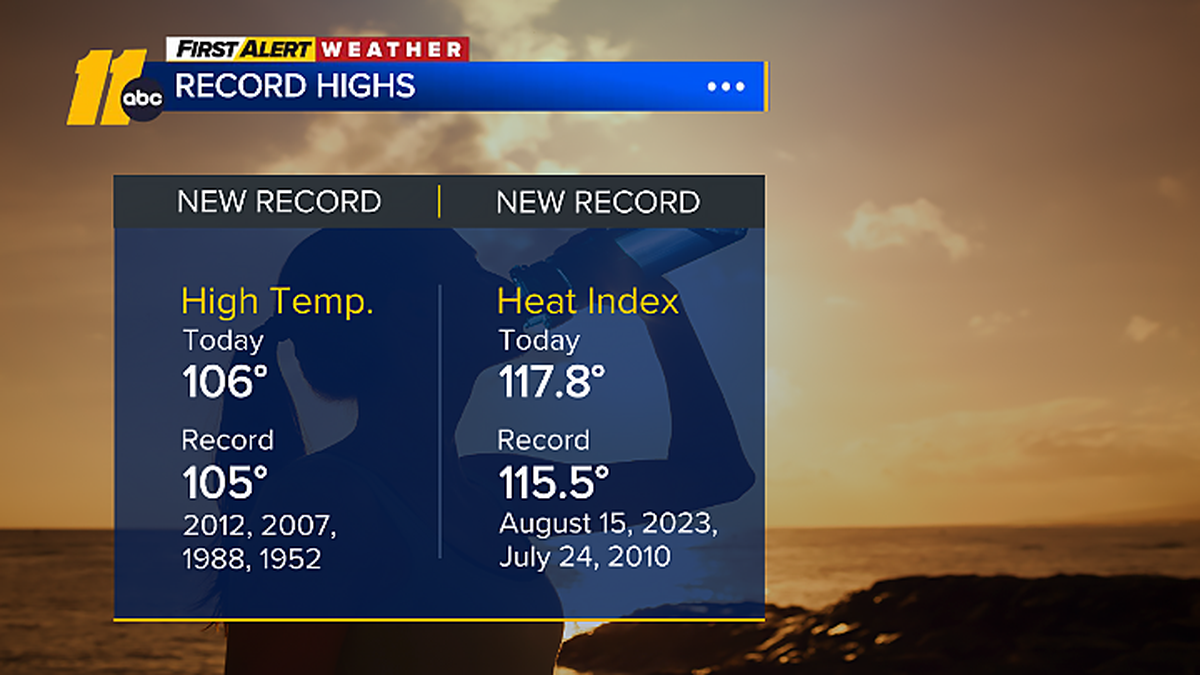
“We knew it was going to be hot that day,” Blaes said, hot enough to challenge the previous record of 105 degrees, which the weather station at RDU recorded in 1952, 1988, 2007 and 2012.
“We were expecting 104 to 105. We expected it to be a blazing hot day and break the daily record and be one of the hottest days ever,” Blaes said. At 1:37 p.m., “Things just lined up right that we made it to 106.”
Right away, skeptics questioned whether the instruments were accurate. As it happened, Blaes said, a Weather Service technician and a contractor for the FAA who both help maintain the weather station were at the airport that day, and both went out to check the equipment against other instruments. All the instruments came within a degree or less of each other, Blaes said.
“So essentially it was corroborated by two other humans. We’re pretty confident that the temperature was accurately represented by what the sensor showed.”
WRAL Meteorologist Kat Campbell noted the record in a Facebook post and preemptively acknowledged the airport’s tendency toward the extreme.
“RDU has a hot bias,” Campbell said. “However, the NWS sent out their instrument technician to the sensor at RDU and had them taking independent readings with a thermometer used to calibrate the sensor. This also produced a high of 105. So the sensor is valid but, yes, we cannot deny the location runs hot.”
What does it mean if RDU hit 106 degrees?
That’s the point on which online debaters were fast-typing their responses — and using a lot of capital letters, exclamation points and eye-roll emojis.
Observers seemed to come to one consensus: Weather conditions at RDU — especially temperature — can’t necessarily be extrapolated to anywhere else.
Former WRAL meteorologist Greg Fishel weighed in on the record-high temperature reading on his O’Fishel Weather Facebook page. Fishel describes himself as a longtime climate-change denier who now believes that the Earth is warming.
But in a phone interview, Fishel said RDU hitting an extreme 106 degrees doesn’t support the climate-change argument and can’t be used to cast suspicion on it, either.
Fishel said he believes the sensor is correct, but says, “The instrumentation is accurately representing a micro-climate, which is not representative of where people actually live.”
That’s been borne out by people who say they live within a few miles of the airport in different directions and claim their thermometers topped out at between 98 degrees and 104 degrees the day RDU recorded 106.
Is RDU an ‘urban heat island’?
Comparing the high temperature on an early July day at RDU to the one on a thermometer on a back porch in a leafy Cary or Durham neighborhood is like measuring watermelon against peaches, experts say.
RDU might meet the Environmental Protection Agency’s definition of a heat island, an urbanized area that sees higher temperatures than outlying areas because of buildings, roads and other infrastructure that absorbs and re-emits the sun’s heat more than, say, woods and lakes would.
Places with lots of buildings and few trees — such as urban areas and large airports — can become islands where daytime temperatures may read from 1 to 7 degrees higher than less densely developed places.
Is RDU getting hotter?
Even if RDU is a heat island that can’t be compared to residential areas in the Triangle, weather data observed there is critical to aviation safety. And measuring temperature and other conditions at the airport over time provides useful long-term information, right?
Yes and no, says Fishel, who compared data from Piedmont Triad International Airport in Greensboro to RDU’s after the July 5 temperature record. He divided his survey into two time periods, 1945 to 1995, and 1996 to 2023 because the weather station at RDU switched to an automated system in 1996.
During the first period, Fishel found that the Greensboro airport had recorded an average of 32 days per year with temperatures over 90 degrees, while Raleigh had an average of 39.
During the second period, Greensboro averaged 33 days with temperatures above 90 degrees, while Raleigh averaged 56.
Fishel said he believes the discrepancy is more than could be explained by global warming, and noted that RDU has paved surfaces and built new buildings since 1996 that likely contribute to increased temperatures on the airport grounds over time.
Do weather records matter?
Extreme weather statistics are irresistible to humans, appealing to our love of superlatives. If you were weeding your garden on July 5, don’t you feel more accomplished knowing you were toiling on the hottest day ever recorded in the Triangle?
Weather experts are used to this; they are often called on to determine whether a tornado came through an area or just straight-line winds. Was that still a hurricane when it blew ashore, or just a tropical storm?
“Anytime you say you broke a record, it’s going to raise eyebrows,” Blaes said. “It’s going to attract some attention.”
This story was originally published July 12, 2024 at 7:00 AM.