Hurricane F-bombs: Why many in NC twitch when storm names reach ‘F’ in the alphabet
During hurricane season, some people in central and eastern North Carolina get triggered when meteorologists drop the F-bomb.
Three of the worst hurricanes to hit the state in recent memory had names beginning with the letter “F”: Fran, Floyd and Florence.
All three were September storms.
Though the state has been affected by hurricanes in other months — Hurricane Hazel, which set benchmarks that went unchallenged for decades, struck in October 1954 — meteorologists say that historically, September storms tend to be more powerful. That’s because usually, September is when the waters of the Atlantic are their warmest, at least 80 degrees.
This year, ocean temperatures started out warmer than average, and by mid-July were well into the 80s in the tropical Atlantic, where hurricanes often develop from disturbances originating off the coast of Africa. Those higher-than-average temperatures are a large part of the reason the National Oceanic and Atmospheric Administration predicted an extra busy Atlantic hurricane season this year.
This week, Tropical Storm Francine is expected to reach hurricane status and make landfall along the Louisiana coast.
If you didn’t live in North Carolina during one of our F-ing hurricanes, or if you have suppressed the memories, here are some reminders of what they were like.
Hurricane Fran, September 1996
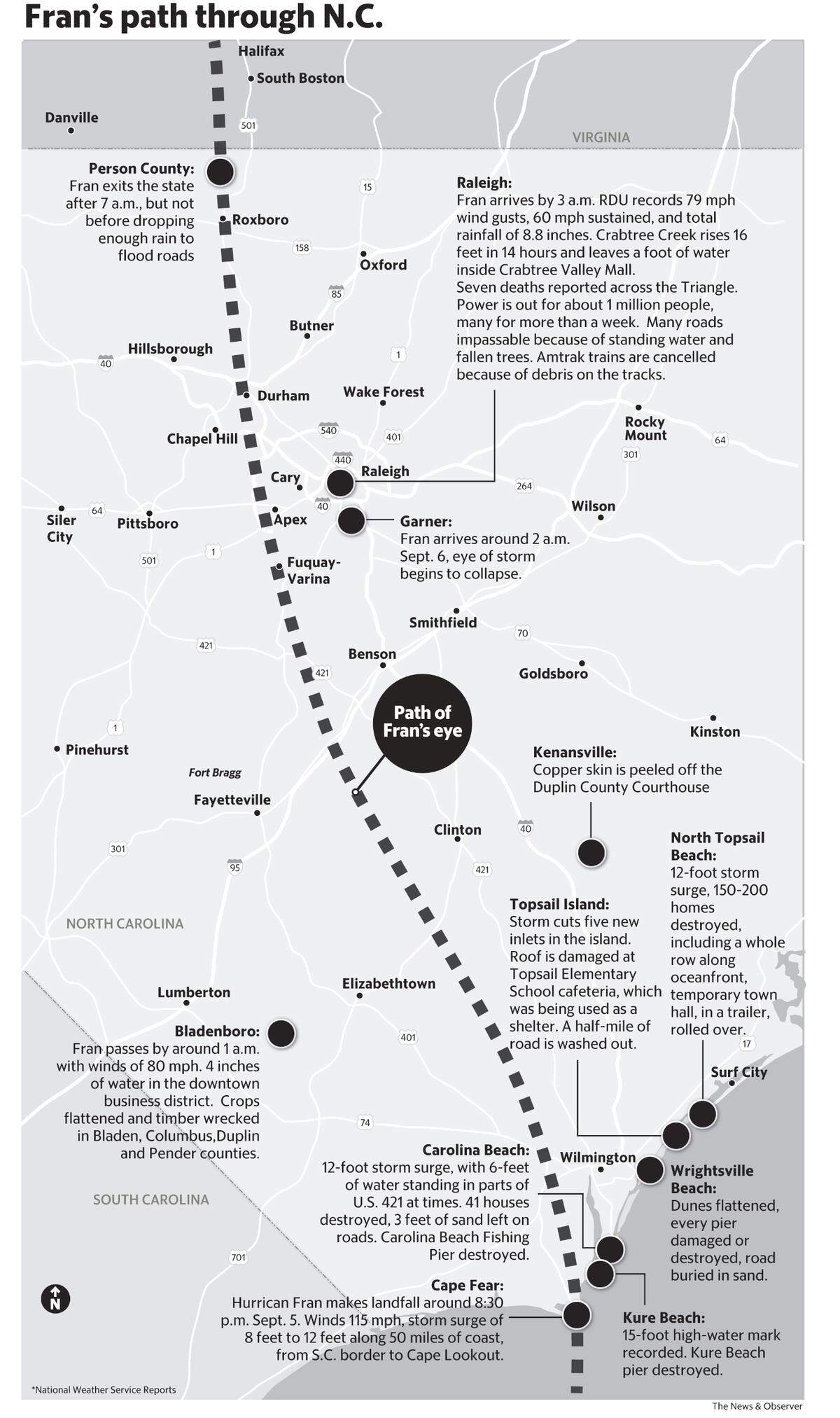
This was a Cape Verde storm, meaning it started as a tropical wave near Cape Verde, a group of volcanic islands in the Atlantic about 350 miles off the west coast of Africa. It became a tropical depression on Aug. 23, according to the National Hurricane Center, a tropical storm on Aug. 27 and came ashore as a hurricane around Cape Fear, south of Wilmington, early on Sept. 6.
Fran had Category 3-strength sustained winds of about 115 mph and gusts up to 125 mph when it made landfall, making it the first major storm to hit North Carolina since Hazel.
It generated a storm surge 12 feet high at North Topsail Beach, enough to wash away the double-wide mobile home that had been serving as a temporary police station and town hall since Hurricane Bertha two months before.
Rainfall amounts in Fran’s path ranged from 6 to 12 inches, causing the worst flooding many places had seen in years.

Fran tracked inland all the way to central North Carolina and was still a Category 1 hurricane when it reached Wake County. It finally lost some energy just outside Garner and was downgraded to a tropical storm before rolling through Raleigh and Durham and then exiting the state through Person County, still blowing at 50 to 60 mph.
Hurricane Fran was blamed for 37 deaths, including 24 in North Carolina. The storm leveled hundreds of beach homes, cut new inlets through barrier islands, took down century-old trees, knocked out dams, closed businesses and destroyed infrastructure, crops and timber.
In Raleigh, the storm took down so many mature trees it changed the skyline in many neighborhoods and opened up opportunities for plantings that couldn’t survive in shade.
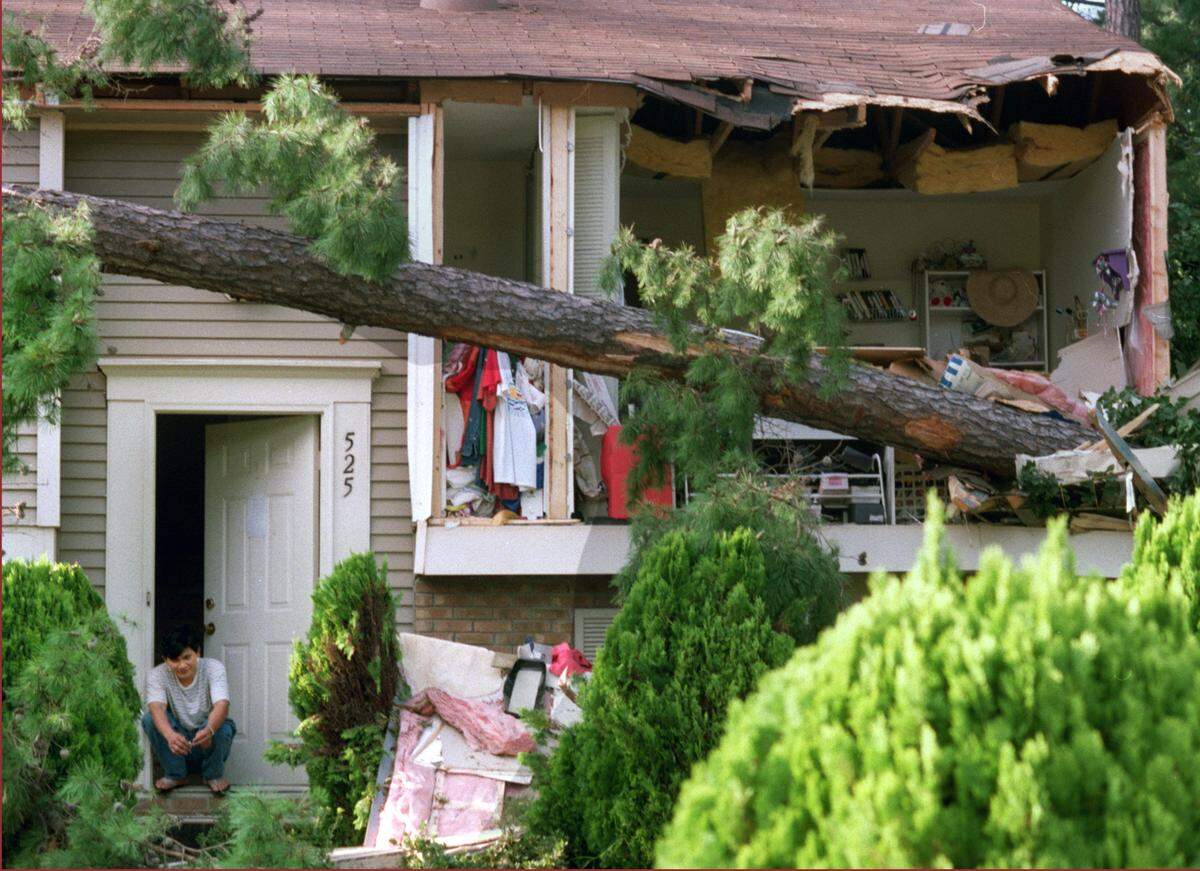
It also surprised residents of the state who didn’t believe a storm could still be that powerful after traveling more than 200 miles from the coast.
We learned other lessons from Fran, too; seeing that most beach houses built on pilings sunk at least 16 feet into the ground survived the storm, the Federal Emergency Management Agency pushed for better building and inspection practices to make sure new homes met that standard.
Hurricane Floyd, September 1999
Floyd became a tropical storm on Sept. 8, forming from a wave that had moved off the west coast of Africa six days earlier, according to the National Hurricane Center. The storm strengthened as it moved across the warmer-than-average Atlantic and had maximum sustained winds of 155 mph as it approached the Bahamas, making it the strongest storm of the 1999 hurricane season, NOAA said.
Though Floyd’s winds weakened as the storm approached the southeastern U.S., bands of torrential rains went northward well ahead of its center because the storm was about twice the size of the average hurricane.
Floyd came ashore around 2:30 a.m. on Sept. 16 near Topsail Beach, south of Wilmington, with winds of around 105 mph.
Though its wind speeds made it only a Category 2 storm — “major storms” are Category 3 and above — widespread rainfall amounts of 10 inches to more than 20 inches associated with the hurricane caused catastrophic flooding in areas of eastern North Carolina and South Carolina, and in other states as the storm eventually moved north.
Some places in North Carolina still have not recovered from the damage.
The death toll from the storm was at least 36 in North Carolina and 57 in the U.S. as a whole, NOAA said, with many of those deaths were due to flooding.
Floyd generated a 10-foot storm surge across Cape Fear area beaches and the rain that fell over a three-day period — on top of more than 10 inches of rain from Hurricane Dennis earlier in the month — sent rivers to record flood levels, inundating communities where people didn’t get or didn’t heed warnings.
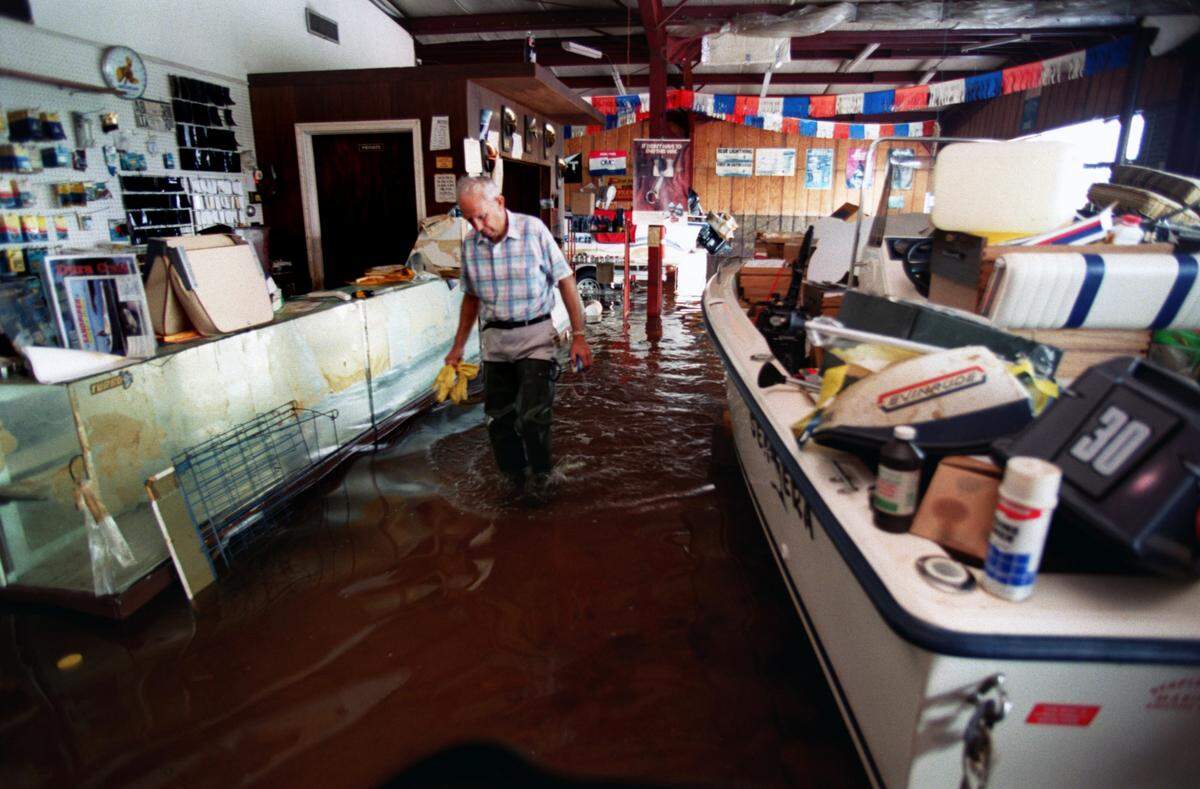
Nearly all of the town of Princeville was inundated with water, along with large sections of Tarboro, Rocky Mount and Kinston. FEMA declared disasters in 66 N.C. counties and eventually brought in thousands of trailers to provide temporary housing for people who had no safe place to stay.
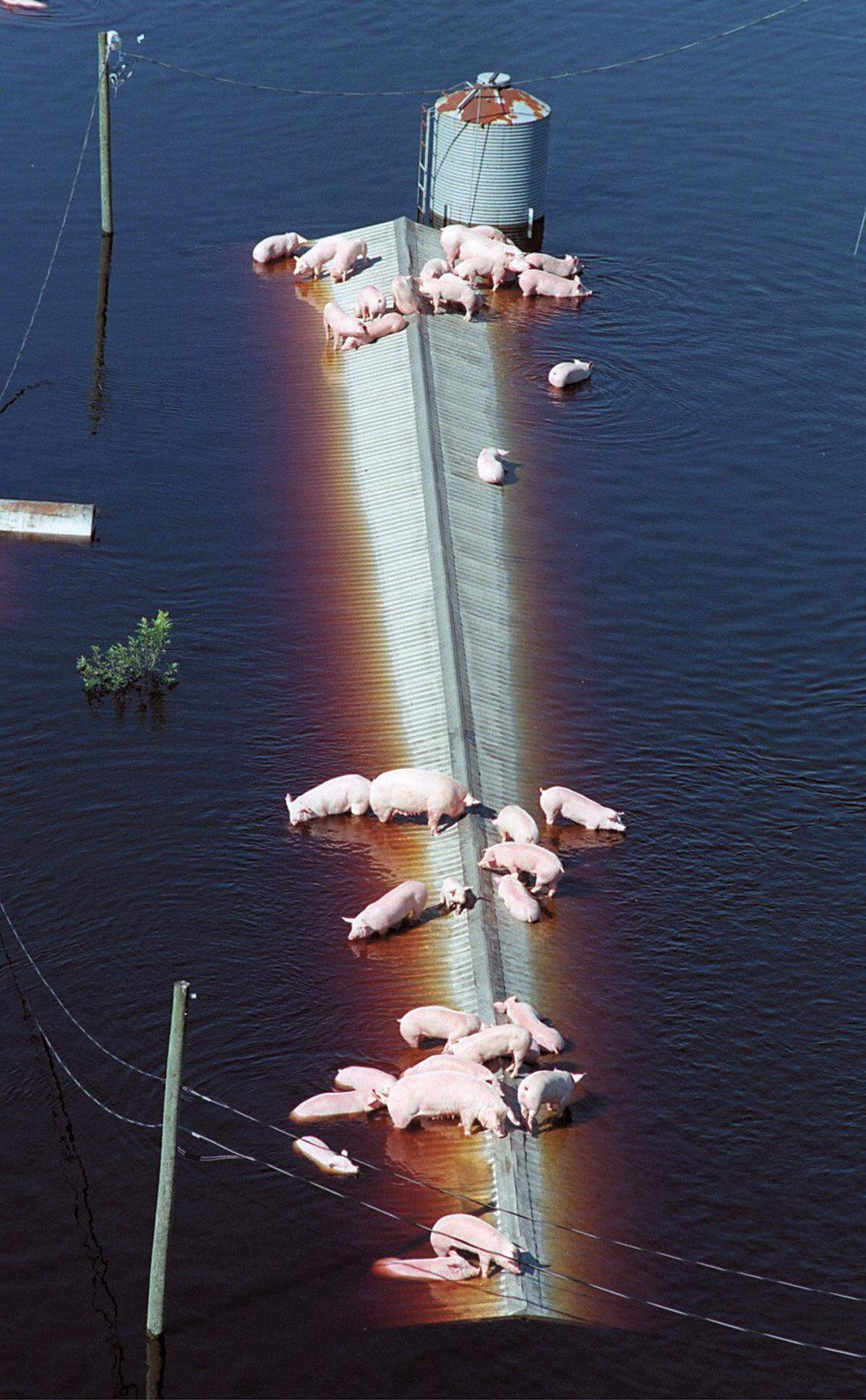
The N.C. State Climate Office said more than 2 million chickens, turkeys and hogs died in North Carolina because of Floyd, mostly by drowning. Wastewater lagoons on flooded hog farms overflowed, carrying toxic sludge into the waterways and contaminating drinking water supplies with disease-causing bacteria and viruses.
Floyd wiped out 40% of the state’s 1999 tobacco crop, along with half the peanut, cotton, soybean and sweet potato crops, NCSU said.
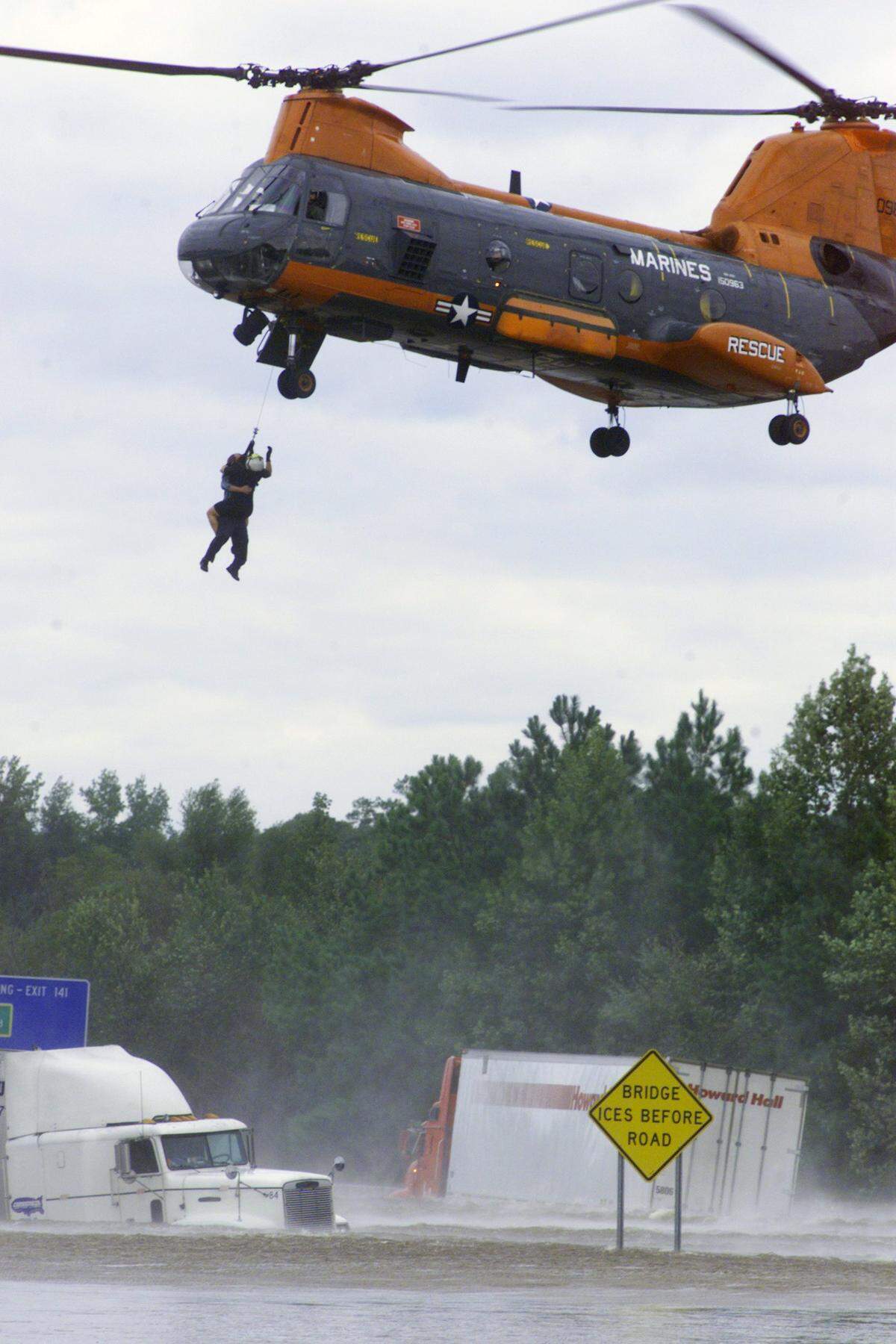
The Federal Emergency Management Agency said Floyd damaged or destroyed upwards of 80,000 structures in North Carolina.
As bad as Floyd was, in some places, Florence was worse.
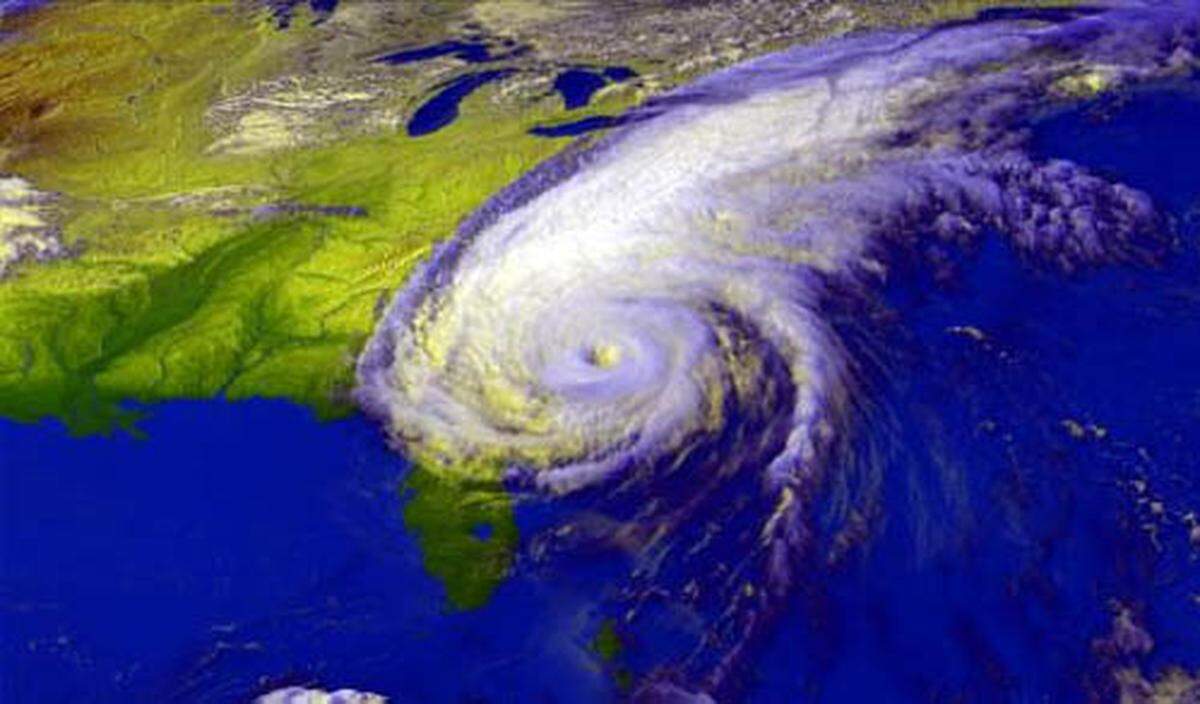
Hurricane Florence, Sept. 2018
Another Cape Verde storm, Florence started as a tropical wave off the west coast of Africa that split into two low-pressure systems at the end of August, according to NOAA. The southern portion eventually made its way to the Pacific, and the northern portion headed across the Atlantic in the general direction of the U.S.
Along the way, the storm gained and then lost strength and shape before finally coming ashore near Wrightsville Beach on Sept. 13 with winds of about 92 mph, a strong Category 1.
While Florence’s wind downed trees and knocked out power for up to two weeks, this was another storm that came with a large storm surge and massive rainfall, too much for sounds and rivers to hold.
The highest storm surge was just upstream of downtown New Bern, NOAA said, where the Trent and Neuse Rivers raised to 11 feet above ground. The Pamlico River in Washington surged to more than 7 feet above ground and at Johnnie Mercer’s Pier in Wrightsville Beach, the surge was almost 9 feet, including wave action.
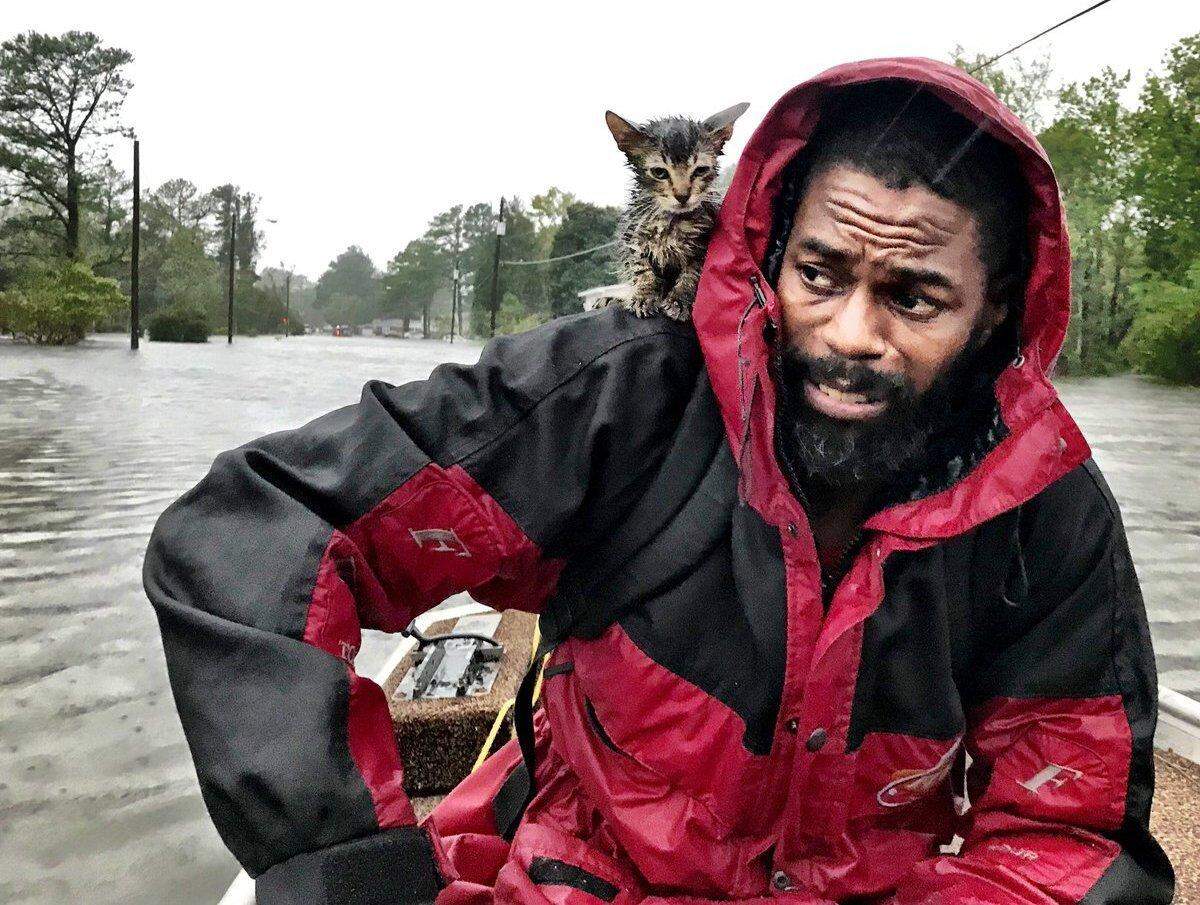
Rainfall amounts were staggering, up to 20 inches in many places and nearly 36 inches in Elizabethtown, topping the previous state rainfall record of more than 24 inches set at Southport during Hurricane Floyd by a almost foot, NOAA said. The Cape Fear River in Wilmington flooded downtown with water 2 feet deep.
Nearly ever major road or highway in southeastern North Carolina saw some flooding and the big main arteries of Interstate 40 and 95 and U.S. 70 were closed in some places for days. Many small towns and even the city of Wilmington were completely cut off for a time.
Florence flooded more than 74,000 structures, forcing water rescues of more than 5,000 people.
Again, millions of chickens, turkeys and hogs died, mostly because of flooding. Farm crops were ruined. Schools were damaged. Beaches were carved up; at Carolina and Kure beaches, the ocean eroded away the sand and left a 10-foot cliff. In Surf City, sand that was carved from the dunes ended up inside houses blocks away, up to 5 feet deep.
The flooding overwhelmed wastewater treatment plants in the eastern half of the state, sending untreated sewage into nearby waterways by the millions of gallons.
At least 40 deaths in North Carolina were attributed to the storm, including 11 people who died after their cars were caught in floodwaters. Four people died as a result of falling trees. Other deaths were the result of medical conditions worsened by the storm; carbon monoxide poisoning, vehicle accidents, fires and electrocutions, NOAA said.
N.C. Baptists on Mission, a disaster-recovery aid group based in Cary, said in June 2024 that Florence remains the most devastating natural disaster North Carolina ever experienced. At one point, Baptist volunteers operated 10 large feeding centers across Eastern North Carolina to serve people who didn’t have usable kitchens or were too busy trying to rebuild their homes to stop and prepare a meal.
Even now, the group needs volunteers to continue rebuilding house Florence destroyed.