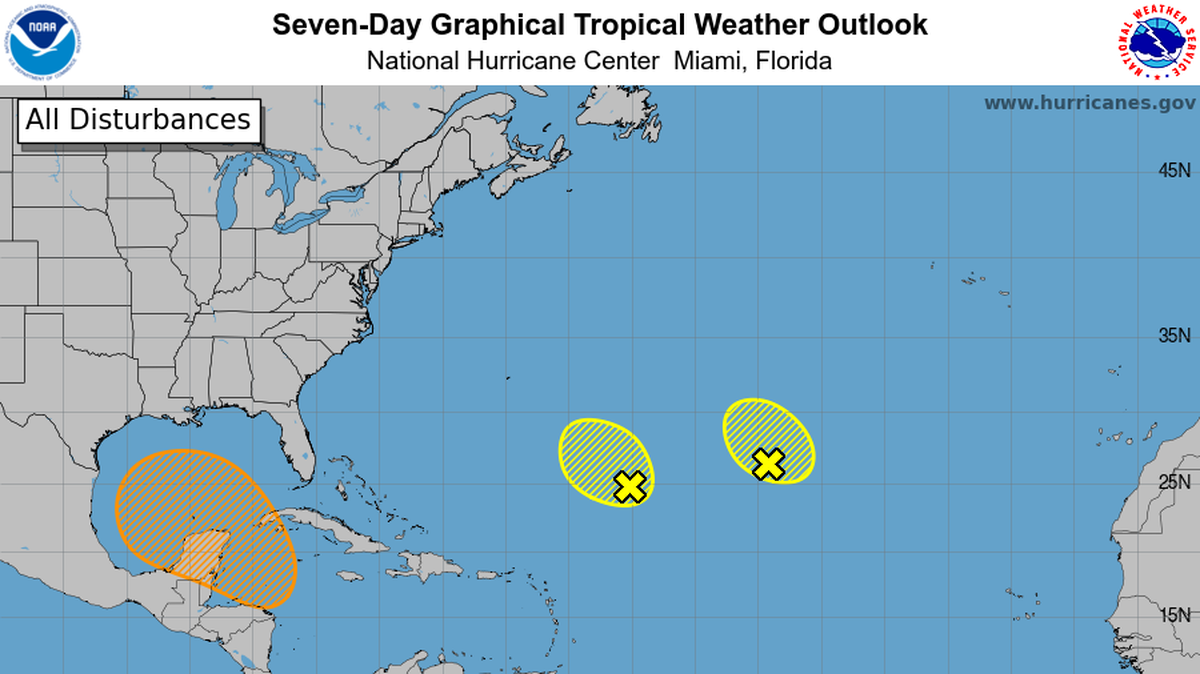
A disturbance in the Caribbean may develop into a tropical depression next week in the Gulf of Mexico, forecasters said Friday afternoon. It’s still expected to be a much busier-than-average hurricane season.
NOAA/National Hurricane Center
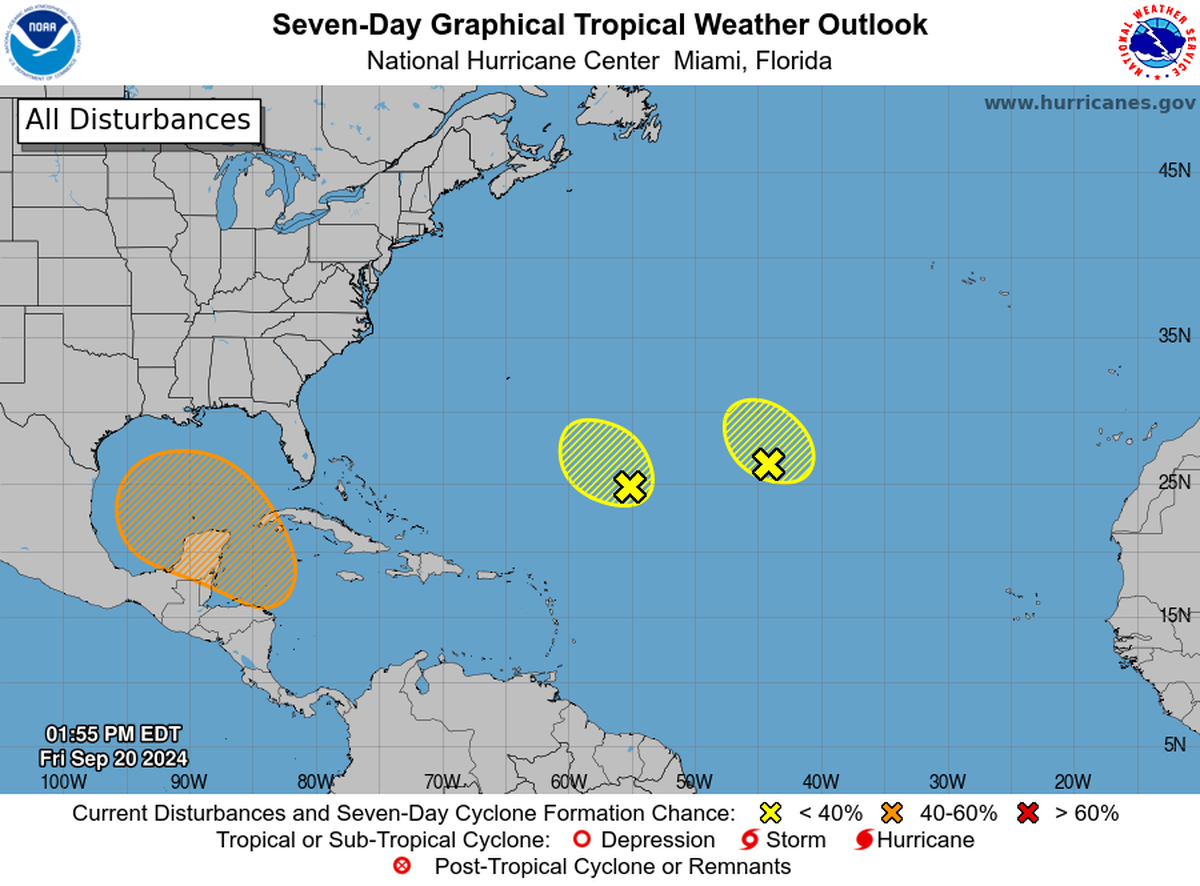
An area of low pressure may form by early next week in the Caribbean that eventually could become a tropical depression in the Gulf of Mexico, forecasters say.
The National Hurricane Center also is watching two systems in the Atlantic, but current forecasts indicate neither will become a threat to North Carolina or the U.S. East Coast.
What’s happening in the Caribbean?
Thedisturbance in the northwestern Caribbean has a 40% chance of developing into a tropical depression over the next seven days, forecasters say. The system is expected to move slowly to the north or northwest over the Caribbean Sea and into the southern Gulf of Mexico through the middle of next week.
It’s too early for forecasters to say where it would go from there.
The most recent storm to move through the Gulf of Mexico was Francine, a Category 2 hurricane that came ashore in Louisiana on Sept. 10. It dropped 6 to 8 inches of rain across New Orleans and surrounding areas before traveling north up the Mississippi Valley.
A disturbance in the Caribbean may develop into a tropical depression next week in the Gulf of Mexico, forecasters said Friday afternoon. It’s still expected to be a much busier-than-average hurricane season. NOAA/National Hurricane Center
Two disturbances in the Atlantic
The Hurricane Center also is watching two areas of the Atlantic for possible storm development.
▪ The remnants of Tropical Storm Gordon are causing showers and thunderstorms in the central subtropical Atlantic. While the disturbance could become more organized as it moves generally toward the north over the next several days, forecasters give it only a 10% chance of becoming a tropical system over the next week.
▪ About 750 miles southeast of Bermuda in the central and western subtropical Atlantic, the Hurricane Center is watching another system that’s generating showers and thunderstorms. That system is expected to drift around the ocean through next week but has only a 10% chance of developing into a tropical depression, forecasters say.
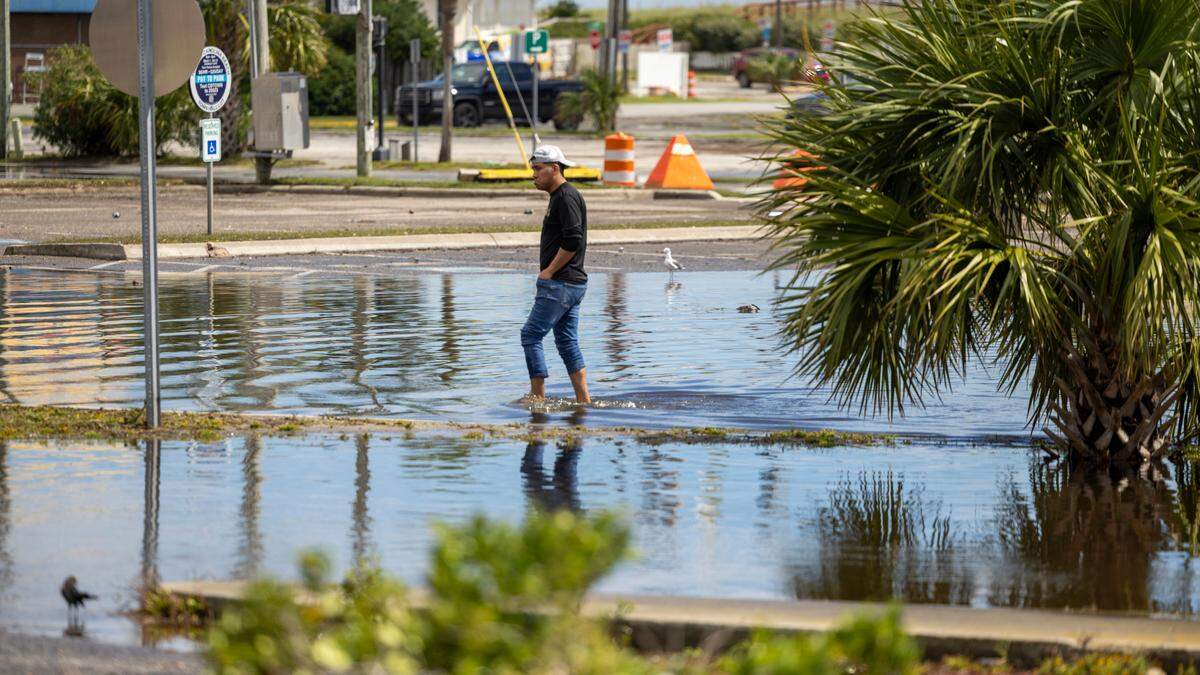
Floodwaters recede in Carolina Beach on Tuesday, Sept. 17, 2024 after an unnamed storm dropped as much as 18 inches of rain in part of southeastern North Carolina over a 72-hour period. Flood Levels in Carolina Beach rivaled that of Hurricane Floyd in 1999. Travis Long tlong@newsobserver.com
Will either storm impact NC?
Right now, it is unlikely either of these storms will be a direct threat to North Carolina or the eastern coast of the United States.
Is it still expected to be a super-busy hurricane season?
More than halfway through the Atlantic Hurricane Season, forecasters at the National Oceanic and Atmospheric Administration’s Climate Prediction Center still expect more storm activity than in an average year.
In their August update, forecasters said that between June 1 and Nov. 30, the Atlantic (including the Caribbean and the Gulf of Mexico) would see 17 to 24 named storms, of which eight to 13 could become hurricanes, four to seven of those Category 3 or stronger.
Historically, September and October are the peak of hurricane season.
So far this year, there have been seven named storms in the Atlantic. The next would be named Helene.
This story was originally published September 19, 2024 at 2:50 PM.