Storms are set to soak Raleigh. Will they finally wash away all the pollen?
Thunderstorms and lots of rain are in the forecast for Raleigh over the next few days.
Isolated storms are possible in the area Tuesday, April 22 afternoon and into the early evening, with “damaging wind gusts” as the primary threat, according to an alert from the National Weather Service (NWS).
Raleigh residents can expect around a half-inch of rain over the next few days, NWS Raleigh Meteorologist Mike Strickler told The News & Observer, adding that some areas could see up to two inches.
“This time of year, the nature of precipitation is very scattered and not uniform,” Strickler said.
Raleigh rain forecast
Rain chances are expected to last until Saturday, April 26 night, according to the NWS.
The forecast this week (as of Tuesday morning):
- Wednesday, April 23: 60% chance of precipitation all day
- Thursday, April 24: 50% chance of rain in the morning, then 30% in the evening
- Friday, April 25: 60% chance of rain
- Saturday, April 26: 70% chance of rain
Temperatures are expected to remain in the mid-to-upper 70s during the day for most of the week in Raleigh, and drop to the low 60s during the evening hours, according to the NWS forecast.
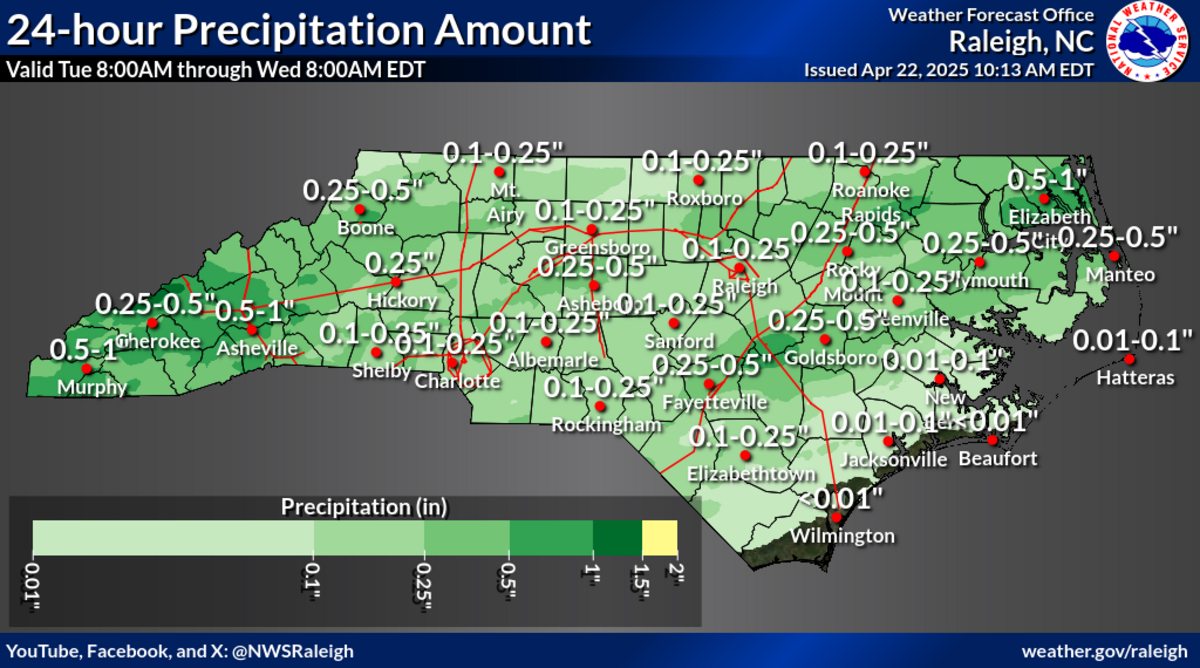
Will the rain wash away the rest of the pollen?
The sticky yellow pollen season (which North Carolinians affectionately call “The Pollening”) is nearing its long-anticipated end. The season peaked on Monday, March 31, The N&O previously reported.
The rain will help “that yellow-free window arrive sooner,” WCNC reported.
The Asthma and Allergy Foundation of America says rain showers can wash pollen away, and the humidity that follows can help keep pollen levels down too.
But precipitation can cause problems in people with allergies to grass, weeds, dust mites and mold.
“When it rains when grass and weed pollen counts are high, raindrops can hit the ground and break clumps of pollen into smaller particles,” the foundation says. “They can then quickly scatter into the air, causing a sudden increase in allergy and allergic asthma symptoms during the rain shower. This tends to happen more often during sudden, heavy downpours and thunderstorms.”
Since outdoor mold thrives in damp conditions, the foundation recommends removing leaves from your yard before they become moldy, and taking steps to reduce indoor allergens, such as vacuuming and keeping windows and doors closed.
This story was originally published April 22, 2025 at 11:25 AM.