NC has been in the forecast ‘cone of uncertainty’ more than other states in 2025
AI-generated summary reviewed by our newsroom.
- North Carolina has spent 12 days inside the National Hurricane Center cone in 2025.
- Carolinas led all states; Arizona and New Mexico ranked second in days spent in the cone.
- Emergency planners prioritize storm impacts and resource needs, not cone track.
No hurricanes have made direct landfall in North Carolina so far this year, but the state has spent, relatively, a lot of time in the “cone of uncertainty.”
The National Weather Service Forecast Office in Greenville-Spartanburg, South Carolina, shared in early October that parts of North Carolina and South Carolina have been within the National Hurricane Center’s forecast cone of uncertainty for 12 days since the Atlantic hurricane season began in June.
That’s more than any other state, and more than double the number of days Arizona and New Mexico have spent in forecast cones of uncertainty this year. Arizona and New Mexico have spent the second-highest number of days in the forecast cone, behind the Carolinas.
What is the ‘cone of uncertainty’?
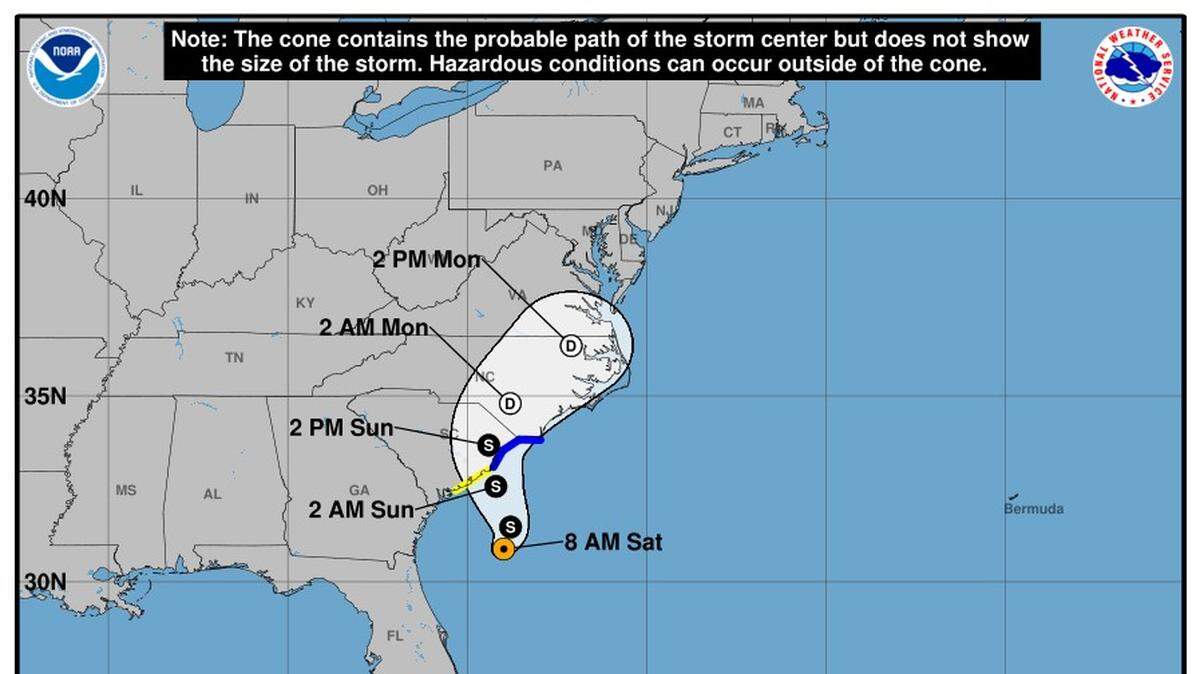
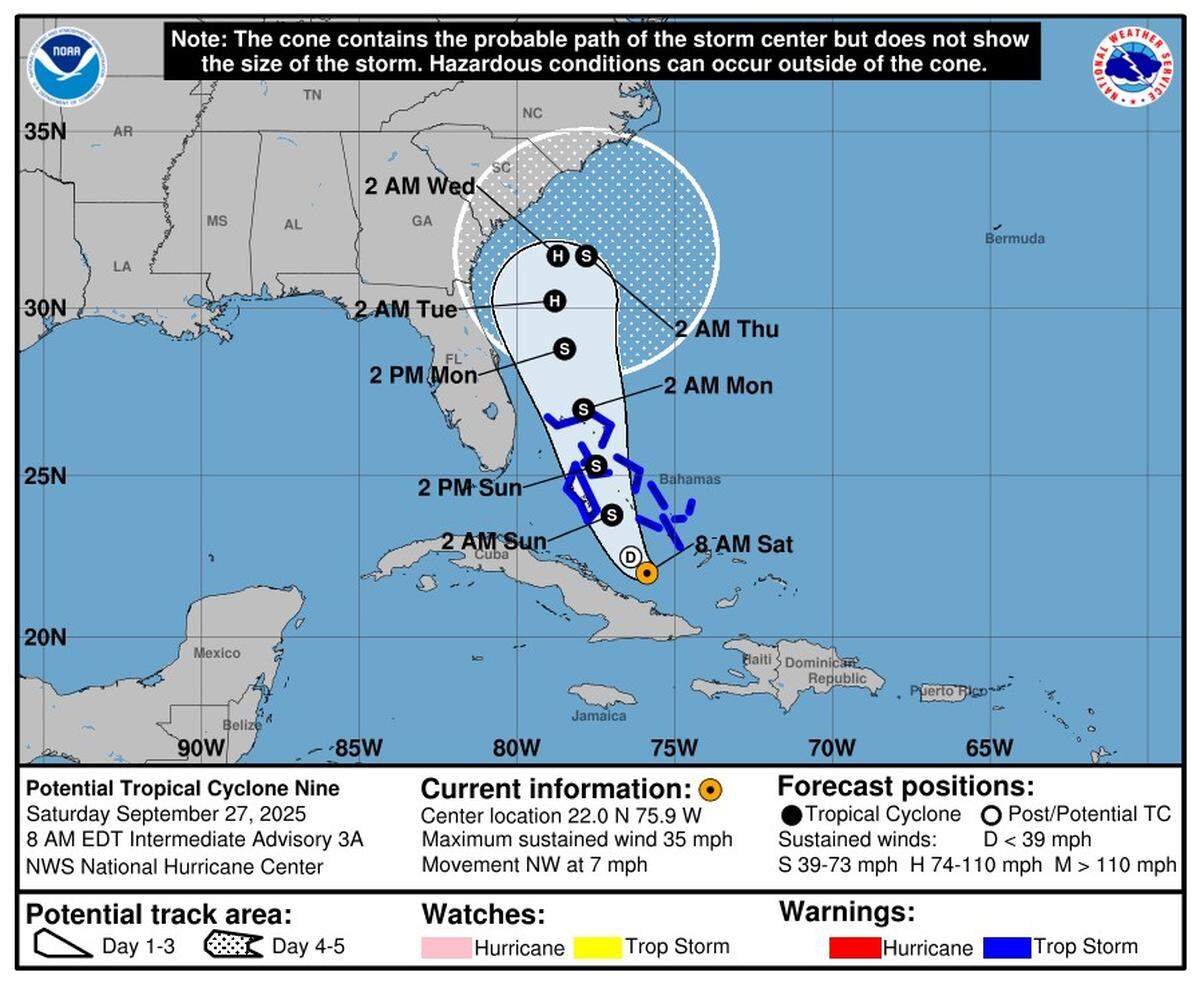
The cone of uncertainty refers to the forecast cone that the National Hurricane Center produces for tropical cyclones, including tropical depressions, tropical storms and hurricanes.
The cone, which factors in data from previous years, shows the probable track of a cyclone’s center. The forecast track forms a cone shape because meteorologists have more certainty about where the storm could be in the more immediate future, compared to several days out.
So far this year, a portion of North Carolina has been within the forecast cone for 12 days.
Why has NC been within the cone of uncertainty?
The number of days North Carolina has remained within the forecast cone is relatively high this year because there has been more tropical activity in the main Atlantic basin, compared to the Gulf of Mexico, said Clay Chaney, a meteorologist with the National Weather Service office in Greenville-Spartanburg.
According to the forecast office’s social media post, the Gulf Coast states typically have the highest number of days in the cone.
Does extended time in the cone of uncertainty affect NC emergency response?
Because the cone of uncertainty maps a storm’s potential path, but not its impact, North Carolina Emergency Response does not change its planning efforts if the state is within the cone, Justin Graney, chief of external affairs and communications for N.C. Emergency Management, said in an email to The News & Observer.
The state’s planning, preparations and deployment of resources depends on a storm’s expected impacts and needs of local emergency management agencies and first responders.
“While it is easy for North Carolinians to experience fatigue in seeing regular hazardous weather forecasts, like we have this year, it is important to North Carolinians resist the urge to let their guard down and to make sure they are informed, have plan, and have a disaster kit at home,” Graney said in an email.
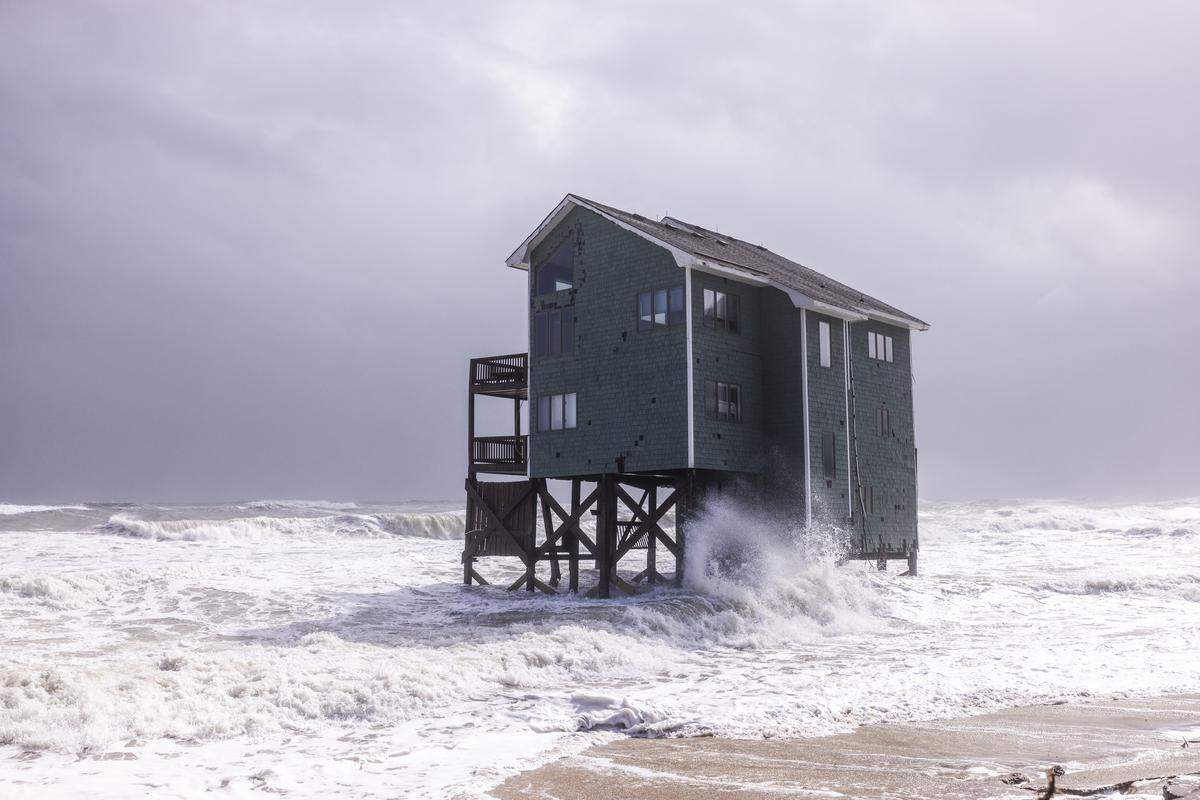
Tropical Storm Chantal, which made landfall in South Carolina, traveled through North Carolina, dropping more than 10 inches of rain and causing record river flooding in some places. And unnamed storms, such as the nor’easter that arrived at the coast around mid-October, caused ocean overwash that led to closures of NC-12.
When is hurricane season?
The official Atlantic hurricane season does not end until Nov. 30.
Forecasters from the National Oceanic and Atmospheric Administration predict that there will be between 13 and 18 named storms this year, including five to nine hurricanes and between two and five major hurricanes.
There have been 13 named storms so far, including hurricanes Erin, Gabrielle, Humberto, Imelda and Melissa. Four of them, Erin, Gabrielle, Humberto and Melissa, intensified into major hurricanes.