First frosts come later, last frosts come earlier than decades ago. What it means.
AI-generated summary reviewed by our newsroom.
- First fall frosts in central North Carolina occur about one week later than decades prior.
- Last spring frosts shift earlier by roughly one week, extending the growing season.
- Longer frost-free periods may enable double cropping but increase weather risk.
Don’t have a Halloween costume yet, or six pounds of mini candy bars for trick-or-treaters?
If you haven’t even slurped a pumpkin latte this season, maybe it’s because it doesn’t feel like fall until the first frost, and that autumnal time-marker has been gradually migrating to later in the year.
The National Weather Service has issued its first frost advisory for fall 2025, calling for the possibility of light frost across much of central North Carolina Friday and Saturday nights, Oct. 24 and 25.
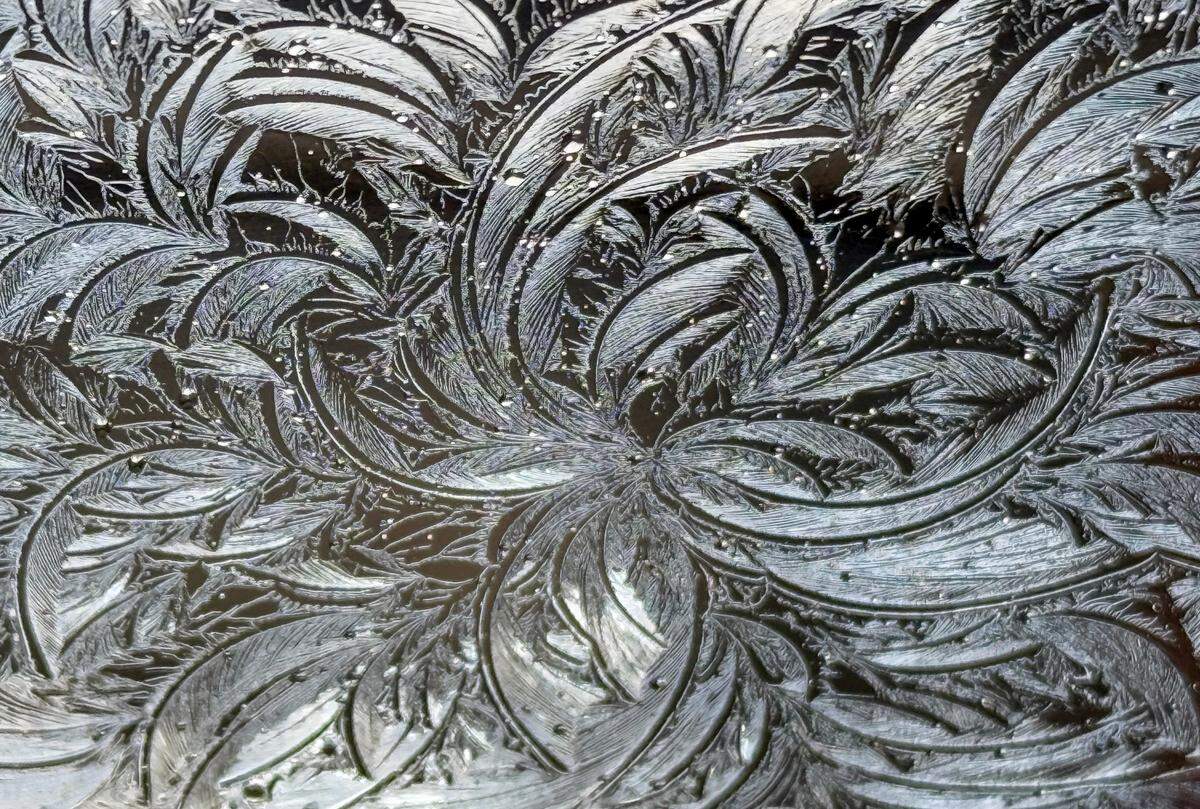
That fits with first-frost dates of the past 15 to 30 years, but is about a week later than first frosts of 30 to 60 years ago.
Meanwhile, the last frost going from winter into spring is trending earlier by about a week.
That means the frost-free period of the year — the growing season for farmers, the mowing season for people with well-kept lawns — has been elongated by a total of about two weeks over the past two to three decades.
“In the 1980s and into the ‘90s, we always used Easter and Halloween as the landmarks for the last spring freeze and the first fall freeze,” said Corey Davis, assistant state climatologist.
Davis, who sorts weather data like baseball announcers slice batting stats, says that for Raleigh, from 1965 to 1994, on average:
- The last spring freeze was on April 9.
- The last spring frost was around April 24.
- First fall frost was around Oct. 17.
- The first fall freeze was Oct. 27.
In the 30 years since, from 1995 to 2025, the averages have shifted this way:
- The last spring freeze is around April 2.
- The last spring frost is now around April 15.
- First fall frost is around Oct. 25.
- The first fall freeze is around Nov. 3.
What’s the difference between a frost and a freeze?
A frost, which is possible this weekend, differs from a freeze in temperature and duration, Davis said.
Frost can happen when temperatures are 32 degrees or lower for an hour or two, he said, causing small bits of ice to form on the surface of a plant, especially the leaves. It’s enough to damage the leaves and tissues but not enough to seriously damage the plant itself.
“It’s like freezer burn,” Davis said.
A freeze is sustained over several hours when temperatures at ground level are below freezing. A freeze causes more serious and more lasting damage to plants, even killing some young ones.
The tricky part about predicting frosts and freezes, Davis said, is that the weather service’s instruments measure temperature at 6 feet above the ground, and Davis said temperatures are several degrees lower closer to the ground.
So anytime the temperature shows below about 36 degrees at the sensors, Davis said, it can be 32 degrees right at ground level. And if it’s 32 degrees at the sensors, it’s likely well below freezing at the ground.
Does it matter if the growing season is getting longer?
Davis said the trend toward a longer growing season could be seen as further evidence of a warming climate, which most scientists attribute in part to the heat-trapping process of burning fossil fuels. While Central North Carolina finally got some snow in January 2025, there also were summery, 80-degree days in November 2024 and in February of this year, when it should be much cooler.
Major crops grown in North Carolina, including corn, soybeans, peanuts and tobacco, mostly have been harvested before the first freeze. Harvesting sweet potatoes, cotton and Christmas trees continues into the fall.
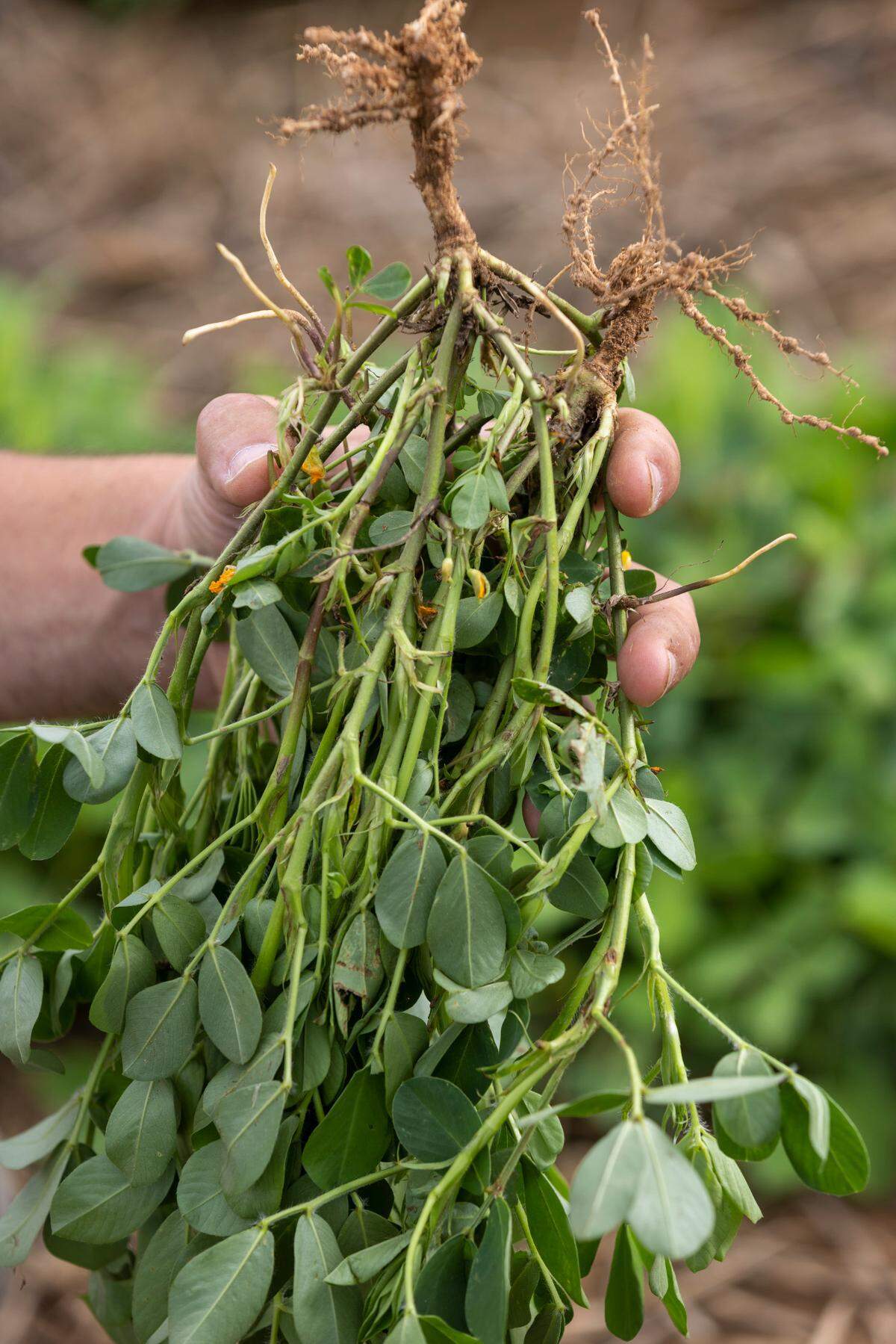
But Davis said that if the growing season continues to lengthen, North Carolina farmers might be able to plant “double crops” by harvesting one and then planting another.
While that could increase productivity and profitability, Davis said, it would come with risks, such as late freezes and early frosts that defy the long-term trends and can take out a month’s worth of work and costly investment.
“In Georgia and Florida, growers are already double-cropping,” Davis said.
“But then the weather in between doesn’t always cooperate. If you start relying on two crops for your income, and then you have a lot of rain in the spring, and then not enough in the fall, you could run into trouble.”
Speaking of not enough rain
Davis said there’s another trend revealed by the data.
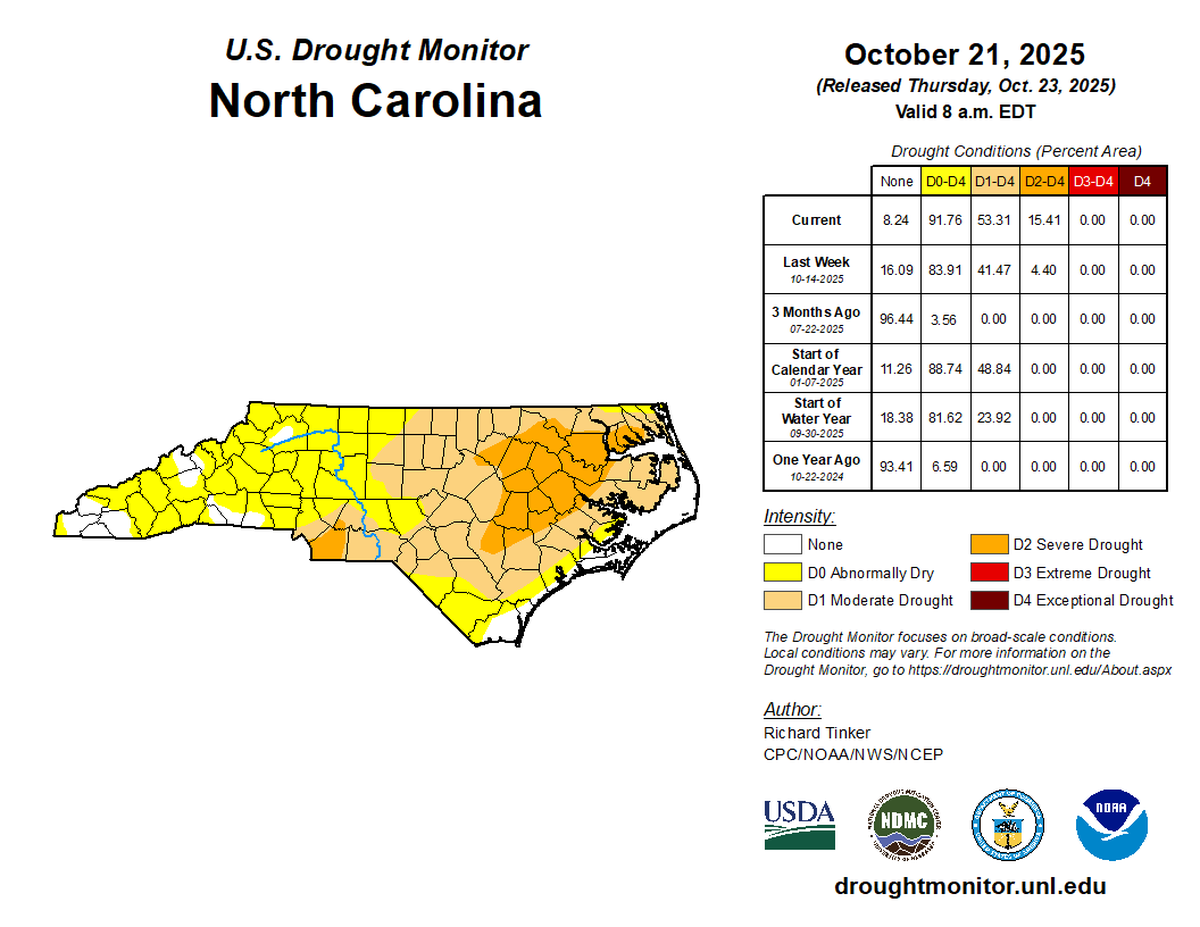
“It’s hard to say yet if this is climate change or just bad luck, but we have had drought for five years in a row in the fall.”
In North Carolina, Davis said, “It’s feast or famine. We get doused by hurricanes or we get drought, and sometimes we get both of those in the same season.”
As of Thursday, Oct. 23, the National Oceanic and Atmospheric Administration’s drought map shows nearly 92% of North Carolina’s land area is abnormally dry or in drought. That’s an increase from the previous week’s report.
This story was produced with financial support from the Hartfield Foundation and Green South Foundation, in partnership with Journalism Funding Partners, as part of an independent journalism fellowship program. The N&O maintains full editorial control of the work. If you would like to help support local journalism, please consider signing up for a digital subscription, which you can do here.
This story was originally published October 24, 2025 at 10:30 AM.