Raleigh could see northern lights again soon. Here’s when to look up
AI-generated summary reviewed by our newsroom.
- NOAA forecasts a severe geomagnetic storm Wednesday; aurora may appear widely.
- Two coronal mass ejections reached Earth and a third CME is expected midday Wednesday.
- The best time to view is after dark: Face north, and avoid city lights.
Some people across the Triangle spotted aurora displays in the sky Tuesday night, Nov. 11.
Those northern lights could appear again.
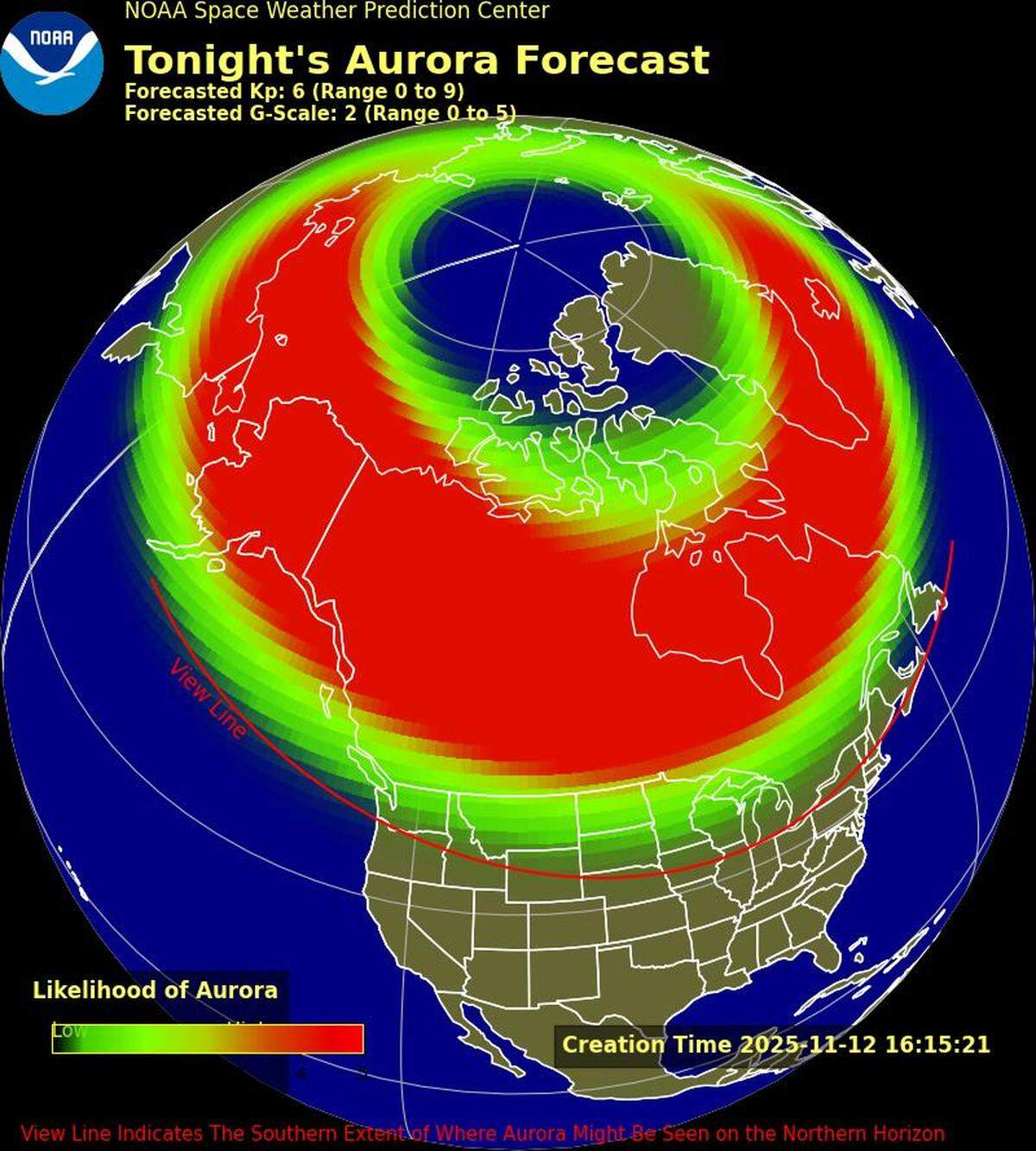
The National Oceanic and Atmospheric Administration’s Space Weather Prediction Center is expecting severe geomagnetic storm conditions Wednesday, Nov. 12. Those geomagnetic storms can make northern lights more visible and disrupt electrical grids and GPS communications.
Two coronal mass ejections, which are large explosions of plasma and magnetic field from the sun, reached Earth on Tuesday, and the aurora was visible over much of the U.S.
Another coronal mass ejection is expected to reach Earth around midday Wednesday, according to the Space Weather Prediction Center.
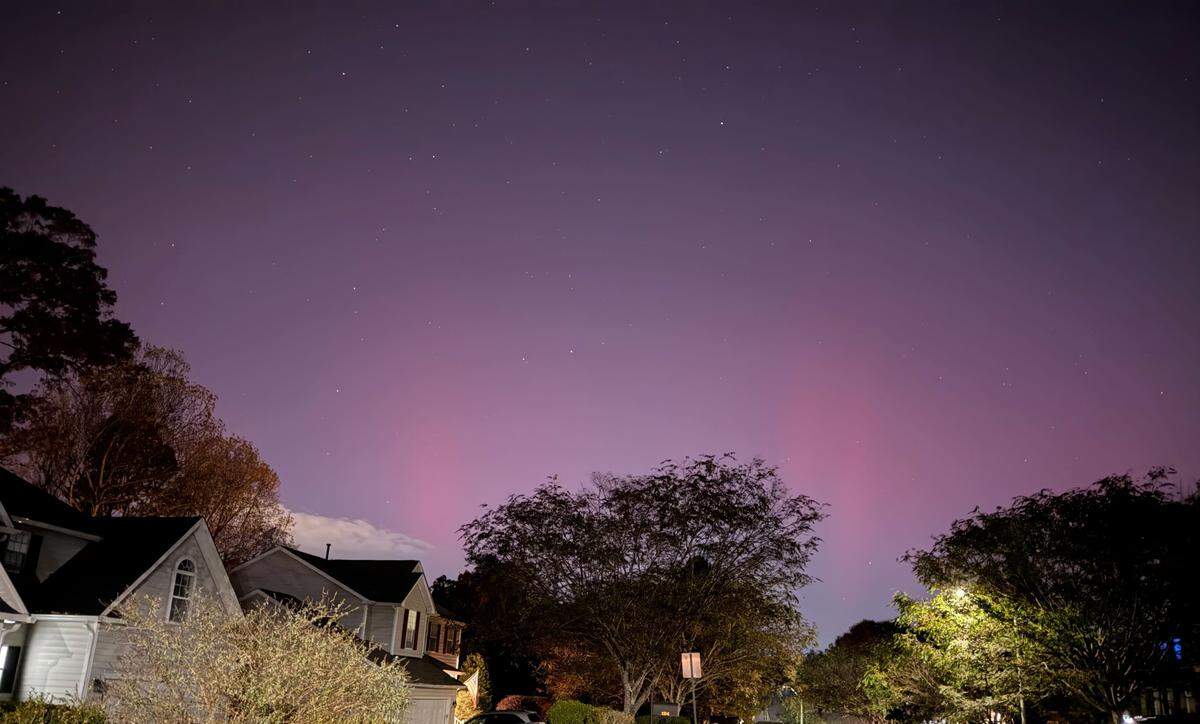
When coronal mass ejections disrupt the Earth’s magnetosphere, which is the area around the planet controlled by its magnetic field, it causes a geomagnetic storm. The particles ejected from the sun interact with gases such as oxygen and nitrogen and cause the colors known as northern lights or aurora.
The aurora expected Wednesday could become visible over much of the northern half of the U.S., even as far south as Alabama and northern California, according to the Space Weather Prediction Center.
Stronger geomagnetic activity makes auroras more intense and more visible farther south in the Northern Hemisphere, The News & Observer previously reported. Under the right conditions, a person can view an aurora that as far as 600 miles away, according to the Space Weather Prediction Center.
How to see the northern lights
The Space Weather Prediction Center offers several tips for viewing the aurora:
- The best time to see the northern lights is at night, when it is dark. Look north.
- With fewer city lights around, it will be easier to see the lights.
- A full moon diminishes how bright the lights appear. The moon is in a waning crescent phase and is 47% illuminated, according to space.com.
- The best timing is within an hour or two of midnight, between 10 p.m. and 2 a.m.
Sometimes, a camera lens is better at capturing the aurora than the naked eye. Using a smartphone, set the camera to night mode. Another option is to manually adjust the exposure settings, and hold the camera still.