
Don't get throttled. NC needs rules to protect internet users.
When you picked up your smart phone this morning, you likely checked Facebook, perhaps laughing at the latest sketch from Stephen Colbert or Jimmy Fallon on YouTube. Perhaps you've binge-watched episodes of Stranger Things or The Crown on Netflix.
While using your laptop, you may have checked into a political message board, one that features potentially controversial points of view. If you are a small business owner, you could have updated your company’s website, booked a new client, or launched a new product or service. But all of these practices that we take for granted may be threatened when net neutrality rules expire in just a few weeks.
Without net neutrality rules, Internet Service Providers (ISPs) could choose to block content that they find objectionable. Or they could slow down competing streaming video services like Netflix or YouTube. Or they could create internet fast lanes, which would allow larger companies to pay more for faster service, a move that would make life difficult for smaller businesses to compete.
Imagine being a painter or contractor. If a potential client can’t get to that business owner’s website within a few seconds, they move on. If that business has to pay more for access, they could have to increase their prices. In both cases, the small business owner would be punished. In communities with just a single broadband provider, this could prove to be more than a mild inconvenience. It could make the difference between your business failing or succeeding.
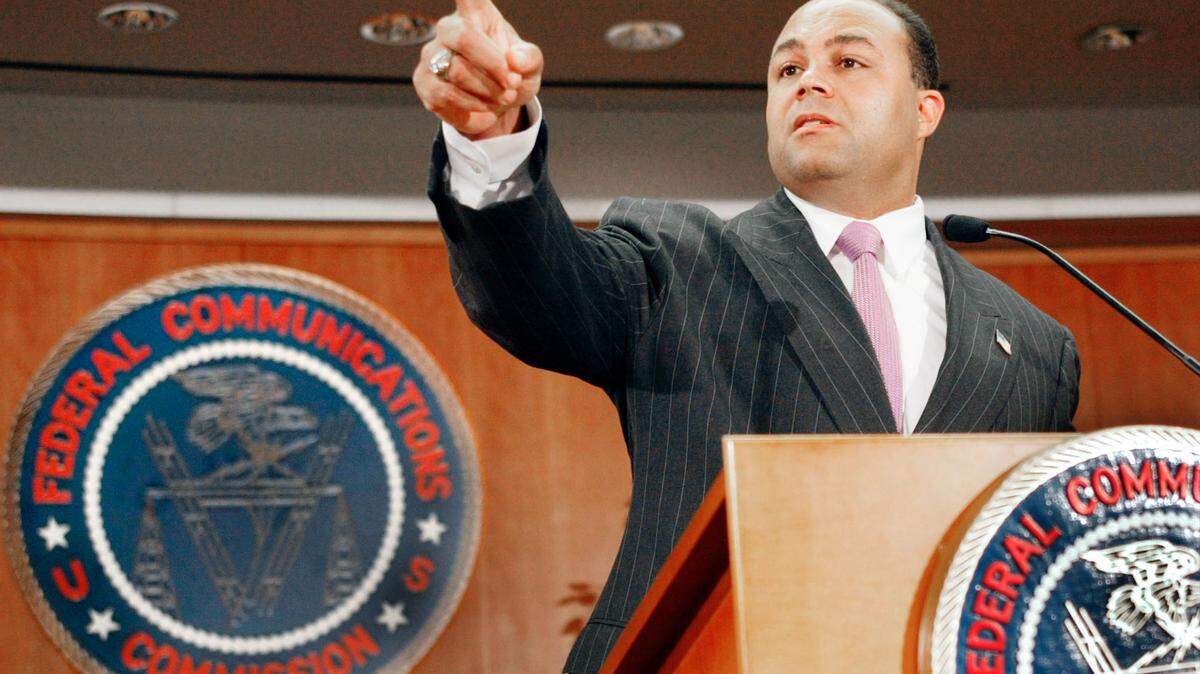
While some have claimed that net neutrality protections are unnecessary, history tells us otherwise. In North Carolina in 2005, Madison River Communications, a small ISP based in Mebane, blocked the Internet telephone service Vonage. Vonage filed a complaint with the Federal Communications Commission, then under the leadership of George W. Bush appointee, Michael Powell, and the FCC sanctioned Madison River, which was forced to pay a small fine and to restore consumer access to Vonage.
Similarly, in 2012, Verizon was caught blocking people from using free online tethering applications, forcing their customers to pay $20 per month to turn their cell phones into mobile hotspots. More recently, in 2017, Verizon was accused of throttling — the intentional slowing or speeding of an internet service — when consumers reported that videos from Netflix and YouTube were slower than usual. Verizon attributed this to “network testing,” but without net neutrality protections, these practices could become common.
We also cannot rely on competition between ISPs. For most residential consumers, there is no meaningful choice when it comes to broadband providers. Only 12 percent of North Carolina’s rural residents have any choice when it comes to broadband internet access, creating a digital divide that would only be exacerbated if net neutrality principles are revoked.
Net neutrality protections haven’t officially expired yet. But the clock is ticking. The FCC revoked net neutrality rules in December and Congress has until April 23 to step up and reverse this unpopular decision. And although the vast majority of U.S. voters—approximately 80 percent according to a recent poll—support net neutrality, Congress seems unlikely to act. Net neutrality legislation is currently stalled in the Senate, and House has not yet put forth a bill.
This leaves it up to individual states to act. The easiest solution involves the use of state contracts. States could issue a decree stating that they will not do business with ISPs that violate net neutrality.
In a state like North Carolina, where we are still expanding broadband service to rural communities, this provision could place pressure on ISPs to follow net neutrality guidelines. Washington and Oregon have led the way, passing the first state laws that would reinstate net neutrality rules. Several other states, including Vermont, Hawaii, Montana, New Jersey, and New York have used executive orders.
But a legislative approach would carry even more weight. North Carolina has an opportunity to take the lead on this issue. Passing net neutrality rules will send the message that our state welcomes small businesses and technological innovators and that it wants to provide opportunities to succeed for all of its citizens across the state.
This story was originally published April 12, 2018 at 8:22 AM with the headline "Don't get throttled. NC needs rules to protect internet users.."