
What? Why should we get the numbers on Medicaid expansion?
Republicans in the state Senate pride themselves on being the adults in the room. They're cool-headed numbers crunchers, often with a business background, who set aside emotion, study the data and make the responsible decision for the taxpayers of North Carolina.
Which makes their recent decision to not study Medicaid expansion a curious one — almost as if a political impulse were getting in the way of making a rational decision.
Under the Affordable Care Act, the federal government will pay for 90 percent of the costs of expanding Medicaid to cover people in households with incomes at or below 138 percent of the federal poverty level. States pay the other 10 percent.
Virginia recently became the 33rd state to expand coverage. Virginia Republicans had rejected previous efforts to expand Medicaid, saying the program's costs were unsustainable. But this year several Republicans joined with Democrats to pass a budget including expanding the health care program for the poor.
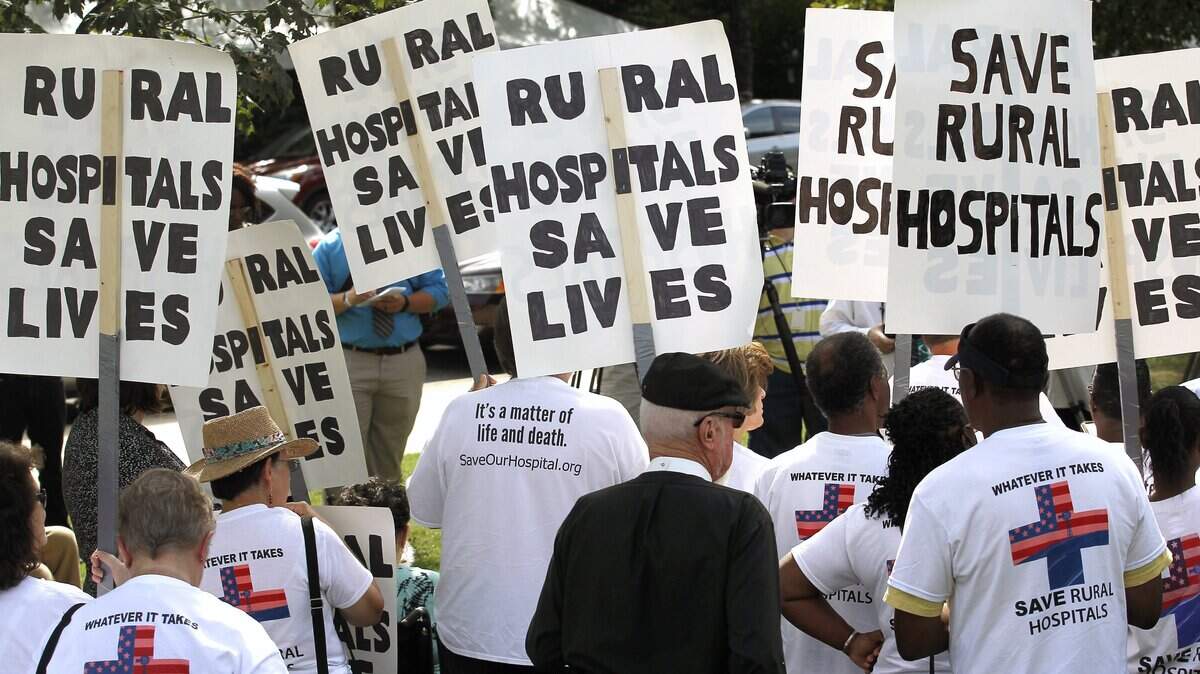
States have had this option since 2014. Remarkably, as best we can tell, neither the legislative nor executive branch in North Carolina has conducted a dispassionate, thorough analysis of the costs and benefits of Medicaid expansion. That would include how Medicaid expansion would benefit financially troubled rural hospitals, who labor under the weight of unpaid bills.
N.C. Democrats and Republicans have argued for years without doing the analysis that should have been the starting point for discussion after the Supreme Court decided in 2012 that states could decide if they wanted to expand Medicaid.
So it was encouraging when a bipartisan coalition in the state House voted recently to do what should have happened years ago. The House agreed that the Department of Health and Human Services should conduct the study and report to a legislative committee by Oct. 1.
But in the Senate, Sen. Ralph Hise, a Mitchell County Republican, convinced his colleagues to remove the provision. Hise said the legislature's program evaluation committee should be in charge of determining what studies are needed. "We want to get through a (current Medicaid) waiver before we study changes to the waiver," he said. "I think that will come, but this interim is not really the time for it."
Obamacare was signed in March 2010. A child born then would be entering the third grade. It's not time yet?
That legislative leaders have shunned this basic responsibility doesn't mean others have. Mark Hall, a law professor and director of the Health Law and Policy Program at Wake Forest University, has produced a thorough assessment of states that have expanded Medicaid.
"The strong balance of objective evidence indicates that actual costs to states so far from expanding Medicaid are negligible or minor, and that states across the political spectrum do not regret their decisions to expand Medicaid," he concluded recently. "Claims that the costs of Medicaid expansion have far exceeded expectations are overstated, misleading, and substantially inaccurate, based on a review of the credible evidence, from either academic or government sources."
Hall said the probable costs appear to be low in comparison with the economic and public health benefits of expansion.
No cost-benefit analysis is perfect. Assumptions and projections must be made; data can be incomplete. Factors difficult to measure can come into play. The analysis is a guide to decision-making, not an omniscient tool.
But the Senate's decision to kick the can down the road is discouraging. As the Senate dawdles, rural hospitals struggle, many teetering on the edge of survival, hoping that they can get paid for the indigent care they provide but wishing also that the adults in the legislature would adopt a more responsible approach for making decisions.
This story was originally published June 20, 2018 at 10:39 AM with the headline "What? Why should we get the numbers on Medicaid expansion?."