
Leaders eat last (and other lessons from my teenage son)
As a journalist, I’ve truly enjoyed my front row seat to history over the years. I’ve been there when big things happened and now have enough “historic knowledge” to be able to recognize cultural shifts as they develop. The most concerning trend I’ve seen lately is not the near-hysterical political polarization of recent years, but rather the disintegration of basic leadership skills, not just in public figures, but in our society as a whole.
Regardless of where one falls on the political spectrum, leadership is not about messaging or about who is loudest, who makes the biggest display for cameras, or who is quickest with a lightening-rod tweet. It is about making the most efficient use of resources, recognizing the value in others’ contributions to a common goal, and knowing how and when to pick battles.
We need to get back to basics on real leadership.
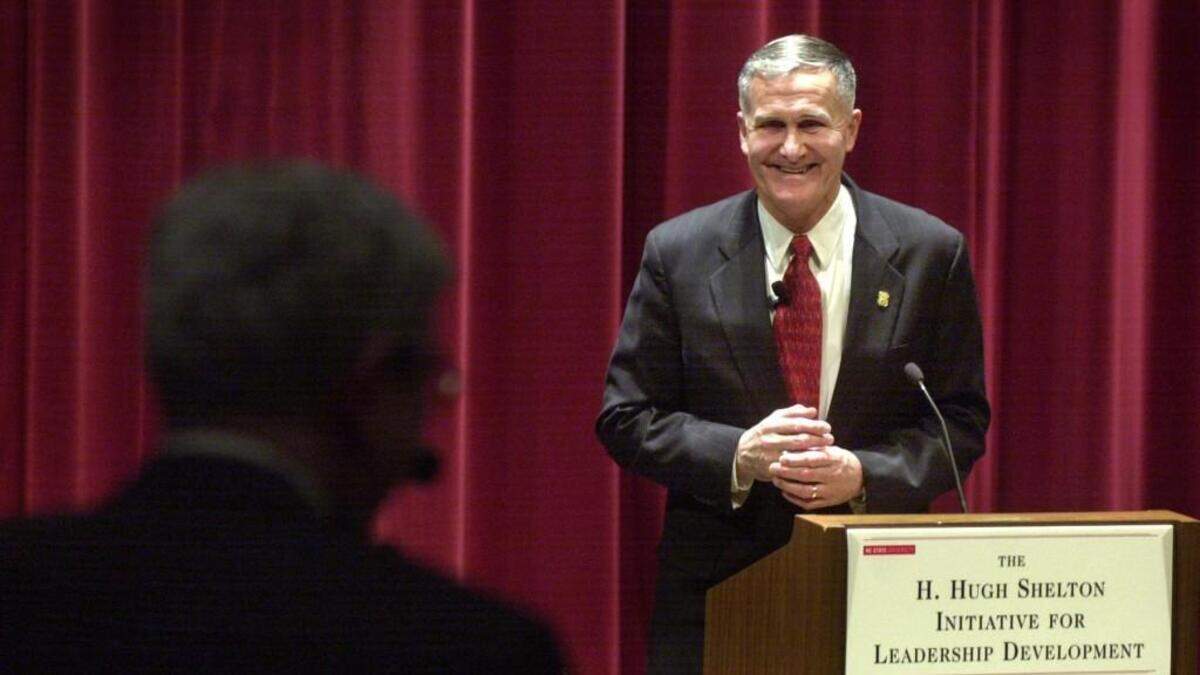
My faith is being restored as I watch and learn from the next generation of leaders being trained in programs like the Shelton Leadership Challenge at NC State. Founded by General Hugh Shelton, former Chairman of the Joint Chiefs of Staff, the program returns to core functions of servant leadership while teaching that everyone in a group has something to contribute, and sometimes the quietest among us are the ones developing the best solution to a problem.
The idea of “servant leadership” is sometimes mocked by those who don’t understand it. But perhaps that is the problem; we’ve forgotten what a servant leader is. My son, a rising high school senior, has discovered it and found his voice through the Shelton program. Recently, I was lucky enough to have his complete attention for an evening while he shared this transformational experience:
Leaders eat last. Leaders are responsible for promoting the well-being of those they lead, even if it is at their own expense.
Do what you say you’re going to do. Ask questions and ensure buy-in by Involving people in the planning and problem-solving process.
Challenge the process. Learn from the past, but remember that growth and innovation comes when we question the status quo and honor risk takers.
Inspire a shared vision. Listen to those who may be quieter. They are the ones observing and thinking.
Love what you do. Foster high expectations in the group you lead and always say “thank you.”
The young people in this program are considered the oldest of Generation Z, the cohort born after Millennials between roughly 1998 and 2012. Most don’t know a time without smart phones. In my experience, they generally view social media suspiciously – although continuously – and the older ones among them use their phones a tool, not a crutch. Many of them are returning to active, rather than passive, experiences like hiking, sports, youth groups, and face-to-face conversations. They are well-read, but they also don’t believe everything they read.
I am looking forward to seeing what this next generation of leaders brings to the table. I’m hoping they bring us back to the basics.
This story was originally published July 20, 2018 at 2:24 PM.