
At the latest hog-waste trial, testimony counters hog industry
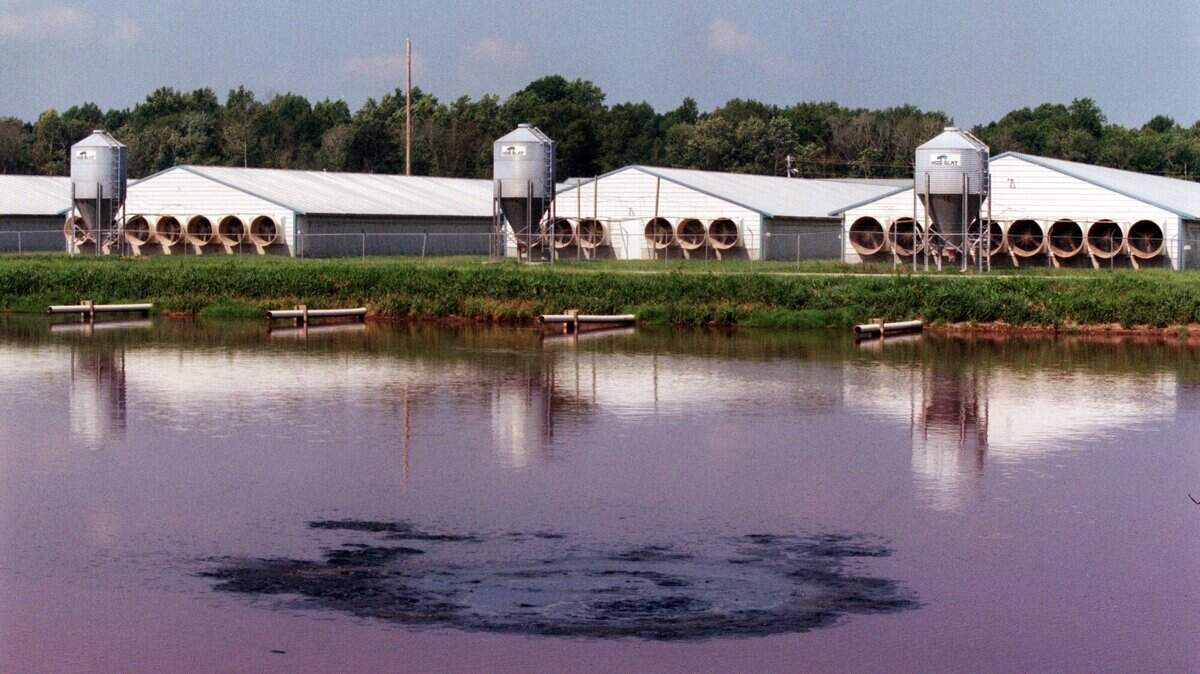
At the current hog waste nuisance trial in Raleigh — trial No. 3, if you’re counting — the hog industry got pounded by a pound cake.
Or rather by a pound-cake baker — Wesley Sewell, a white-haired retiree with a Hulk Hogan-style mustache.
Sewell, a former police officer and firefighter, lives near a Pender County hog farm that is raising hogs for Murphy-Brown/Smithfield Foods, the world’s largest pork producer. The company is being sued by six of the farm’s neighbors, who say the farm’s hog waste fills the air with a terrible odor, brings swarms of flies and attracts buzzards.
Sewell, is not a plaintiff, but a witness subpoenaed by plaintiffs. He was testifying in federal court in Raleigh about the nose-wrinkling reality of living near an industrial hog farm when he brought up the pound cake. He said that he noticed the smell was stronger than at his home when he delivered one of his made-from-scratch cakes to a neighbor who lives even closer to the hog farm.
Sewell then went on a riff about how he makes about 30 pound cakes around Christmastime and hands them out as gifts. He makes a wide variety of them, including “sweet potato surprise” pound cake. Asked what the surprise is, Swell said, “it doesn’t taste like sweet potato pound cake.”
Judge Earl Britt asked if the ingredients were a trade secret. Sewell said it was a secret family recipe.
It was a funny and unexpected exchange about a sweet dessert in the midst of a trial about sour smells, but it clearly amused the jury and cast a homey light on Sewell and his neighbors living along Piney Woods Road.
More importantly, Sewell’s testimony countered the defense offered by hog farmers. The farmers and groups that support industrial hog farming contend that some two dozen nuisance suits were filed only after out-of-state lawyers told hog-farm neighbors that they could gain a substantial monetary award if they sued and won.
But Sewell is not seeking compensation, just relief. He owns two homes, the one on Piney Woods Road and another on Oak Island. He and his wife stay in their Pender County home to care for his wife’s elderly parents, who live nearby.
His testimony on what he and his wife have endured was specific and convincing. He found the home online in a foreclosure sale and didn’t do much to investigate the neighborhood. He didn’t know there was a hog farm nearby until one day he caught a whiff and thought, “Whoa, where did this come from?”
He found out soon enough. There is an open hog waste lagoon nearby that collects feces and urine from more than 7,000 hogs. When it gets full, the farmer sprays the liquid waste over fields on the hog farm.
As an emergency first responder, Sewell testified that he has smelled burned and decomposing bodies. He said the odor of hog waste ranks just below. “I can deal with some really bad smells,” he said, but sometimes he surrenders. “There are times when we just don’t want to be outside,” he said.
Inside, he keeps an air freshener in every room. He drinks bottled water, he said, because his well water “has an odor. I don’t trust the water.”
Two plaintiffs also testified Wednesday, but it was the engaging, consistent testimony of the former police officer that likely hurt the defense most.
And there isn’t much of a defense. Smithfield Foods lost the first two nuisance cases and juries awarded a total of $75 million to the plaintiffs, an amount that will be sharply lowered by a state cap on such awards.
It’s baffling why China-owned Smithfield Foods is continuing to put its contract farmers through these trials. When cases are lost, the company has moved its hogs elsewhere, leaving the farmer with empty hog barns, debt and a lot of hog waste.
Smithfield should invest in better waste treatment technology. That would allow its contract farmers to be good neighbors. All Sewell wants is the hog waste odor to go away. For that, he’d might include the neighboring hog farmer in his next delivery of pound cakes.
This story was originally published July 20, 2018 at 9:30 AM.