
Police profiling of NC motorists must stop
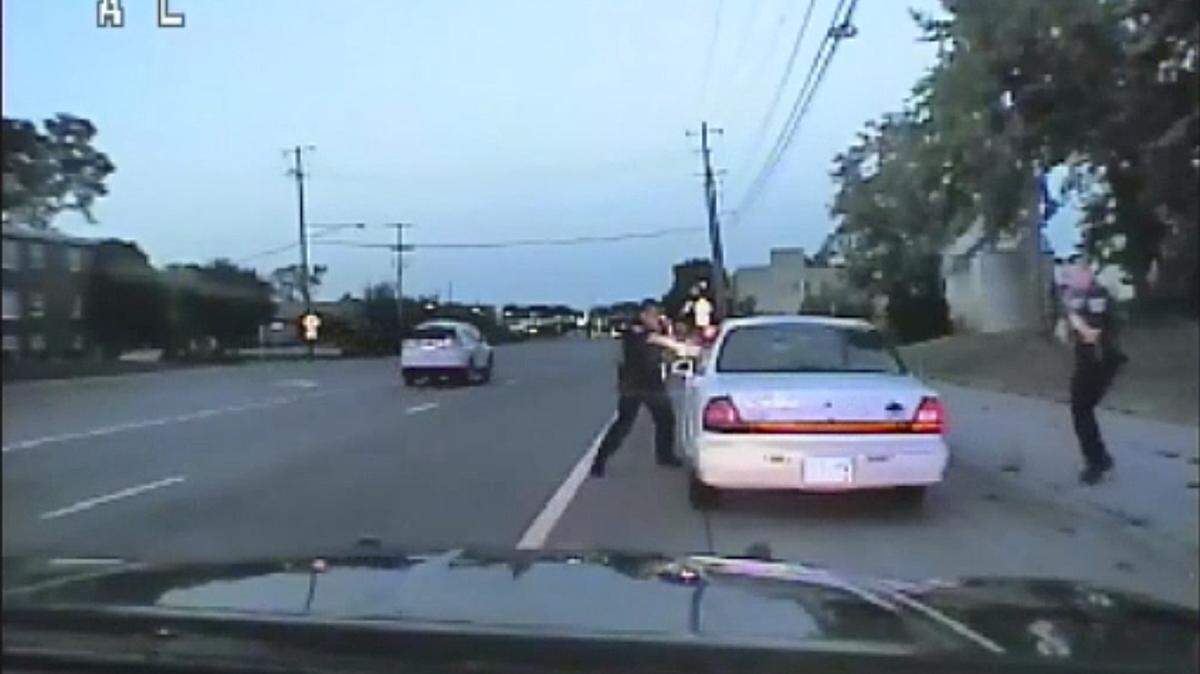
The police killing of Philando Castile during a 2106 traffic stop in Falcon Heights, Minn., drew nationwide attention after a livestream video made by Castile’s girlfriend went viral. Castile, a 32-year-old African American, was shot seven times by a police officer who thought Castile was reaching for a gun when he reached for his driver’s license.
The Castile case has become a powerful example of excessive use of force by police, but there was a footnote to the case that highlights another police abuse — the racial profiling of black motorists, especially if they are young men. Before that fatal encounter, Castile had been pulled over by police 46 times and accumulated more than $6,000 in fines. On the final stop, police pulled him over for a broken taillight because they thought he matched the description of a suspect in an armed robbery.
Castile’s real offense was “driving while black.” The injustice of such profiling is the focus of a new book by political scientists Frank Baumgartner, Derek Epp and Kelsey Shoub titled “Suspect Citizens.” It draws from a deep and rare database created by a North Carolina law that requires police across the state to report the details of every traffic stop, including the race of the motorists.
The law was adopted in 1999 to apply to the N.C. Highway Patrol and amended in 2002 to include all but the smallest North Carolina police departments. Black state legislators pressed for the law — the first of its kind in the nation — in response to a 1996 News & Observer investigation of stops conducted by the Highway Patrol.
The law requires the state to issue periodic reports as data accumulates, but that mandate has been largely ignored, nullifying the value of the reporting. That failing prompted the authors to dig into the dormant data — reports on more than 20 million traffic stops since 2002 — and write “Suspect Citizens.”
Their analysis confirms the impression of many black motorists that they are treated differently by police. The researchers found that black motorists are twice as likely to be pulled over as white drivers. And once stopped, they’re twice as likely to be subject to a search. The increased frequency does not correspond with increased results. Searches of blacks are less likely to find contraband than searches of whites, the data show. Contraband hit rates were 36 percent for whites, 33 percent for blacks and 22 percent for Hispanics.
The cumulative effect of disproportionately stopping black motorists is unfair and demoralizing.
Baumgartner, a UNC-CH professor, said in an interview with The Washington Post, “Frequent stops for minor traffic violations, especially if followed by a request to search the vehicle, send an unmistakable signal to those who experience them that they are viewed more as potential suspects than as full citizens.”
The first step in correcting this disparity is to stop using traffic law as a pretext for fighting drug trafficking and other crimes. It’s discriminatory, ineffective and expensive to stop people for minor violations in the hope of finding evidence of some other crime. Instead, police should concentrate on responding to serious traffic violations — such as texting while driving, speeding, running red lights and drunken driving — without regard to race.
The second step is for the state to do what the law requires. It should look regularly at what the database reveals about trends in traffic stops and arrests. The trends tell a lot more than who is getting ticketed and why. They show where police efforts are concentrated and where bias — intentional or not — is shaping law enforcement.
This story was originally published July 31, 2018 at 5:17 PM.