
Sexual assault reports rise on college football game days
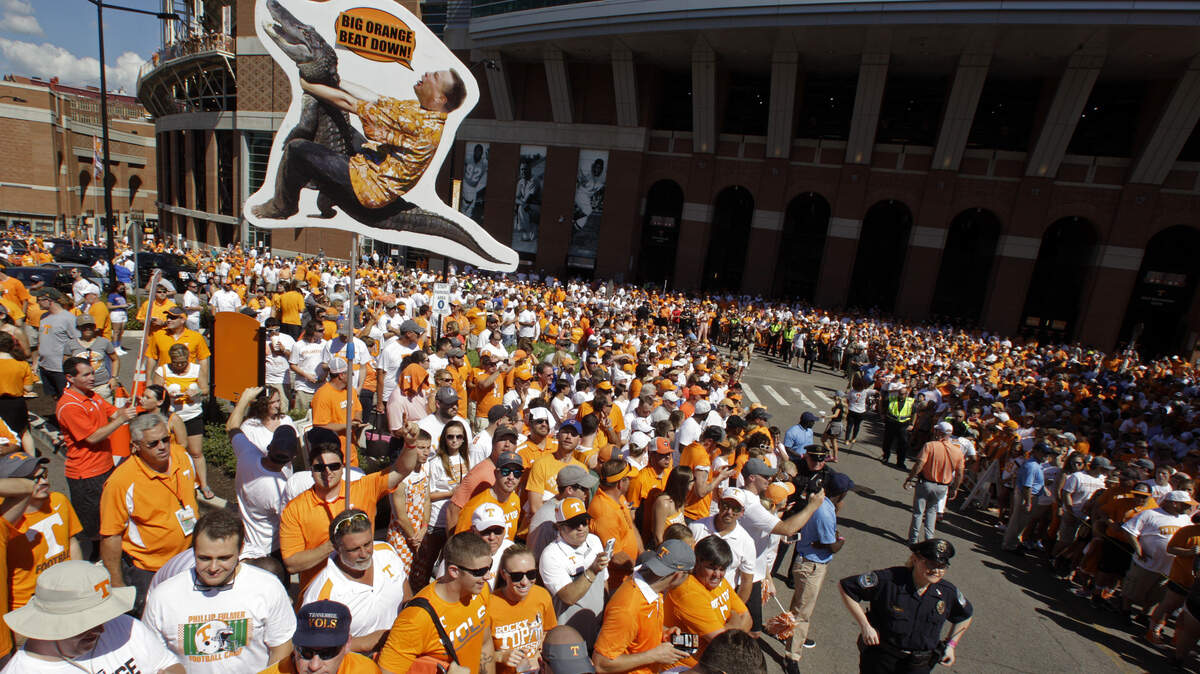
It’s already known that students drink and party more on college football’s big game days. We found in a recent study that reported sexual assault also increases.
We are all economists with a keen interest in the interplay between risky behavior, crime and health.
Our analysis suggests that this rise in reported sexual assault during big college football games is likely due to the increased partying and alcohol consumption that accompany them. The results reaffirm the need for prevention strategies to address the negative effects of the college party culture and the role that alcohol plays in it.
Sexual assault on college campuses has gotten increased attention in recent years. Much of the attention has been spurred by research, such as a 2009 study that found that nearly one in five female seniors at two anonymous large public universities reported being sexually assaulted since entering college. That study found that “most sexual assaults occurred after women voluntarily consumed alcohol.”
Numerous subsequent surveys have found similar victimization rates. They include a 2015 national survey that found 11.7 percent of student respondents from 27 universities reported experiencing nonconsensual sexual contact by physical force, threats of physical force or incapacitation since enrolling in college. The same survey says 10.8 percent of female students “experienced nonconsensual sexual penetration by physical force, threats of physical force, or incapacitation since enrolling in college.”
We wanted to ask how much college events that lead to more partying and alcohol consumption also increase reports of rape. We chose to investigate the effects of Division I college football games, since these events have been shown to intensify partying and drinking on and near college campuses.
For our analysis, we used daily reports of rape to campus and local police departments serving schools with Division I football programs over a 22-year period, specifically from 1991 to 2012. We were able to identify agencies serving 96 Division I schools.
Using these data, we estimated how much rape reports went up on game days over and above the number expected on the day of the week the game is played.
We found football games increased the rate of reported sexual assaults by 41 percent on home game days and 15 percent on away game days. The effects are larger for schools with prominent football teams and for big games, such as rivalry games and games against ranked opponents.
Like the alleged victims, many of the reported offenders were 17 to 24 years old. The effects are also larger for cases where the offenders were unknown to the victim, despite the fact that offenders are known to the victims in the majority of sexual assaults. These effects seem to be due to increased partying and alcohol, rather than through some other mechanism associated with watching football.
Our study also shows that drunkenness, drunk driving incidents, liquor law violations and public order offenses are also elevated on game days. Our results indicate that home games increase arrests for disorderly conduct by 54 percent, drunk driving by 20 percent, drunkenness by 87 percent and liquor law violations by 102 percent over two days.
Based on our results, we think it makes sense to take some of the revenue from big-time college sports, over $10 billion in 2017, to help address the rise in reported sexual assaults that accompany big college games. This could be in the form of prevention programs, victim support programs and research on which programs work best.