
Raleigh’s Catholic bishop seeks to reassure
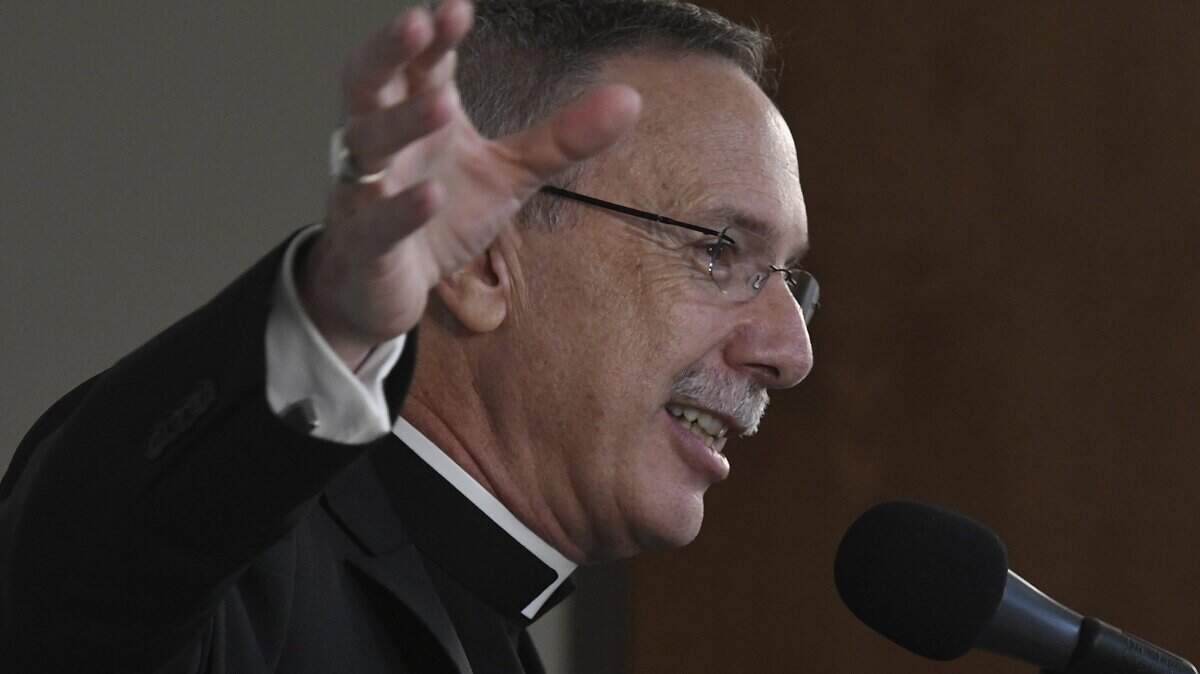
During a special Mass last Tuesday at Holy Name of Jesus Cathedral in Raleigh, Bishop Luis Rafael Zarama did not give his homily from the pulpit.
He gave it from his knees.
Kneeling in front of the altar and facing a congregation of nearly 700, the bishop asked for forgiveness, understanding and healing during a Mass of Reparation. In pews off to one side of the altar, more than 30 priests listened as their bishop apologized for priests who sexually abused children and the bishops who ignored or concealed those crimes.
“The person that you most trust failed and destroyed, in you, the beautiful opportunity to taste and see the goodness of the Lord,” he said.
The bishop did not discuss the causes of the crisis or the solutions. He said he felt the pain of victims and of all church members and urged them to have faith that God will heal the church. “We are living a Good Friday,” he said, “but Good Friday was not the end. We are waiting for that Easter Sunday.”
Rising from his knees, the bishop turned to address the priests. In a voice cracking with emotion, he said, “I tremble for you.” He told them, “It’s tough to preach today. Whatever we say is not good enough, but our mission is to not allow the people to lose hope. That is our mission. Don’t allow people to lose hope because Jesus is hope.”
Raleigh has not experienced the level of abuse disclosures that has convulsed dioceses elsewhere. But the sweeping and damning grand jury report released in August on six Pennsylvania dioceses has shaken the faith of many Catholics and brought an outpouring of letters and comments to the bishop and priests here. Of the 301 priests named in the Pennsylvania report, two — the Rev. William Presley and the Rev. Robert Spangenberg — had served in the Raleigh diocese in the late 1970s and early 1980s in Kinston, Newton Grove and Clinton.
In the Catholic liturgical calendar, the weeks outside of the seasons of Christmas and Easter are known as “Ordinary Time.” The term refers to the weeks being numbered or in “order.” But these days, Ordinary Time has taken on an ironic note, for the church is reeling through an extraordinary time.
In the wake of the Pennsylvania report, which found that more than 1,000 children had been sexually abused in cases dating back to 1947, attorneys general in New York and New Jersey have announced they are launching similar investigations. Last week, the German Catholic Church released the findings of an investigation that describe the cases of 3,677 children abused by more than 1,000 clergymen between 1946 and 2014. In Buffalo, N.Y., there were calls last week for the Buffalo bishop to resign over his mishandling of sex abuse claims made against clergy.
With his papacy becoming engulfed by the scale of the scandal, Pope Francis has called bishops from around the world to meet in Rome early next year to discuss how to confront the crisis.
The Mass of Reparation opened with the reading of petitions. One of them said in part, “We implore your spirit, O Lord, not only in seeking justice for those who have been robbed of their innocence, but also how we may foster and protect the dignity of those you have created and entrusted to our care.”
The Raleigh diocese is explaining to its members the protections put in place in the early 2000s to prevent and detect sexual abuse by the clergy.
On the evening of a somber day, Sept. 11, with a hurricane bearing down on the North Carolina coast, a small group gathered in the parish hall of Sacred Heart Church in downtown Raleigh to hear about those protections and discuss their church’s own disaster.
“I was a little disappointed more people weren’t there,” said Sister Anne Heath, a Sisters of Mercy nun and a counselor for Catholic Charities who attended. But she said the outreach must continue.
“I recognize the anger people have. I totally understand that,” she said. “I’m hoping they can direct that anger into reform.”
Barnett: 9191-829-4512, nbarnett@ newsobserver.com
Correction: An earlier version of this column incorrectly stated the number of victims identified in the Pennsylvania grand jury report. There were more than 1,000, not 3,000.
This story was originally published September 29, 2018 at 2:39 PM.