
Keep Raleigh’s Cameron Village bike friendly
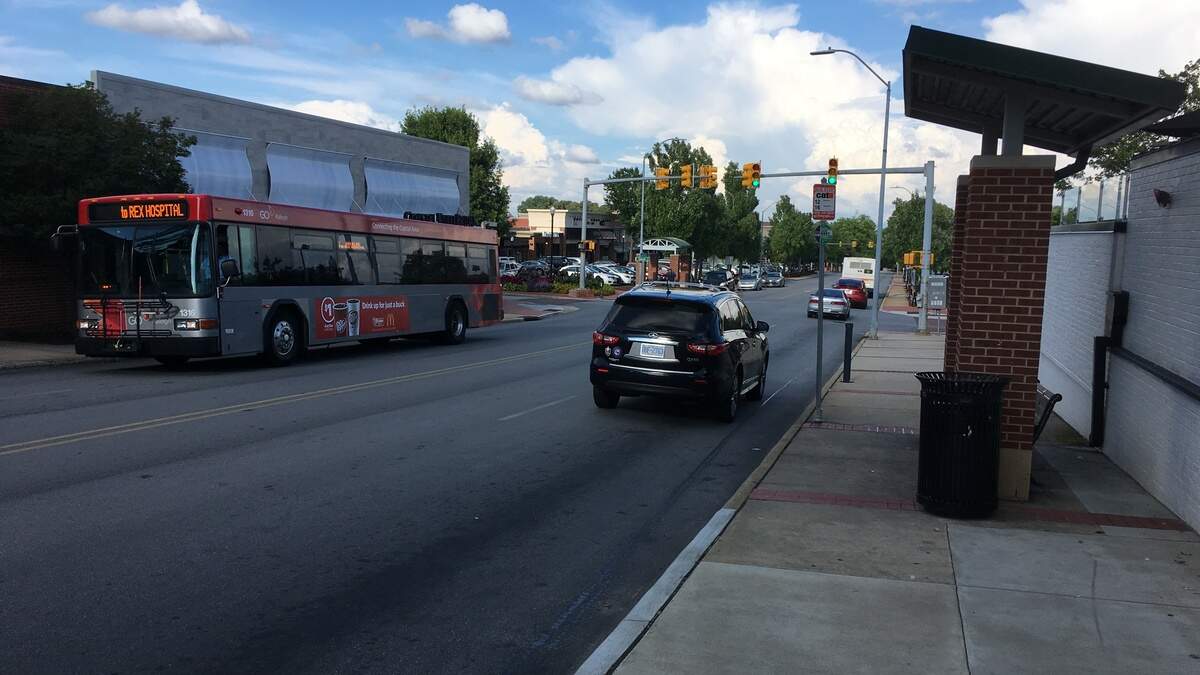
As Raleigh continues to grow, we need to be deliberate about how we design our streets. Indeed, as more and more people move to our area — and as pressure on our infrastructure increases — we need to build our roads to accommodate all modes of transportation, from cars and buses to bicycles and scooters.
That’s why it’s deeply disappointing that the City of Raleigh is presently on the verge of allowing a private business to hijack our transportation plan and dictate how we are allowed to use one of our own public streets.
For years, the road that runs through the heart of Cameron Village Shopping Center, Cameron Street, has consisted of four lanes. But months ago, when the road was repaved, the city wanted to implement a road diet to reduce the number of lanes down to three, with a left turn lane down the middle and bicycle lanes on either side.
However, the proposed plans were put on hold when the owners of Cameron Village, Regency Centers, objected.
Regency’s opposition to the Cameron Street road diet stems, in part, from an analysis by private consulting firm Kimley-Horn, suggesting that going down to three lanes could lead to congestion at peak evening hours, particularly during the busy holiday season. However, this is not the full story, as the analysis also concluded that, during the rest of the year, traffic would likely be minimally impacted. In the worst-case scenario, the analysis suggested that traffic would slow by only two seconds during a typical weekday. Moreover, the road diet could yield safety benefits, as the analysis showed that going down to three lanes could prevent anywhere from 8 to 25 percent of automobile crashes.
After months of waiting — and long after the paint for the temporary lane markings faded — the city has finally installed the new traffic pattern on Cameron Street. But, due to the push-back from Cameron Village, the installation is being treated merely as a trial run. Over the next couple months, the City will monitor traffic flow and congestion along Cameron Street to determine whether to make the new street design permanent come springtime.
As someone who frequently rides a bicycle for transportation — but is certainly no professional, lycra-clad “cyclist” — it’s encouraging that Raleigh is trying to design more streets with people, rather than cars, in mind. It’s wonderful, too, seeing bicycle lanes finally installed within Cameron Village because, given the number of people who ride bicycles in this part of the city, new lanes are sure to be appreciated and used.
According to 2017 data from the U.S. Census Bureau’s American Community Survey, the census tract adjacent to Cameron Village has one of the highest rates of bicycle commuting in all of Wake County. Nearly 8 percent of residents in the neighborhood west of Oberlin Road use a bicycle to get to and from work. For comparison, the average rate of bicycle commuting throughout the entire city is less than 1 percent.
Given the health, economic, and environmental benefits of bicycling, we should be making it easier, not harder, for residents to ride to major destinations such as Cameron Village. As such, the city should have stuck to their initial plan and installed the new traffic pattern along Cameron Street on a permanent basis, despite objections from private business.
Nonetheless, I support waiting to see the results of the trial run before drawing premature conclusions. Again, we need to be deliberate in how we design our streets and rely on an evidence-based approach at all times. I hope the owners of Cameron Village agree.
Brian Kurilla is a psychologist and freelance writer/blogger who is passionate about using data to promote positive change in society. He is a volunteer with Oaks & Spokes, a local bicycling advocacy non-profit, and he has lived in Raleigh with his wife and two sons since 2014.