
Remembering Rosanell – a tough foe of Jim Crow
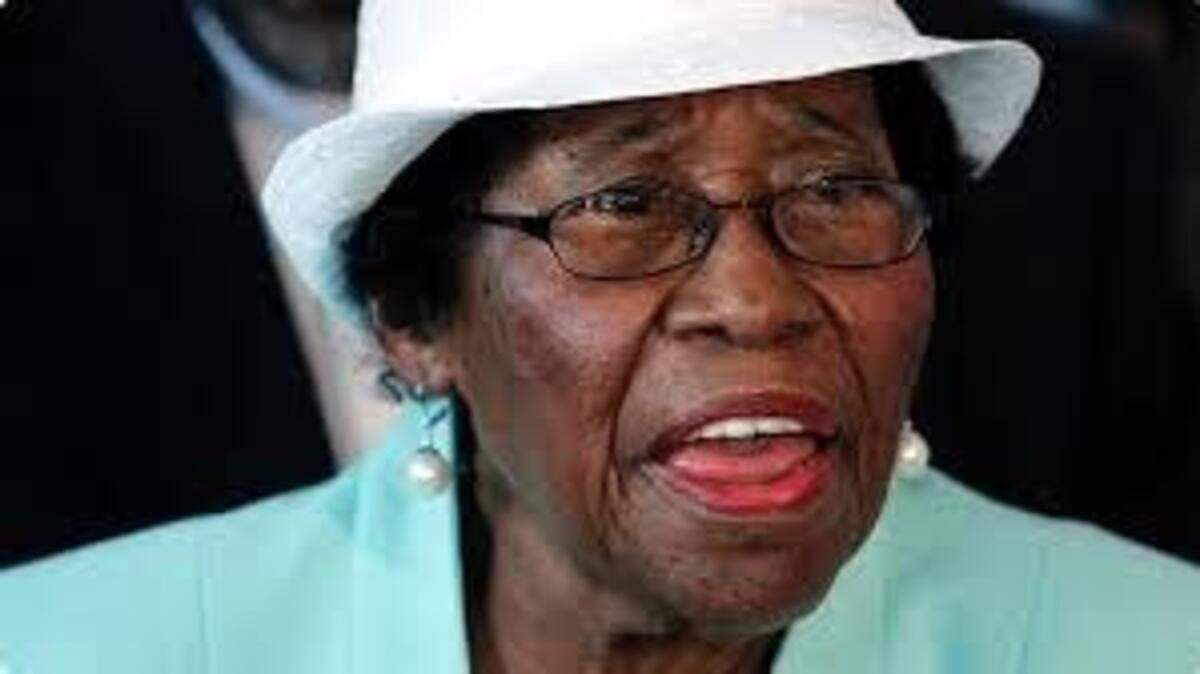
Civil rights hero Rosanell Eaton was buried Thursday in her Louisburg hometown where she spent her entire life. Rosanell’s story may not be well known, but her impact on the Nation will be felt for generations.
Born into the Jim Crow South, Rosanell’s upbringing was marked by segregated schools and cross burnings on her front lawn. Upon reaching voting age, Rosanell traveled hours by mule-pulled wagon to register to vote. When she finally arrived at the courthouse, the three white-male clerks bemusedly asked her to stand still and recite the Preamble to the Constitution, assuming she couldn’t possibly do so. Yet Rosanell didn’t miss a word, becoming one of the first African Americans to register in Franklin County.
Notwithstanding her own registration challenge, Rosanell made civic participation her life’s focus, registering over 4,000 voters — Republicans, Democrats, African-Americans, Caucasians, old-timers, and high-schoolers — before she “just stopped counting because I thought it was silly.”
I first met Rosanell when my law firm, Kirkland & Ellis, had the privilege of representing her in the lawsuit challenging House Bill 589, the 2013 law that imposed a range of voting restrictions. I prepared Rosanell for her deposition in the living room she shared with her daughter, Armenta (herself a plaintiff in the case). They fixed me lunch and I got to hear Rosanell’s stories. Like how she was a chief advocate for early voting in North Carolina, and was first on line to vote early in 2000. Or how she made ten trips to the DMV and other offices in 2015 to obtain a photo ID to comply with the State’s new law. That day — and the next day when she went toe-to-toe with the State’s lawyer — were among my proudest as an attorney.
Our case eventually proceeded to a series of trials, including a few admittedly dry court days. Yet each morning, in would stroll Rosanell, along with Armenta and fellow plaintiff Mary Perry (a voting rights warrior herself). The “three hats” (as they came to be known due to the headgear they donned — never the same hat twice, mind you) were courtroom fixtures, watching intently and passing notes of advice. And when the appeal was argued in 2016, there was Rosanell taking notes behind the bar.
In July 2016, the Court invalidated HB 589, famously finding that it could “only conclude that the North Carolina General Assembly enacted the . . . law with discriminatory intent,” and observing that it “target[ed] African Americans with almost surgical precision,” and “impose[d] cures for problems that did not exist.” I called the Eatons that afternoon to tell them, but couldn’t reach them. When we connected the following day, I found out why: they were out registering voters.
The Eatons took great pride in the victory, but their cause endures. To be sure, Rosanell witnessed great progress in the near-century she lived. But as we see continued attempts to impinge upon the franchise around the country (just last week the General Assembly imposed a Photo ID requirement anew), we know the project of perfecting this Union requires still more work. It will require people like Rosanell — a woman who dove headfirst into a world that told her she wasn’t equal and worked for decades to improve it. In an age of hateful tweets and divisive politics, her grace should serve as a model. May her indomitable spirit and optimism live on. May her perseverance remind us of the power we each have to shape this democracy. And may she rest in peace.
Michael A. Glick, a partner at Kirkland & Ellis in Washington, D.C. , was among the counsel to the plaintiffs in N.C. NAACP v. McCrory.