
1/18 Letters: Ethics investigations aren’t always fake news.
A full accounting
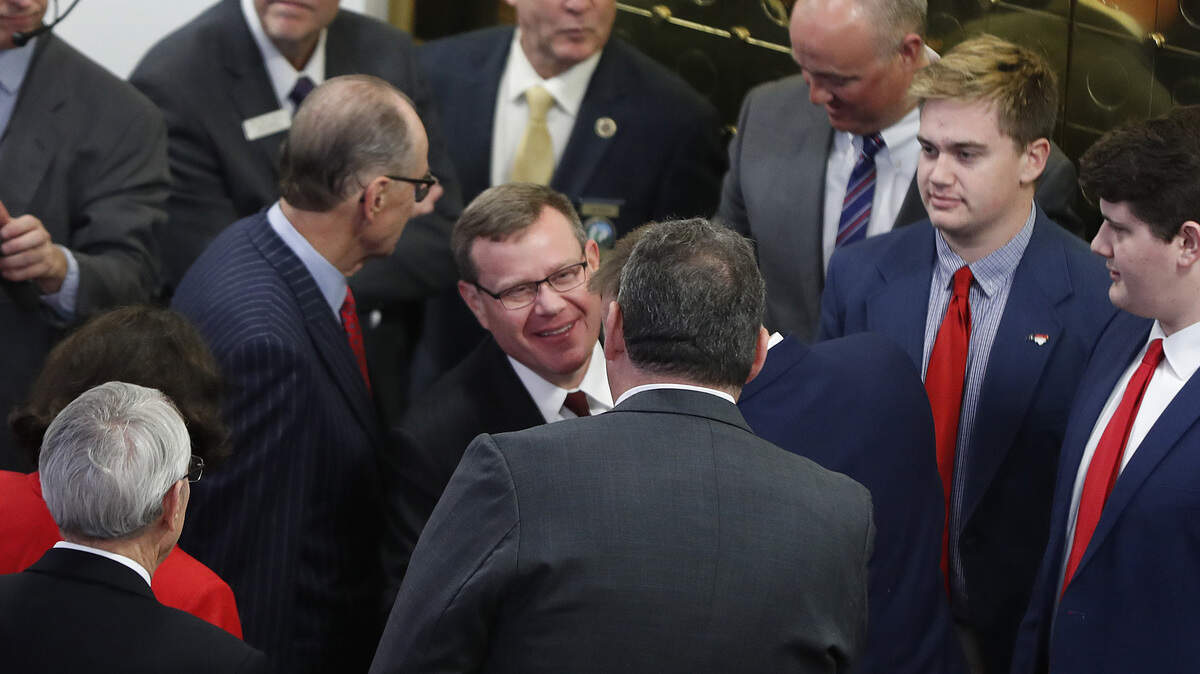
There are many parts of the recent story about Speaker Tim Moore’s chicken plant that are ethically muddy and of concern (“Aide’s inquiry about plant Moore sold draws scrutiny,” Jan. 13). We,the people, have a right and moral obligation to expect that our politicians do not receive special favors because of their positions.
The article states that “Gillespie (senior aide to Speaker Tim Moore) could not be reached for the N&O’s report last week. He later told WRAL that it was “fake news,” but did not speak to the emails showing his involvement in his boss’s business.”
Using the well worn phrase “fake news” to describe any legitimate questions from the public and press is wrong. Please stop these Trump antics, Mr. Gillespie, and by default, Speaker Moore. Speaking this political mantra makes you look as if you’re trying to hide the truth. North Carolinians deserve much better from their elected officials. No public servant is above the rules of ethics and If there is any concern that these rules have been violated, we have a right to ask and be given a respectful and full accounting. Always. Every time.
Paula Jennings
Cary
Class and dignity
I was stunned to hear that Carol Folt will be resigning from her office as chancellor of UNC Chapel Hill, but not as stunned as when I read the remarks made by Harry Smith, chair of the UNC BOG. In the wake of her announcement Smith stated that her resignation “lacks transparency and it undermines and insults the Board’s goal to operate with class and dignity.”
As a student representative who has been invited to closed session meetings regarding Silent Sam, I cannot recount the “class and dignity” that Smith speaks of. I have seen Smith talk down to students and to tenured faculty, and discredit historians, all while operating under the guise of an education advocate. He continued this pantomime today, simultaneously jabbing at Folt while claiming “to ensure that the appropriate stakeholders are always involved and that we are always working in a healthy and professional manner.”
Similar remarks were made at meetings in December, yet faculty, staff, and students were unable to enter the December BOG meeting. Despite shortcomings, Chancellor Folt’s departure is not a time for the Board of Governors to take jabs. It is time for the BOG to fill those promises of involving stakeholders in a healthy and professional manner.
Chastan Swain
Chapel Hill
Not a solution
In J. Peder Zane’s op-ed (“Easing suspensions risks school safety,” Jan. 3) pegged off the U.S. Department of Education’s decision to rescind the 2014 Discipline Guidance, he asserts that cutting school suspensions also “cuts school safety” and asks how we should move forward.
Let’s start by acknowledging that the construct of “school safety” is relatively ambiguous, subjective, and influenced by multiple factors. And exclusionary discipline isn’t the only factor that impacts school safety.
Simply suspending students absent an examination of cause is a band-aid “solution” that sets schools and students up for repeated failure. We must explore what educators are doing to prevent disruptive behaviors in the first place and have a responsibility to provide educators with tools and space to reflect on the cause of a student’s behavior. By doing that instead of arguing about discipline, we could make significant progress towards the ultimate goal of optimizing schools’ learning environments so that all students can achieve academic excellence.
Students of color and students with disabilities are suspended at much higher rates than their peers, yet we know if the right training and supports are in place it doesn’t have to be that way. Let’s move forward by taking responsibility for better training educators rather than blaming students.
Lauren Morando Rihm
Executive Director and Co-Founder of the National Center for Special Education in Charter Schools
Us vs. Them
As the political climate thickens and the rhetoric rises, we have become more and more susceptible to develop an “us versus them” mentality. It seems so often we forget to listen as we loudly debate our “side.”
We live in a country that allows each citizen to bring their thoughts to the table—to share their opinion on how “this” or “that” should be done. However, as we try to overpower each other in thinking we are right or they are wrong, we forget what we actually have the ability to do. Let us use the freedom we have wisely so that we can ensure we will always have the freedom to speak freely. Perhaps we’ll learn something from one another in the process if we stop yelling and listen.
Miles B. Hunt
Garner