
No wall can stem the tide of change
As far back as the 7th century BC, the Chinese began construction of a series of walls to protect them from being invaded by nomadic tribes. During the Ming Dynasty in the 16th century, what eventually became the Great Wall was constructed. It stretched for more than 5,000 miles, surely one of the wonders of the world as well as a symbol of the never-ending desire of people to shield themselves from outsiders.
In the second century AD, the powerful Roman Empire constructed a wall across Britain stretching from the North Sea to the Irish Sea. Hadrian’s Wall, named for the emperor at the time, marked the northern limit of the empire walling out the “barbarian” Britons to the north.
Even today, hundreds of cities across Europe have at least the remnants of the walls that once encircled them. Tourists love walls. One of my most pleasant memories of a trip to England was an early morning run along the wall that surrounds the city of York. At the time, I didn’t dream that some day we in the United States would be passionately arguing over whether or not to build a wall across our southern border.
The Bible uses walls as a metaphor for exclusion and misplaced power. Joshua brings down the walls of Jericho and the prophet Isaiah decries the walls that surrounded Babylon, then the largest city in the world and now a dusty ruin near Baghdad, Iraq.
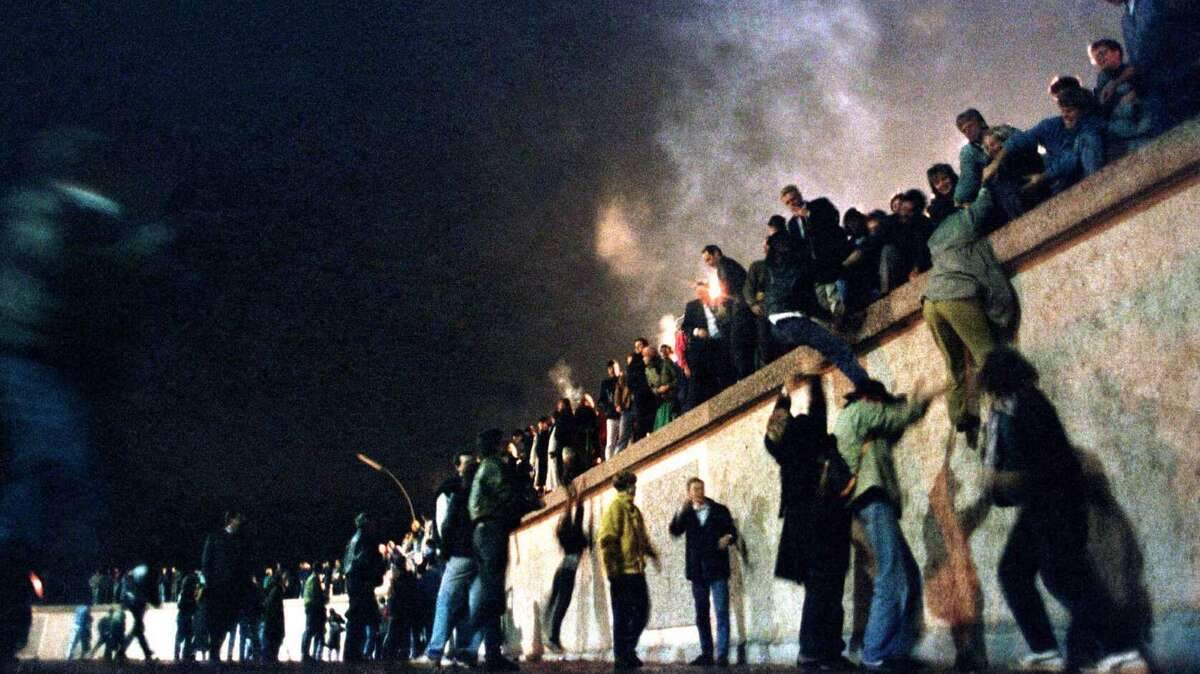
There are walls of more recent vintage. In 1961, the communist East German government, allied with the Soviet Union, constructed a concrete wall around its sector of Berlin. Unlike earlier barriers, the Berlin Wall was constructed not to keep people out, but to wall people in. A “death strip” discouraged attempts to escape.
In 1987, speaking at Berlin’s Brandenburg Gate, President Ronald Reagan challenged the existence of that barrier to freedom, addressing his words to Michel Gorbachev, the President of the Soviet Union: “Mr. Gorbachev, tear down this wall.” Two years later, the wall was opened and dismantled.
By the end of 1991, a metaphorical wall, the “Iron Curtain,” that had encircled much of eastern Europe since the conclusion of World War II, also dissolved into history. Like the Ming Dynasty and the Roman Empire, the Soviet Union was swallowed up by the inevitability of change.
Today, another leader demands a wall to protect an “empire” from “invasion.” As was true in Asia and in Europe centuries ago, so now in North America, it is imagined that hoards of invaders are crossing the border and endangering our homeland. The alarm has been sounded. We need a wall!
It is reported that when President Richard Nixon’s Secretary of State, Henry Kissinger, was asked if he thought that American world ascendency would last forever, the scholarly diplomat replied, “As a politician my answer is ‘Yes.’ As an historian, my answer is ‘No.’”
In the short term, a wall across the southern border of the United States might help resolve a current problem, but men and women not yet born are likely to look back upon it as but another failed effort to stem the tide of change.
The world continues to be transformed. Perhaps on a cool morning in the 22nd century, a tourist will jog along an abandoned remnant of a wall in Arizona, unaware of the passion with which his ancestors argued over its construction.
Can not a leader step forward now, and echoing President Reagan’s challenge of three decades ago plead with our president, “Mr. Trump, don’t build that wall!”
William F. Powers, a retired Professor of Sociology, lives in Chapel Hill.