
Dix Park, so close, but so far from Central Prison
The Holy Name of Jesus Cathedral, the N.C Farmers Market, N.C. State’s Centennial Campus — all are the new Dix Park’s neighbors in Raleigh and they will be beneficiaries as the park develops. But what about the park’s other prominent neighbor across Western Boulevard, Central Prison? In community discussions of the park, Central Park gets more mention that Central Prison.
Are we missing something? Maybe it deserves more consideration in discussions about about the park and its neighbors.
A prison testifies to the value of a forest, meadow or a park. Incarceration is not a walk in the park, but anyone in prison relishes the thought of one. Prisons may tell us more about our own Dix Park needs, opportunities, and responsibilities than we care to know.
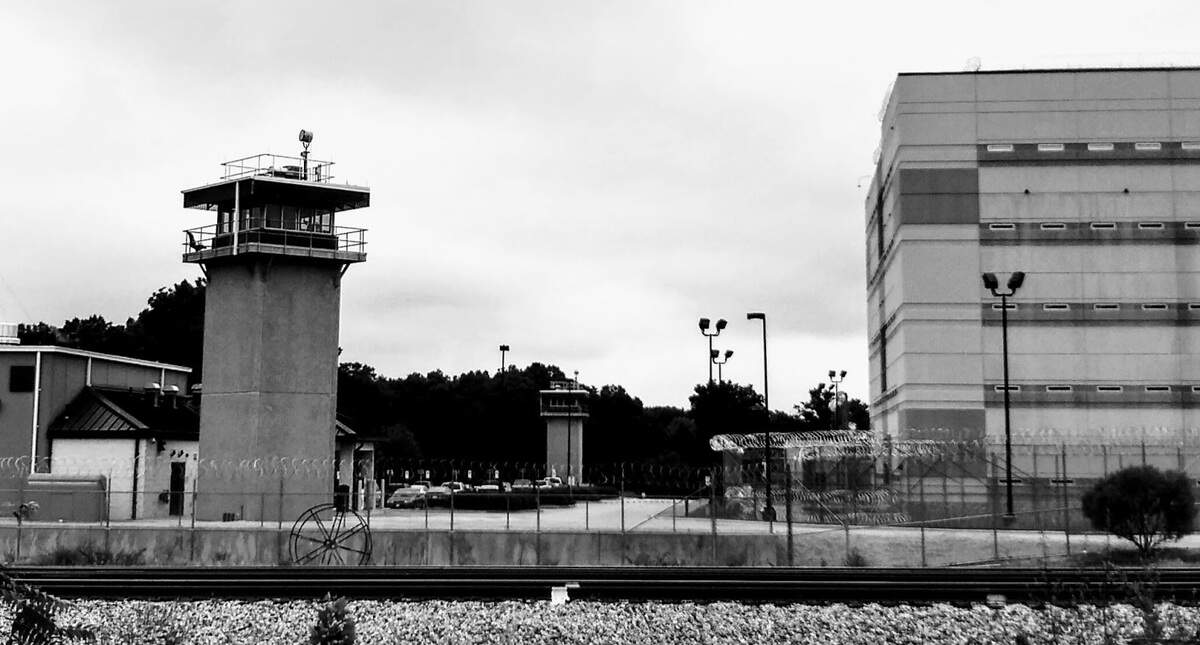
The term “penitentiary” is an antonym for open space. You won’t find a serene prison-park interface. Like a film negative, things are reversed: a prisoner’s everyday life is more about being locked out than being locked in.
Yet, a prisoner’s humanity is not lost. Human longings remain, as the imprisoned Oscar Wilde wrote in “Ballad Of Reading Gaol::
“… that little tent of blue,
We prisoners called the sky,
And at every happy cloud that
passes, In such strange freedom, by.”
Prison continues a work, begun elsewhere by innumerable mechanisms of dependency, despondency and deprivation. When you learn the inmates’ stories, it’s not revulsion you feel, but sadness. Prison isolation is relentless and no place of repose. It works against self-regeneration. Cell blocks don’t have views of grass and trees, much less the panorama of Spring Hill. For inmates, the vaunted Dix Park view of Raleigh’s skyline is a fantasy beyond reach. “Outside” is a keyhole view. A prisoner is deserted and detached..
There are also others, who are not incarcerated but as locked up as those behind bars. What are mental illness and addiction, drug or otherwise, than prisons of anxiety, anger, delusion, or despair? Restless and unsettled minds are jailers of the soul. In addition, there are the willing prisoners of myth, stereotyping, confirmation bias, flawed narratives — inventions upon which too many, too often, confine themselves, prisoners of culture, ideology or politics.
Yet, these and others are free to find an escape to the park while a prisoners’ punishment permits no escape. Picnic-in-the-park day for Central Prison? No such thing. A park for everyone? Not these ones. The prison nightmare preempts the dreams the rest of us can experience and the hope of achievement of unfilled promise.
The time may come for Central Prison and its inmates to join in park programs, but the hurdles are many. Under prison conditions, otherwise plausible prisoner-to-park contributions, like a prison workshop making park benches or raising park plants and flowers in a prison garden, are out of reach.
Instead, a prison-park connection is more likely to begin with people, other than inmates, themselves: for example, visiting family members, paroled or pardoned inmates; or, broadly, those who suffer emotionally or who experience one of the forms of personal self-incarceration. Small steps, but better than acting like the prison isn’t there across the street, reflecting in confinement the opposite of the park’s freedom. “Remember the prisoners and those who are troubled, as if you were in their place.” Hebrews 13:3
Forgotten Central Prison is hardly less a neighbor than other institutions, but it’s inmates must stand apart until their debt to society paid. When that happens, the occasional prisoner may fulfill his dream of taking a walk through the prison gate and into the freedom of Dix Park. It will be there to welcome him to a beautiful day in the neighborhood, a beautiful day for a neighbor.
Douglas Johnson, a retired attorney, can be reached at douglasjohnston39@gmail.com
This story was originally published January 25, 2019 at 6:59 PM.