
Black Durham ready to ride on the light rail
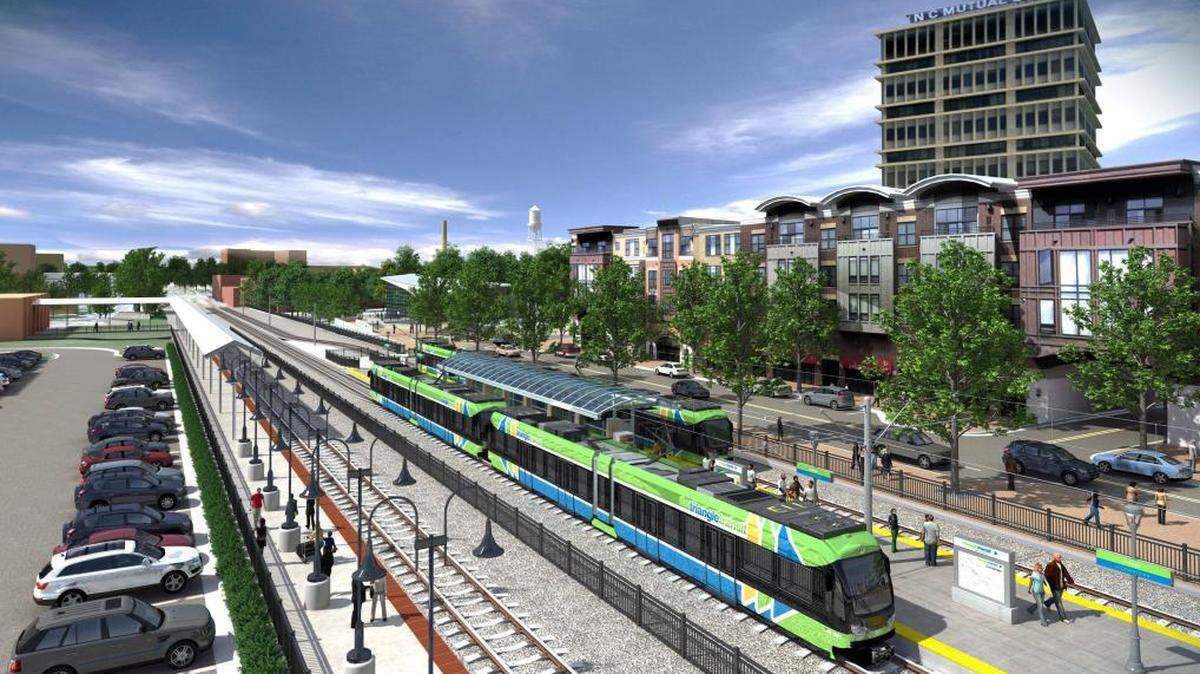
The Durham Committee on the Affairs of Black People sees the Durham-Orange light rail project as a potential opportunity to bring forth a number of positive developments that will benefit the Black community. These benefits include increased minority private sector investment, renewed public sector interest, and greater economic activity and mobility that is sustainable, equitable and more inclusive.
The DCABP realizes that most large infrastructure investments, such as the Durham-Orange light rail project, have the potential to increase property values and raise rents posing both an opportunity and a threat to the Black community. The DCABP is hopeful but vigilant in our efforts to ensure that the benefits of light rail and transit-oriented development will actually accrue to the current residents (both homeowners and renters) who live in neighborhoods likely to be affected. While we welcome and support diversity we are very concerned that higher housing costs (tax valuations and higher rents) may lead to financial distress and displacement of some, undermining the benefits for the Black community in the long-term.
The DCBAP’s long-standing support for the project is premised upon our assumption that there will be timely and intentional policy guidance from GoTriangle and actions by various elected bodies to make sure that our concerns are incorporated into public policy going forward over the decades that this project will have impacts upon our community.
Durham’s Black community has experienced historically redlined neighborhoods, with continued disinvestment, and displacement. GoTriangle should adopt a displacement risk analysis to evaluate how growth and development policies might exacerbate the risk of displacement for low-income and Black communities. The system must be designed with the needs of low-wage residents and workers in mind.
The DCABP sees this as another opportunity to commit to an investment strategy that lifts up community driven development projects in neighborhoods with high displacement risk, invests in community organizing and capacity building, and works to preserve affordable and low-income housing by taking land off of the speculative market. More specifically, the DCABP sees this as an opportunity to buy and hold land for affordable and low-income homeownership in an effort to prevent displacement.
GoTriangle can ensure that local residents, including low-income and minority residents, are prepared for the jobs created by the building of the light rail system and the economic opportunities it will create. We also encourage the public sector to support the creation of a targeted capital pool, such as a dedicated investment fund, to ensure that historical residents will be able to not only remain in the redeveloped communities along the transit route, but also take part in ownership of transit-associated businesses.
The Durham Committee on the Affairs of Black People sees this as an opportunity to get it right this time. We believe if our recommendations are taken to heart, we can build a better Durham whose prosperity reaches all. We need look no farther than the 147-corridor to see the consequences of past promises broken. The DCABP commits to partner with GoTriangle, the City Council, County Commissioners, the Planning Commission, and others to ensure there is a commitment that the Durham-Orange light rail will have long-term benefits for our neighborhoods and communities, and that the benefits will be shared across all of Durham. We strongly encourage all parties to sign the necessary agreements so that we can collectively get to work on these important goals.
Omar Beasley is Chair of DCABP, Stella Adams is Housing Chair of DCABP, and Henry McKoy is Economic Chair of DCABP. Henry McKoy is also part of the Durham Herald-Sun’s Gentrification Community Advisory Panel.
This story was originally published February 17, 2019 at 1:00 AM.