
What will it take to launch Mayor Baldwin’s affordable housing ‘moonshot’ ?
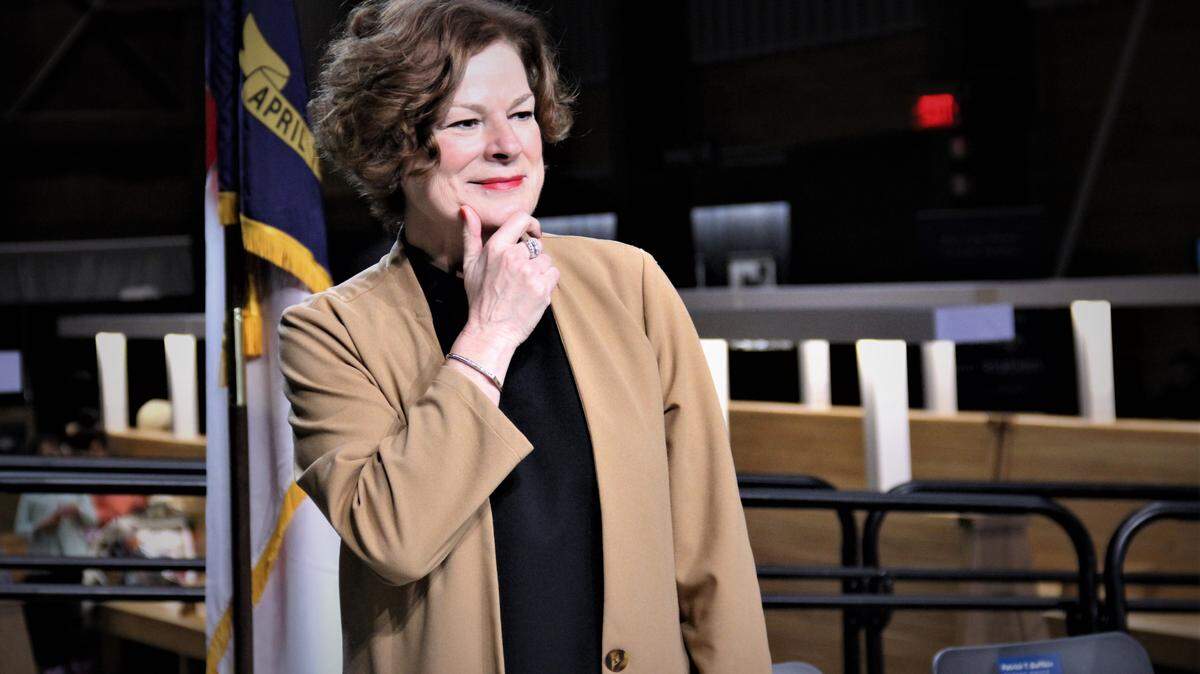
Raleigh’s new mayor, Mary-Ann Baldwin, thinks she has found the elusive solution to a lack of affordable housing: Look to the moon.
No, she’s not planning subdivisions in the Sea of Tranquility. She’s saying aim high, move fast and don’t quit until you get there. At her first City Council meeting as mayor she recalled how President Kennedy challenged the nation in 1962 to land a man on the moon within a decade.
“It’s with that spirit of determination,” she said, “that I’m asking all of you to get ready for Raleigh’s version of the moonshot.”
One big difference between JFK’s ambitious goal and Baldwin’s is that the young president was asking for a triumph for its own sake, an uplifting but unnecessary accomplishment. The new mayor is summoning the city and the region to take on a task that is essential.
“Affordable housing” is generally defined as rent or a mortgage that is no more than 30 percent of a family’s income. But Raleigh’s growth, including an influx of higher earners, is driving up rents and home prices and making it difficult for lower-income earners to find housing they can afford. The average rent in the Raleigh-Durham area rose 5.3 percent this year compared to 3 percent nationally. If the trend continues, Raleigh could face rising homelessness and lower-income workers may have to live further and further from where they work.
For now, Raleigh remains a relatively affordable housing market, but pressures are growing. In a 2018 community survey, Raleigh residents ranked affordable housing as the top issue facing the city. It was also the top issue of this year’s city election.
Creating more affordable housing will start with a large bond issue. Baldwin is not citing an amount, but it likely will be high. Charlotte passed a $50 million affordable housing bond in 2018. Durham passed a $95 million affordable housing bond in November.
But before any borrowing goal can be set — and before any bond can passed — there has to be a strong public consensus about the need for more affordable housing. Building that consensus will be Baldwin’s challenge. If an affordable housing bond issue fails, it would be years before officials could ask the voters again. Raleigh can’t afford that delay. It has to get this right the first time.
Gregg Warren knows what it takes to generate support for affordable housing. He is president of Raleigh-based DHIC, a nonprofit developer. DHIC has built 2,700 lower-priced apartment in 45 different apartment communities and 350 single-family homes using private donations and public grants.
Warren welcomes Baldwin’s setting an ambitious goal, but he said getting there will require an alliance of developers, hospitals, other major employers and faith-based institutions. Finally, it will take the support of voters.
He said, “We need to make our case clearly to the voters that this is everyone’s issue — that we’re talking about housing for the many people who make our economy and society work — whether it’s teacher aides, Amazon drivers, grocery store cashiers, nurses’ aides and the many others who work in low-wage jobs.”
The countdown to Baldwin’s moonshot will begin at a special City Council meeting on Dec. 17 where Durham Mayor Steve Schewel will describe how his city passed its affordable housing bond.
The challenge in Raleigh will be daunting, but worth it. As Kennedy said of taking aim at the moon: “That goal will serve to organize and measure the best of our energies and skills, because that challenge is one that we are willing to accept, one we are unwilling to postpone, and one we intend to win.”
This story was originally published December 8, 2019 at 12:00 AM.