
News & Observer endorsement: Our choice for NC’s 2nd Congressional District
North Carolina state lawmakers haven’t done much for Wake County, but when they redrew the congressional district maps, they did give it a clearer voice in Congress.
The district lines, redrawn last November under a court order to fix excessive gerrymandering, put the entire 2nd Congressional District within Wake County, including all of the county except for its northern tier. Previously, the district included parts of southern and eastern Wake along with parts of northern Johnston County, southern Nash County, far western Wilson County, and all of Franklin and Harnett counties.
The former convoluted district was reliably Republican and represented by Republican Rep. George Holding. Reshaping it to include only Wake will give the state’s second-most populous county the focused representation in Congress it deserves.
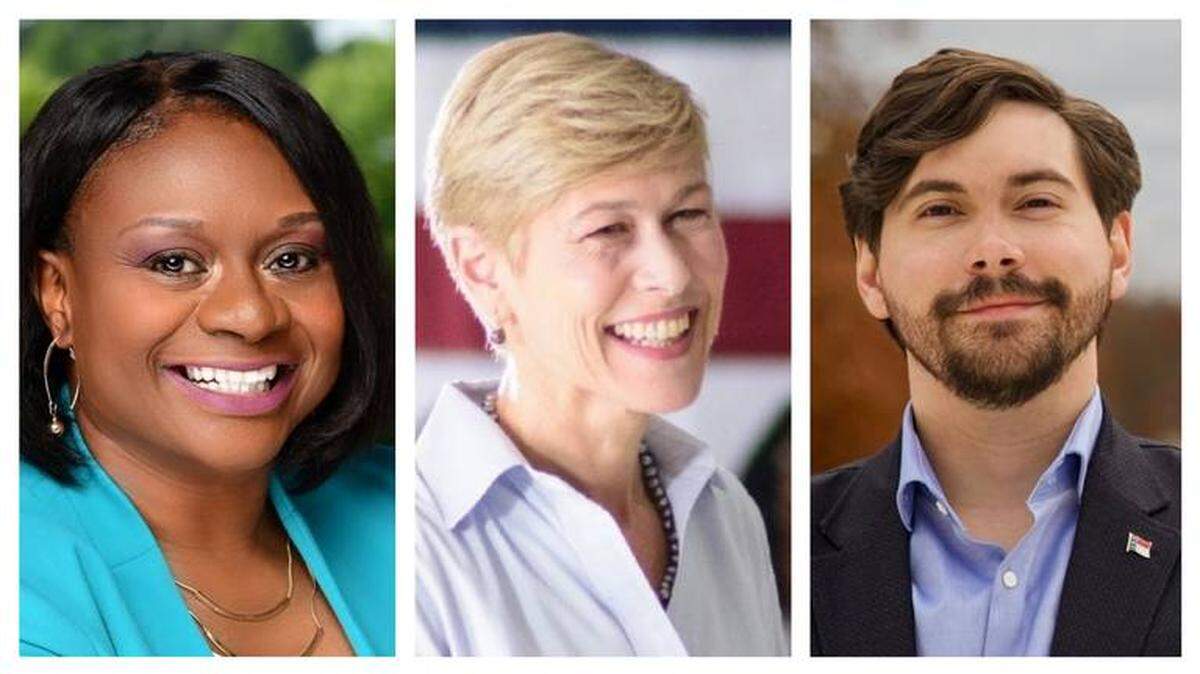
The change in the district so favors Democrats that Holding decided not to seek reelection while four Democratic candidates stepped up to compete in the March 3 primary. They are: Deborah Ross, Monika Johnson-Hostler, Andy Terrell and Ollie Nelson. There is no Republican primary. Republican Alan Swain and Libertarian Jeff Matemu will be on the November ballot.
In the Democratic field, there are two experienced and capable candidates: Ross and Johnson-Hostler. Wake County could be proud to send either to Washington, D.C., but our recommendation is the candidate with the strongest credentials and an impressive record of legislative accomplishment — Deborah Ross.
Ross, 56, is a Raleigh attorney who served as a state director of the ACLU in the 1990s and represented Wake County for 10 years in the state House. She was the Democratic nominee for U.S. Senate in 2016 but lost to incumbent Republican Sen. Richard Burr. This time, she’s pushing for greater access to health care, more support for education, action on climate change and passage of gun safety laws.
A Philadelphia native and a longtime resident of Wake County, Ross knows North Carolina well, having visited 90 of the state’s 100 counties during her Senate run. She wants to help bring the state and nation together.
“People are tired of partisan bickering,” she said.
Johnson-Hostler, 45, a member of the Wake County Board of Education, had the gumption to seek Holding’s seat even before the lines changed. Ross’ entry narrowed her chances, but didn’t dim her confidence. “If I’m not afraid to run against a well-established Republican, I’m not afraid to run against a well-established Democrat,” she said.
Johnson-Hostler, a native of Thomasville, is the executive director of the North Carolina Coalition Against Sexual Assault. She is focused on broadening access to health care, improving education and creating affordable housing.
Andrew Terrell, 33, a Hickory native who lives in north Raleigh, resigned from the British-American Business Council to run for Congress. The council works with British businesses interested in doing business in North Carolina. He also interned on the National Economic Council.
Terrell is campaigning on slowing climate change, providing free public college and protecting LGBTQ and women’s rights, but his leading issue is providing universal access to affordable health care. “If 32 out of 33 industrialized countries can do it, I can’t see why the U.S. can’t do it,” he said.
Ollie Nelson, 59, a retired Marine, former teacher and pastor, lives in Jacksonville, but plans to move to Raleigh. Nelson tried to join the Democratic primary for a 2019 special election in the 3rd Congressional District but missed the filing deadline.
BEHIND THE STORY
MOREHow we do our endorsements
Members of the combined Charlotte Observer and Raleigh News & Observer editorial boards are conducting interviews and research of candidates in municipal and state elections. The combined board is led by N.C. Opinion Editor Peter St. Onge, who is joined in Raleigh by deputy Opinion editor Ned Barnett and in Charlotte by deputy Opinion editor Paige Masten. Board members also include Observer editor Rana Cash and News & Observer editor Nicole Stockdale.
The editorial board also talks with others who know the candidates and have worked with them. When we’ve completed our interviews and research, we discuss each race and decide on our endorsements.
This story was originally published February 19, 2020 at 5:00 AM.