
My sister has Down syndrome. Please don’t use the R-word for a person. Ever.
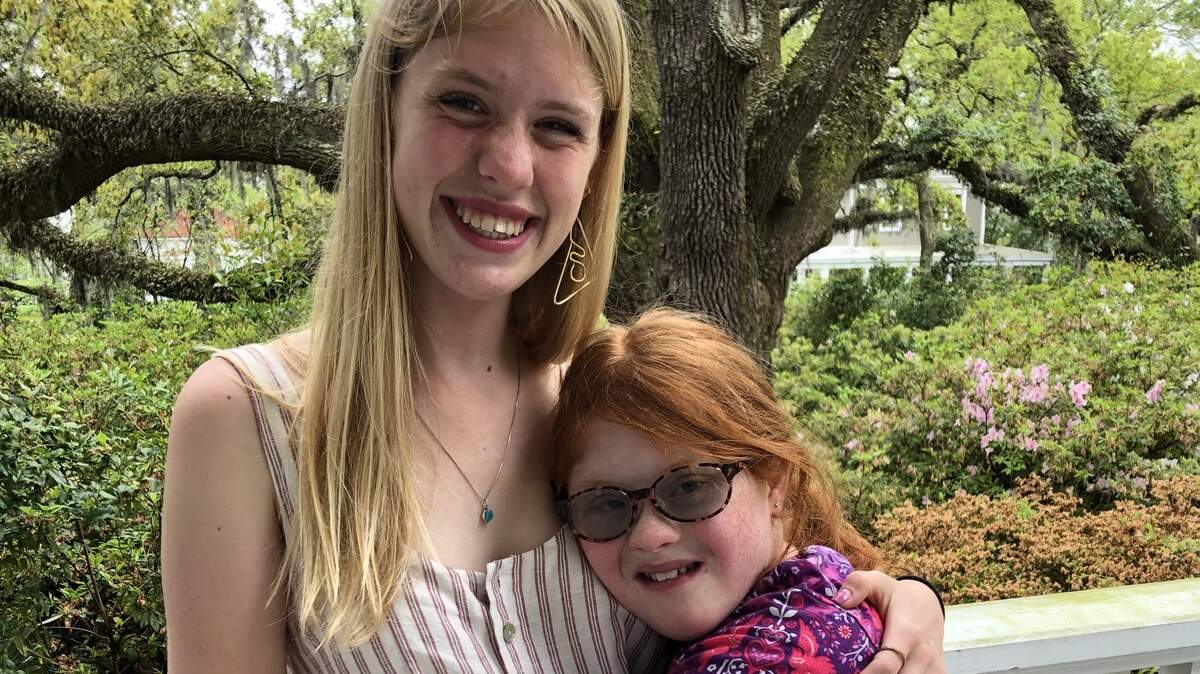
For as long as I can remember, I have opposed the use of the R-word. The word “retarded” has been something I have worked to eliminate from common usage. It has become something I am passionate about because it personally affects me and my family.
While the term was once used in the medical world to describe someone with an intellectual or developmental disability, it is now outdated. Today, the R-word is often used by people of all ages in place of words like stupid or dumb. When it is used this way it is hurtful to people affected by developmental disabilities.
When I was four years old my sister, Mary Evelyn, was born. I remember my family and I excitedly anticipating her arrival at The Women’s Birth and Wellness Center in Chapel Hill. When she was born, she was everything I could have dreamed of as a little sister.
Mary Evelyn was born with Down syndrome. Being young, I was unsure what Down syndrome meant, but this didn’t stop me from my extreme joy at being a big sister to an adorable redheaded baby.
Growing up with a sister who has a developmental disability, I have been given a more personal understanding of the stigmas, stereotypes, and generalizations that are often made about people with disabilities. Whether it’s the use of a derogatory term, or someone treating my 14-year-old sister like a baby, my family and I are constantly made aware that people think my sister is “different” or “sick.”
Throughout middle school, I struggled with how to approach people, many of whom were my friends, who used the R-word. I was constantly worried about upsetting people or getting too upset, and embarrassing myself while attempting to stand up for something I believed in. After conversations with teachers and my parents about the best approach for the situation, I gained confidence about taking a stand against the use of the R-word.
During my sophomore year at Raleigh Charter High School, I decided to take initiative to end the use of the R-word and to spread awareness about developmental disabilities. I worked toward educating my peers and teachers by breaking down the stigmas and generalizations I had witnessed.
I started a club with a friend to move our school in the direction of a more aware and educated environment. Since starting this club, I have worked on the “Spread the Word to End the Word” campaign, a movement that focuses on ending the use of the R-word. People can pledge online, wear bracelets, and help educate others through this campaign. T
At my school, the University of North Carolina Wilmington, use of the R-word around me is still ever-present. While things have become no less awkward when explaining why people shouldn’t say it, the conversation is even more important than ever before. I’m now in a time when my peers and I are entering adulthood, the workforce and starting families. If families and lives are being started on a foundation where demeaning differently-abled people and using derogatory terms and slurs is acceptable, change will never occur. Unfortunately, without a greater effort being put forth, I fear it will take some time before reaching the point when the R-word is passe.
This story was originally published March 25, 2020 at 1:46 PM.