
Remembering Lee Calhoun, savior of the southern apple
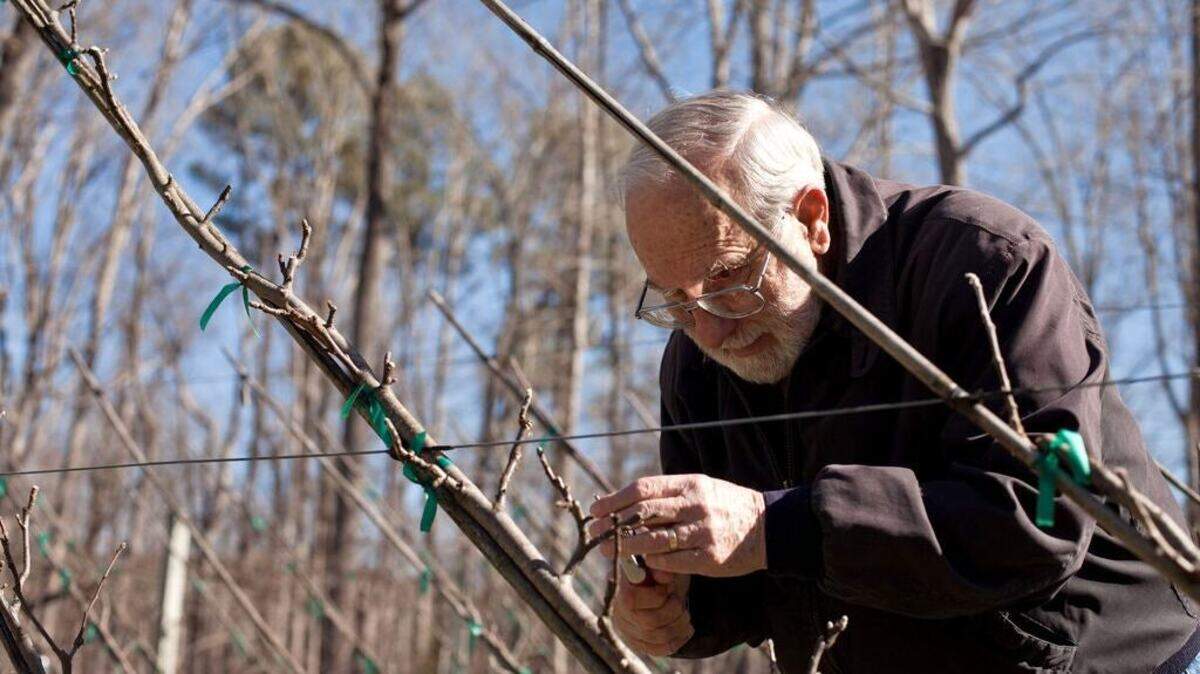
North Carolina lost a treasure last month. Lee Calhoun, the Chatham County orchardist who rescued countless heirloom apples from obscurity and extinction, passed away in February. He was 86 years old.
I only had the pleasure of Lee’s friendship for a year, but even in that short time, I got to walk the rows of trees he kept in his home orchard. I heard the stories behind more than 400 different apples varieties Lee collected across the southeast, including the ones now growing at the Horne Creek Farm state historic site in Pinnacle, North Carolina.
Like a reverse Johnny Appleseed, Lee scoured rural backroads looking for old trees standing half-forgotten in backyards, on the edge of fallow fields, hidden in overgrown forest. He called them “antiques,” and he made it his mission to preserve them.
Lee and his wife Edith started their hunt as a hobby, grafting trees they found near their Pittsboro home. But like a stubborn sapling, Lee’s hobby branched out. He eventually traveled as far north as West Virginia and as far south as Alabama, recovering old apples and the local histories that went with them.
Because of the way apples are grown, each tree is its own tale. You can’t just plant a seed from an apple and get a copy. You need a graft from the original tree, which means you need the backstory of that tree to keep a particular apple varietal alive. Lee found those stories by knocking on screen doors, poring over horticulture catalogs dating back to the 1800s, and diving into the archives of schools and colleges across the region.
“You can write a history of the South through these apples,” Lee explained to Diane Flynt, an orchardist and cider maker near Floyd, Virginia. “Not just the facts but the people and the lives they led.” Flynt was one of many apple growers that Lee influenced and mentored, helping to seed a region-wide revival in unique apple flavors, new cideries, and a more thoughtful approach to local agriculture. “Thanks to him we know that the southern table is piled high not just with peas, benne, corn, and beans,” Flynt wrote in Southern Cultures. “At the center of the southern table is a big pile of apples—ingredients not brought to the South from other countries and traditions, but grown, discovered and continued right in our own back yards.”
All of Lee’s well-earned knowledge made its way into Old Southern Apples, a beautiful book that Lee and Edith assembled through years of hand-marked drafts and good-natured editorial arguments. Lee would scrawl out his chapters on yellow legal pads, and Edith would transcribe them into her computer with “often acerbic” comments and suggestions, Lee recalled. The result was an instant classic of both southern agriculture and history, with rich descriptions of everything from Aunt Cora’s Yard Apple (“fine-grained, nutty flavor, subacid to almost sweet”) to the proper aging of apple brandy (“in a cask, charred on the inside, to smooth the brandy and give a little color to it”).
Flynt introduced me to Lee. Together we worked to make sure that his stories, like his apples, stay alive. All of Lee’s papers are now archived in the Southern Historical Collection at the University of North Carolina, a project my students helped tackle last year. They unearthed heartfelt letters that Lee received from people all over North Carolina and beyond, recounting family histories that were passed down in the form of apple wisdom. Nancy Moretz and Jane Campbell sent Lee clippings from the Coffey Grounds farm in Watauga County; Richard Melvin shared some of the last cuttings from the Cullasaja apple near Franklin. They were all eager to do their part in preserving southern foodways.
You can, too. Horn Creek Farm hosts a remarkable orchard of heirloom apples that Lee helped to find and cultivate over many years. It’s open to the public, with tours and classes and the chance to carry on a little piece of Lee’s legacy. The next apple tree sale is March 21st, when you can take home an heirloom sapling and help nurture the next chapter of our state’s rich history.
This story was originally published March 30, 2020 at 12:00 AM.