
The pews are empty, but our faith remains full
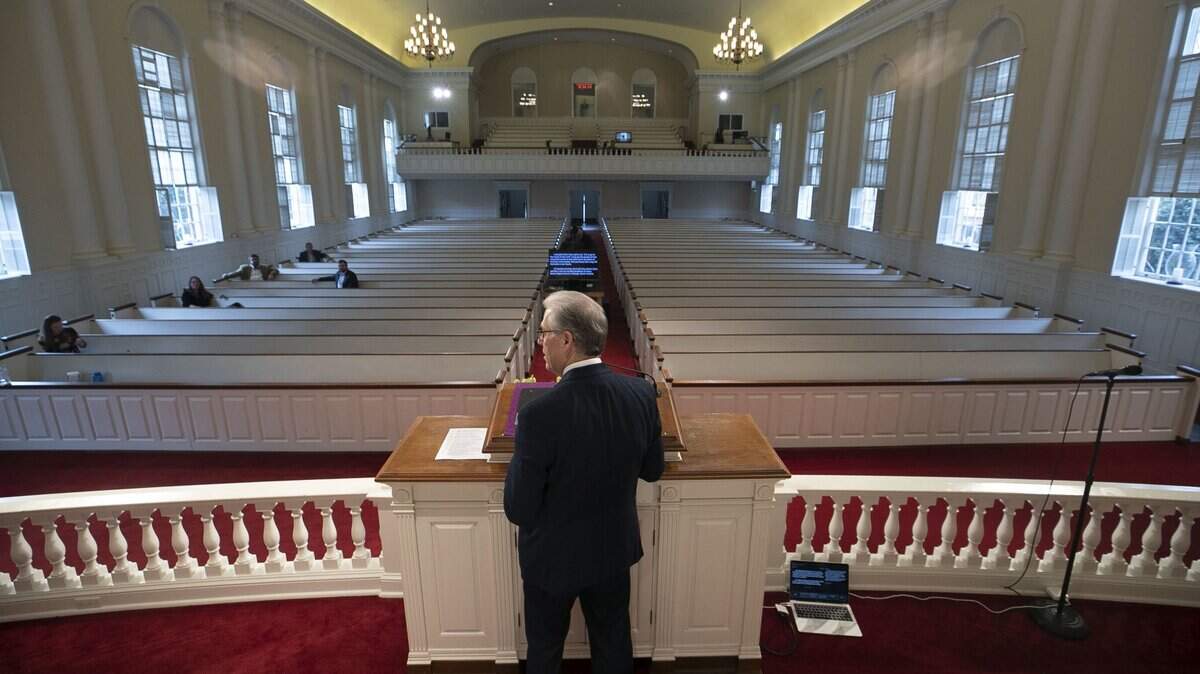
I miss the gathered church.
I miss the comfortable familiarity of “my” pew and kneeler and the holy whimsy of a congregation in its small, collective moments.
I miss marking the change in weather by the acolytes’ footwear, the crisp hem of their robes light above ballerina flats, athletic shoes, boots, and, by now, finally, flip flops.
I miss the music. Lord I miss the music.
It has been well more than 20 years since I have gone this long without being present for Sunday service in a church building. These weeks have flummoxed me.
They have also been and continue to be necessary.
Faith communities have proven to be susceptible spaces to COVID-19, from our proximity to our rituals to our singing. In addition, vulnerable populations are disproportionately represented in many congregations. Returning to Sunday too quickly could cost us those who worship beside us, who teach church school or lead youth group despite a chronic illness or who have been around long enough to know how to jiggle the key in that reluctant lock just so.
We need to love each other enough to miss each other a little longer.
Perhaps this season has prompted some recalibrating. An April survey by the Pew Research Center found that almost one in four Americans felt their faith was stronger because of the pandemic even though most also said their faith communities were not physically gathering. Only 2 percent felt their faith had weakened. Our commitment is not necessarily bound to our presence.
I am no less a mother when our sons are not with us. I am no less a daughter when I cannot see my mom. The houses for both are significant parts of my life, walled in memories. But they are buildings, not people. They aren’t care, and the emotion that exists within them extends just fine outside. Family is family, whether we’re together or not.
Like my love for my children, we are loved by God all the time. So the pressure is on us. Either we believe the power of that love touches us wherever we are or we don’t. Either our faith is truly in things seen and unseen or it isn’t. That includes the science that God created so that we could make better decisions about well-being for ourselves and one another. Such love is expected in every way I read the Bible, but grand displays of piety are not required.
At the same time, our ability to be the church rather than just be in the church continues uninterrupted, and it is needed more than ever – walking with care and compassion with others and reaffirming our commitment to all God’s children. Faith communities have responded and will need to continue in ways that liberate them from weekly worship or structural isolation.
Some congregations may not survive, and there is no easy way to sit with that. But sacrificing the welfare of our siblings is not the discipleship that is expected of us.
The Christian church celebrates the seventh Sunday after Easter as Pentecost. We recognize the Holy Spirit’s descent upon the followers of Jesus and, through them, the expansion of the church into the world.
The feast day serves as a reminder that the church is not a place, but it is action. For now, being physically apart from one another until we better understand how to be safely together is the faithful act that we are called to do.