
So many times on race we said ‘Now it will change.’ It didn’t. Can it happen now?
I have been asked many times in recent weeks how I’m doing.
The granularity of my response depends on how well I know the questioner. From “hanging in there” to “chipped around the edges” to “broken” to “shattered,” mere acquaintances to dearest friends. And I say it knowing that in comparison to many, my suffering is nothing at all.
Five years ago this month, nine of our siblings were murdered in an act of terrorist violence by a white nationalist hoping for a race war. He killed them in their Charleston church during Bible study.
We were told everything would change.
Almost three years ago, white supremacists marched through the streets of Charlottesville carrying torches and chanting hate. A young woman was killed when a neo-Nazi drove his car into civil rights activists assembled for a counter protest.
We were told everything would change.
We were told then and so many times in recent years – when our unarmed siblings have been shot by police, when black churches have been burned in Louisiana, when a Walmart in Texas and a synagogue in Pennsylvania have become killing fields, when word leaked of leaders saying demeaning and outrageous things – we were told everything would change.
In February, Ahmaud Arbery was hunted and shot. It took months for a serious investigation even to begin.
In March, Breonna Taylor was shot dead in her home by police serving a “no-knock” warrant in the middle of the night.
In May, George Floyd lay pinned to the asphalt for almost nine minutes, a police officer’s knee on his neck.
No charges have been filed in Taylor’s death, and, without video, it’s quite possible nothing would have come of Arbery’s and Floyd’s. Even with the recordings, justice is not guaranteed, as some seem most concerned with justifying their gruesome deaths.
As the Rev. Traci Blackmon has asked, “…(H)ow are we as people of color ever to be perceived as unarmed and therefore nonthreatening if our blackness is the weapon that you fear?”
Recent change has been painfully inadequate. We are reckoning with flags and statues, but that has been slow and messy. The National Football League, apparently realizing it had an HR problem, acknowledged the concerns of its workforce. But without naming that Colin Kaepernick has been robbed of his career for doing the right thing years ago.
Meanwhile, systemic racism and brutal policing continue, knit by the endemic othering that feeds both. The pandemic’s disproportionate impact on people of color has made the first even more apparent. Phones in every pocket and purse have provided a window for the world into the second.
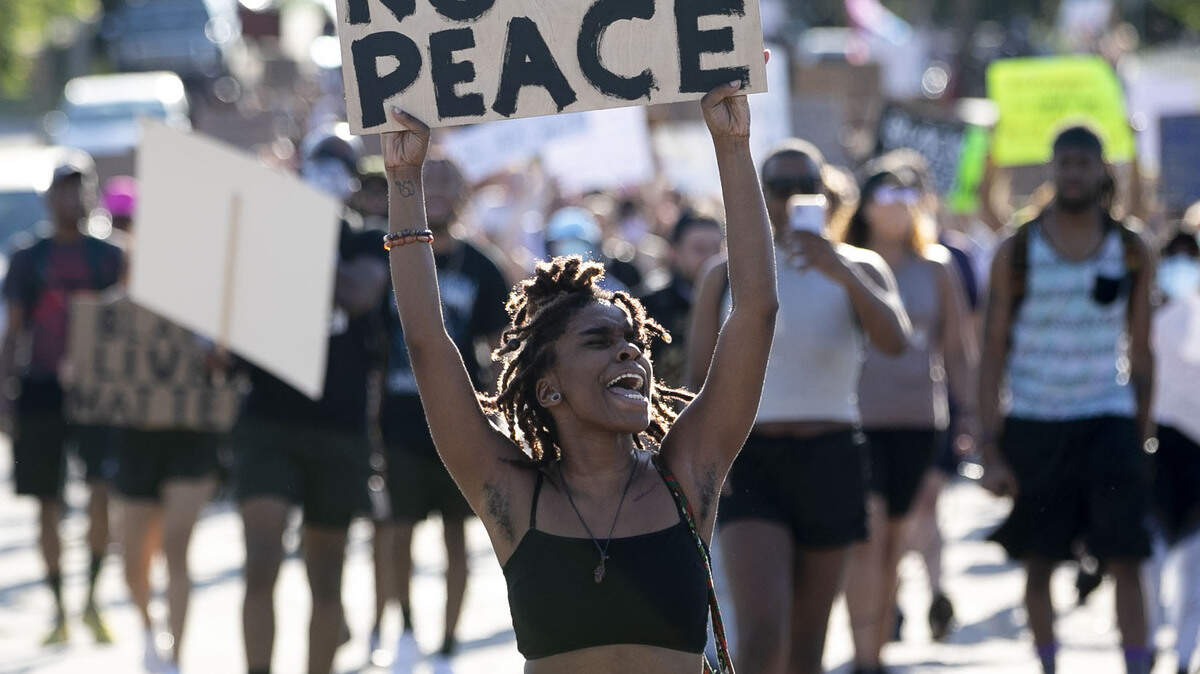
The anger and desperate need for change behind overwhelmingly peaceful protests across the country are understandable. We watched a man die, crying for his mother, crushed beneath authority. Who can be unmoved by that?
On Saturday afternoon, I was one of many who took part in the Raleigh Interdenominational Ministerial Alliance’s Prayer Walk for Social Justice. It was multi-racial and multigenerational, united around a desire for everyone to be respected and treated equally as beloved children of God.
Even in settings like that, with support swelling around the world, it can be hard not to lose faith. We have been here so many times before.
None of this current moment or the centuries of moments that preceded it changes without political will – without policies and reinvestment that prioritize the equal value of every human being. But for people of faith, this also requires a righting of the spirit. There is soul-work to be done.