
Cooper chooses the best path to reopen NC schools - but questions remain
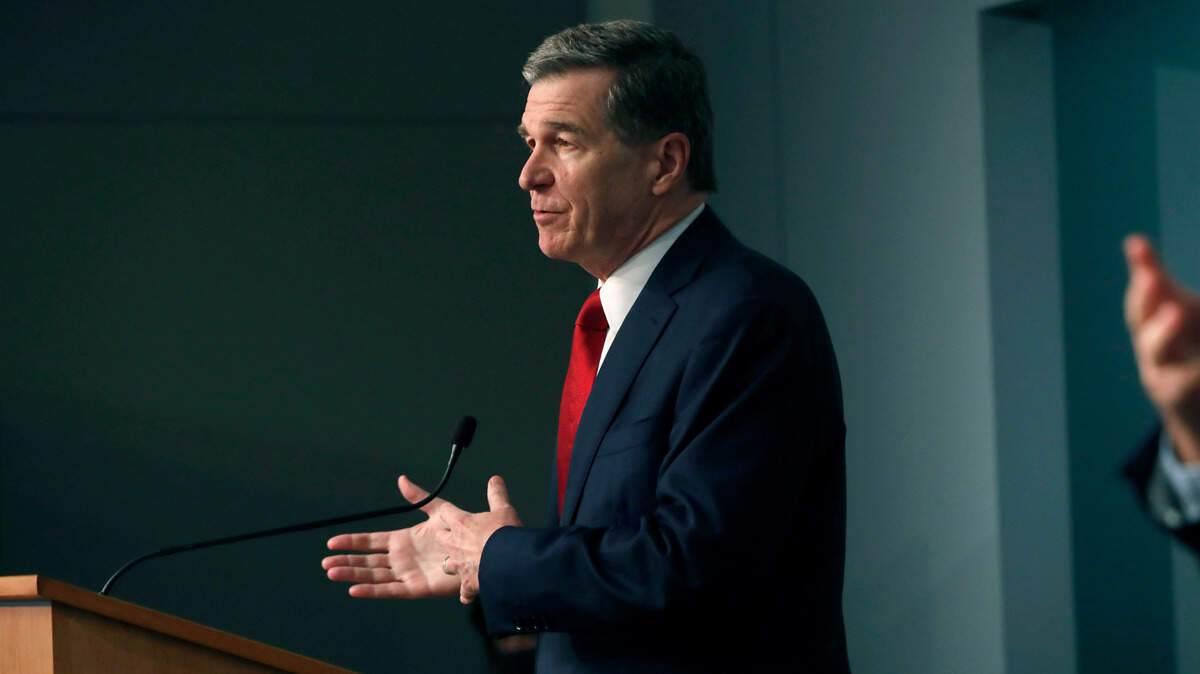
Gov. Roy Cooper on Tuesday drew a path through the uncharted terrain of a pandemic. He announced that North Carolina’s public schools will open in August with a mix of classroom and remote leaning.
It was a tough call from Cooper, but the right one. Given a choice between opening schools as usual or limiting them to remote instruction, he picked a middle course. He balanced risks and benefits and chose an option that’s the least undesirable.
That choice splits the extremes and allows for flexibility. North Carolina’s schools can start all online, or offer a blend of in-person and online instruction, but they must be prepared to close if infections keep climbing.
In choosing a middle course, Cooper has also committed to the most complicated one. There are still major questions: Will enough teachers participate in in-person classes? Will the legislature provide enough funding for increased school safety measures? Can school districts make the transition to a blended approach without confusion and missteps?
Cooper has not solved the challenges of opening schools in a pandemic. He has invited school officials, teachers and parents to take on those challenges.
Cooper’s choice of a hybrid approach will not satisfy President Trump or Secretary of Education Betsy DeVos, both of whom want children to return to school as if it were 2019 and more than 135,000 Americans had not died from the virus. Nor will it please those who think it’s too dangerous to have any in-person school instruction as infection rates are spiking in the South and West. On Monday, the school districts of Atlanta, Los Angeles and San Diego, under pressure from teachers concerned about safety, announced that their schools will be online-only this fall. In North Carolina, many teachers also want urban districts to hold off on in-person classes.
Local school officials were prepared for the governor’s recommendation and are already fashioning their own hybrid plans.
Wake County, the state’s largest district with 162,000 students, is offering a Virtual Academy that has been flooded with 18,000 applications in less than a week. Wake also plans to offer rotating attendance – one week in schools, two weeks online – to allow for social distancing in schools. Durham will offer in-person instruction for grades K-8, with high school students learning from home. The Chapel Hill-Carrboro schools will have a staggered re-entry plan that calls for high school students to take virtual classes until the sixth week of the school year. Mecklenburg County is likely to mix remote and in-person instruction.
Meeting the challenges of safely opening schools will require an effort by the whole state. That means a strict adherence to social distancing guidelines – especially the wearing of masks in public. It also means more state funding to support safer school conditions with more personal protective equipment, increased janitorial services and changes on air circulation systems.
A curious quality of COVID-19 is that it appears not to sicken children as much as adults. But as the school year approaches, it’s clear that the pandemic does profoundly affect children in other ways. It is cutting into their education and cutting them off from classmates and teachers, sports and extracurricular activities. The consequences, especially for poor children, could profoundly shape their lives.
The challenge for state and local leaders, and for parents and teachers and school volunteers, is to find a way to bring children through the fog of this pandemic in a way in which they can continue to learn and grow. Cooper has encouraged schools to take the most flexible path. A rise in infections may require turning back, but for now it is the best way forward.
This story was originally published July 14, 2020 at 12:45 PM.