
Goldsboro once almost became a Hiroshima. The US must keep reducing nuclear weapons.
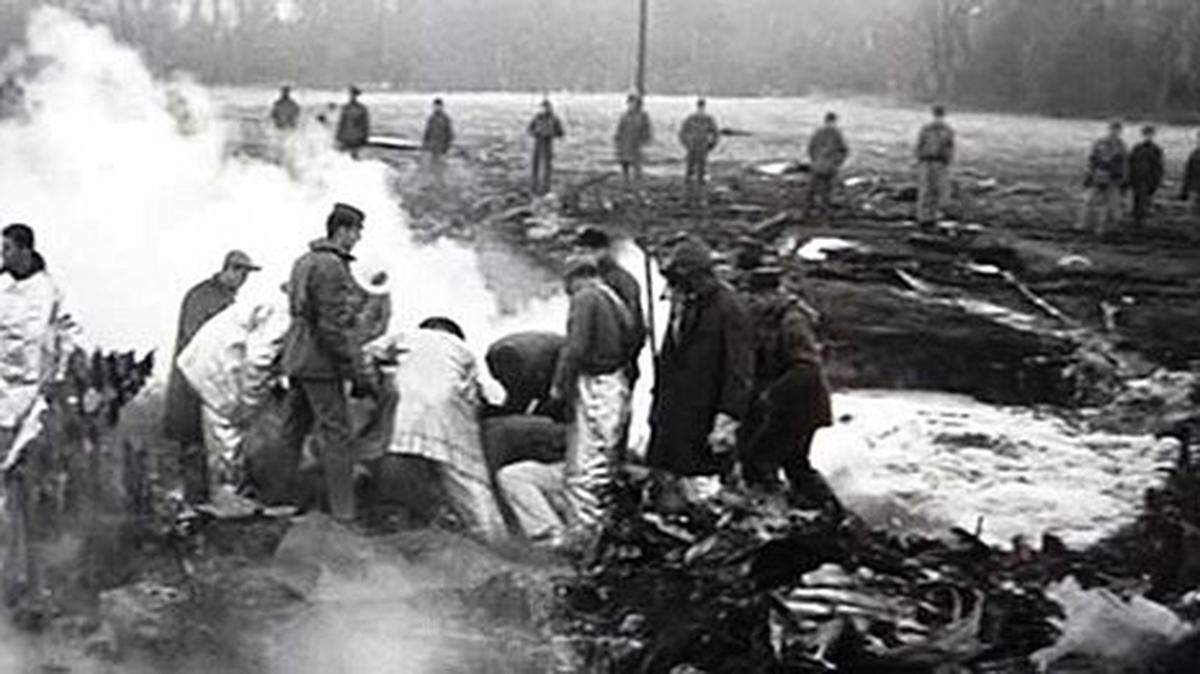
Nearly six decades ago, in the skies over Goldsboro, North Carolina, two hydrogen bombs fell from a B-52 bomber. One bomb parachute deployed, one did not. Three out of four safety switches were set to detonate on the bomb that landed softly. The second slammed into the Earth and should have exploded. A twist of fate and one switch kept Goldsboro out of the history books as the location of the worst “accident” since human ingenuity split the atom.
If things had gone the other way, the combined explosive power of about 500 Hiroshima bombs would have been unleashed. An estimated 60,000 people would have died instantly, and the radioactive fallout could have endangered people as far away as New York.
We have been closer to nuclear chaos more times than most people know. Preceding North Carolina’s brush with doomsday, that one switch had actually failed some 30 times before. Proverbial nuclear switches have failed many times since. On numerous occasions, false alarms of Soviet ballistic missile attacks led the leaders in Washington to think that civilization was going to end within hours. The Soviets experienced their own false alarms, coming dangerously close to ordering a massive strike on the United States in 1983.
The Research Triangle was a major target for the Soviet Union and likely would have been struck in an all-out attack. Today, the Pentagon is concerned that our early warning systems, which track inbound missiles, are vulnerable to cyber-attacks. This is complicated by the fact that they have designed a system in which a President only has minutes to determine if an attack is real before deciding to launch a counter-attack.
Despite these frightening truths, the American public has largely avoided confronting the legacy of our nuclear weapons buildup. We have also distanced ourselves from the catastrophic human consequences of a nuclear detonation. The metaphorical wall that separates the anodyne idea of security through nuclear deterrence from the reality of the threats nuclear weapons pose needs to be torn down, brick by brick.
Since the end of the Cold War, talk of nuclear war has all but vanished from the public discourse. It may have seemed the threat was fading, as the global nuclear stockpile dropped from its peak of some 60,000 to about 13,400. Unfortunately, every remaining weapon and the nuclear materials spread across the world are a danger to humanity. Even worse, the arms control regimes that helped us navigate out of the Cold War have eroded. The protection they provided is withering away. This process was accelerated by the Trump Administration, which has made sport of ripping up arms control agreements, damaging U.S. credibility in the process.
It was actually 75 years ago on Aug. 6 that the United States dropped a nuclear weapon on Hiroshima, Japan. That single bomb ultimately killed about 140,000 people. It would be considered a small nuclear weapon by modern standards. Eight other countries also possess nuclear weapons now and the world is on the brink of a new nuclear arms race. That is why North Carolinians and all Americans have to re-engage on nuclear matters and insist that our leaders de-politicize what is a literal matter of life and death.
Historically, arms control has been championed by both Democrats and Republicans. President Richard Nixon signed the Anti-Ballistic Missile Treaty with the Soviets in 1972. President Ronald Reagan negotiated the groundbreaking 1987 INF Treaty, which eliminated an entire category of nuclear weapons. Negotiations for the Strategic Arms Reduction Treaty (START I) between the United States and Soviet Union also began under the Reagan Administration with President George H. W. Bush bringing that agreement into force. President George W. Bush further reduced U.S. and Russian nuclear stockpiles with the Strategic Offensive Reduction Treaty (SORT). The New Strategic Arms Reduction Treaty (New START), which was ratified in 2010 by President Barack Obama, is now the last bilateral guardrail against a new nuclear arms race. It will expire in February 2021, but can be extended for five years, through a simple agreement between the United States and Russia. For inexplicable reasons, the White House is dragging its feet, even though the Russians have said they want to preserve the agreement. There is a growing bipartisan call for the extension of New START in Washington, but it would be easier to hear if the public added their voices.
In rejoining the nuclear policy dialogue, it is important to remember the one little switch that stopped a quiet North Carolina town from turning into a radioactive crater. Safety measures, whether they come in the form of a switch or a legally binding treaty like New START, are all that stands between us and disaster. But a switch is not enough. We have to start thinking about how we maintain security without the ever-present threat of global annihilation. That’s the only real way to prevent an incident, like the one that happened in Goldsboro, from becoming a nuclear nightmare.