
Trump’s jobless aid offer is a short-term stunt. NC should offer real and lasting help.
North Carolina’s Republican lawmakers punished the jobless in 2013 as they radically cut the state’s unemployment insurance program, making it one of the stingiest in the nation. So it seemed odd Tuesday when Republican legislative leaders called for Gov. Roy Cooper to act immediately to help the unemployed.
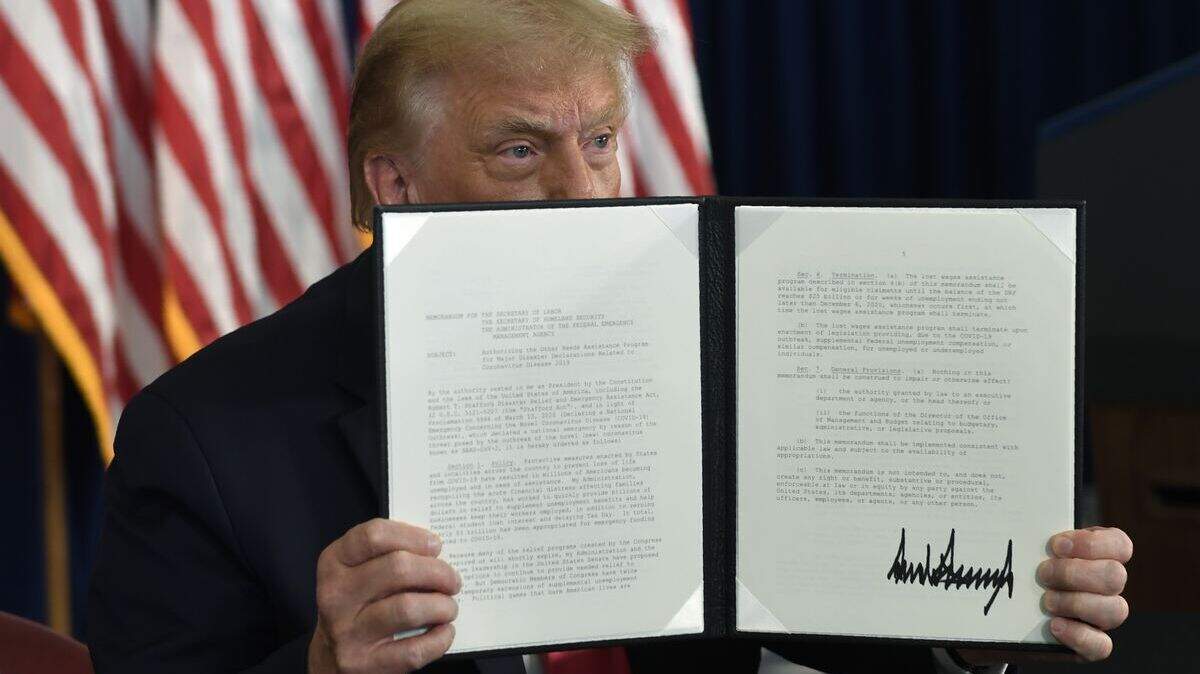
Senate leader Phil Berger and House Speaker Tim Moore are urging the governor to apply for federal disaster relief funds for the unemployed under President Trump’s ill-conceived order that even a Republican senator has called “unconstitutional slop.”
Republicans in the U.S. Senate Republicans let the $600 per week federal unemployment supplement expire at the end of July. Now Trump is offering to give the unemployed $400 a week – if states provide $100 of it.
Trump, facing re-election with millions of people losing their federal unemployment supplement, is acting the savior and Berger and Moore want to help him play that role. But it’s a phony rescue.
John Quinterno, a Chapel Hill consultant who studies the North Carolina labor market, said: “The proposal is a half-baked, Rube Goldberg-esque contraption that would deliver little meaningful aid to workers.”
One big problem with Trump’s offer is that states starved for revenue because of pandemic-related business shutdowns can’t afford to pay their $100 share of each unemployment claim. Some are already borrowing from the federal government to meet the surging demand on their unemployment programs.
But Berger and Moore boast that North Carolina can pay it “because of smart budgeting” that has $2.9 billion still in the state’s Unemployment Trust Fund. The state also has $552 million available in unspent CARES Act funding.
Responding in a letter, Cooper told Moore and Berger he has begun applying for the federal funds in the event that Trump’s plan proves legal and feasible. But he also noted the bulging trust fund balance and offered the two leaders what, for them, would be a novel idea: The General Assembly should use the money on hand to help the unemployed now. The Democratic governor suggested that lawmakers should extend state unemployment benefits from 12 weeks – the shortest duration in the nation – to at least 24 weeks and increase the maximum weekly state benefit to at least $500, up from $350.
That action would be quicker and more certain than relying solely on Trump’s shaky proposal. Distributing federal disaster relief dollars to the jobless will require states to adopt a separate, parallel unemployment program. Although the president says the payments will be retroactive to Aug. 1, creating the program could delay checks for weeks or months.
Sen. Wiley Nickel, a Wake County Democrat and an advocate for better unemployment benefits, said: “North Carolinians needed help last week and the week before. Trump’s order does nothing to help jobless workers pay their bills any time soon.”
The previous federal supplement covered the jobless for as many weeks as they were eligible. Trump’s plan draws from a fixed fund. When the money runs out – experts estimate it would last four to five weeks – the federal payments stop, no matter how many weeks of eligibility a recipient may have left.
Instead of inventing new eligibility rules and relying on a fast-dwindling funding source, U.S. Senate Republicans should pass what the House has approved – an extension of the weekly supplement of $600, or an amount close to it.
Meanwhile, Republican state lawmakers who are prodding the governor should be prodding themselves to do more for the unemployed.
That’s what North Carolina’s unemployed need. That’s what they should get – true relief, not the illusion of it.
BEHIND THE STORY
MOREWhat is the Editorial Board?
The Charlotte Observer and Raleigh News & Observer editorial boards combined in 2019 to provide fuller and more diverse North Carolina opinion content to our readers. The editorial board operates independently from the newsrooms in Charlotte and Raleigh and does not influence the work of the reporting and editing staffs. The combined board is led by N.C. Opinion Editor Peter St. Onge, who is joined in Raleigh by deputy Opinion editor Ned Barnett and in Charlotte by deputy Opinion editor Paige Masten. Board members also include Observer editor Rana Cash and News & Observer editor Nicole Stockdale. For questions about the board or our editorials, email pstonge@charlotteobserver.com.