
UNC, N.C. State grad students: We’re not safe this fall
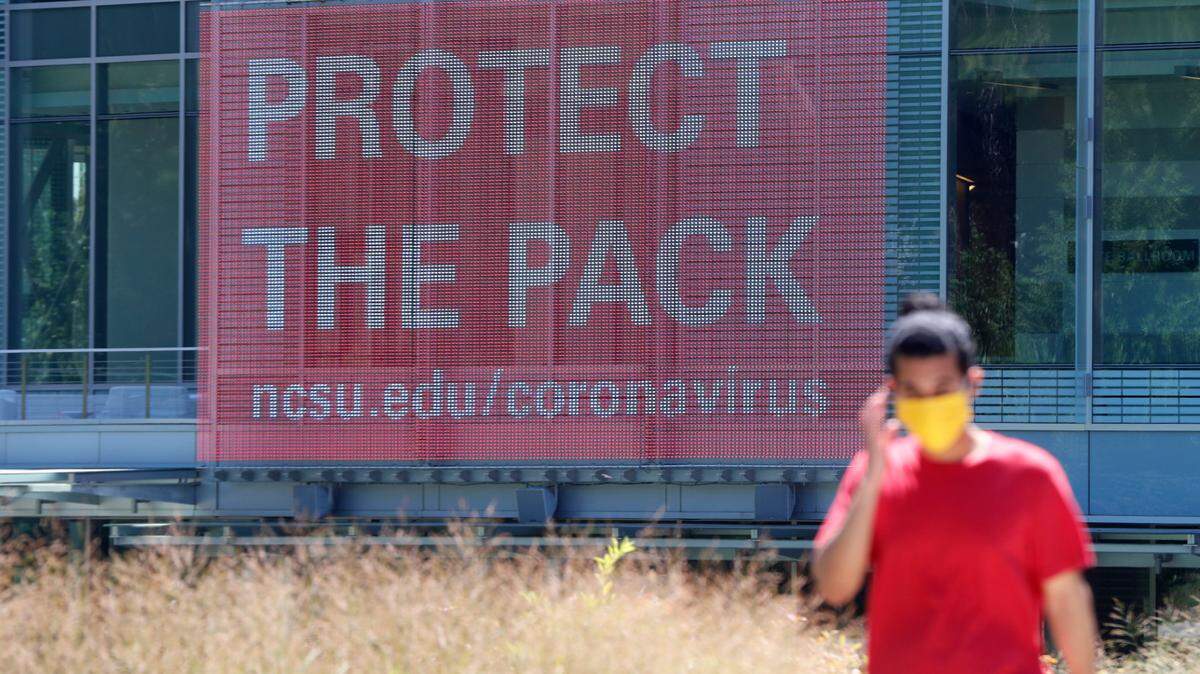
Both North Carolina State University and the University of North Carolina at Chapel Hill are committed to reopening campuses. As such, 65,000 students are to campuses, in spite of COVID-19’s continuing rise throughout the state.
Graduate student-workers are often the first line of contact for students. We teach their courses, grade their assignments, meet with them during office hours, and tutor them outside of class. And while we are underpaid, we care deeply about education and the well-being of students. Yet, we have not been included in decision-making concerning the fall semester. And we are not alone. Undergraduate students, faculty and staff have also been excluded, as university administrators make plans for activities they will not participate in and which will not affect them directly, such as teaching, research, and campus life.
At N.C. State and UNC-CH, recent memos from Chancellors Woodson and Guskiewicz indicate that masks and social distancing will be generally required on both campuses. While such action is supported by epidemiological evidence to prevent the spread of the virus, the efficacy of these measures relies on the assumption that every person on campus will willingly comply with the proposed health and safety regulations. However, there is no clear proposal for how these measures will be enforced, or who would be in charge of enforcing them.
Furthermore, even when masks are utilized properly, epidemiological evidence suggests that spending large amounts of time in closed rooms - i.e., classrooms - is one of the riskiest settings for COVID-19 spread. UNC’s recent announcement that some students will be as close as three feet to one another in the classroom, that widespread testing on either campus will not be available, and that unessential facilities such as campus gyms will be opened with no mask requirements, compounds these risks. Add to this the fact that staff will be expected to work more disinfecting rooms without a raise, with faculty and students expected to pitch in for free.
In short, we as graduate student-employees will not be safe. And neither will students, staff, or the wider Triangle community. Therefore, we are writing this to sound the alarm. We have tried to raise our concerns regarding the safety of our colleagues and students through numerous petitions that address these very issues. However, neither administration has acknowledged or addressed our efforts. This is not surprising given the administration’s general view of graduate and campus workers as cheap, expendable labor unworthy of a say in the process.
If we were given a say, we would tell the university that there is no consideration that should outweigh human lives. We would remind them that, just recently, a 21 year-old student at Penn State died from COVID-19. We would tell them that a single preventable death is one too many. We would prioritize the lives of our students, our fellow instructors, our staff colleagues, and the wider community.
On behalf of the UNC and NCSU Graduate Workers union chapters of UE150, I call on parents, students, instructors, faculty, staff and the triangle community to voice their opposition to the current reopening plans, support the union action of the graduate students who are trying to prevent the cruel and unnecessary risk of death, and help us convince the administration to give us a seat at the negotiating table.
This story was originally published August 17, 2020 at 11:54 PM with the headline "UNC, N.C. State grad students: We’re not safe this fall."