
The season may go on for some, but COVID may change college football forever
Major college football conferences have split over whether they should play this fall, but what the COVID-19 pandemic may be changing is not just a season, but big-time college football itself.
The novel coronavirus may do what decades of Knight Commissions couldn’t. It may bring balance, perspective and accountability back to college football, a sport that at its highest levels has become an illness of its own, one whose symptoms are feverish greed, hypocrisy and exploitation.
Paul Haagen, co-director of the Center for Sports Law and Policy at Duke University, said: “This is a moment of reckoning.”
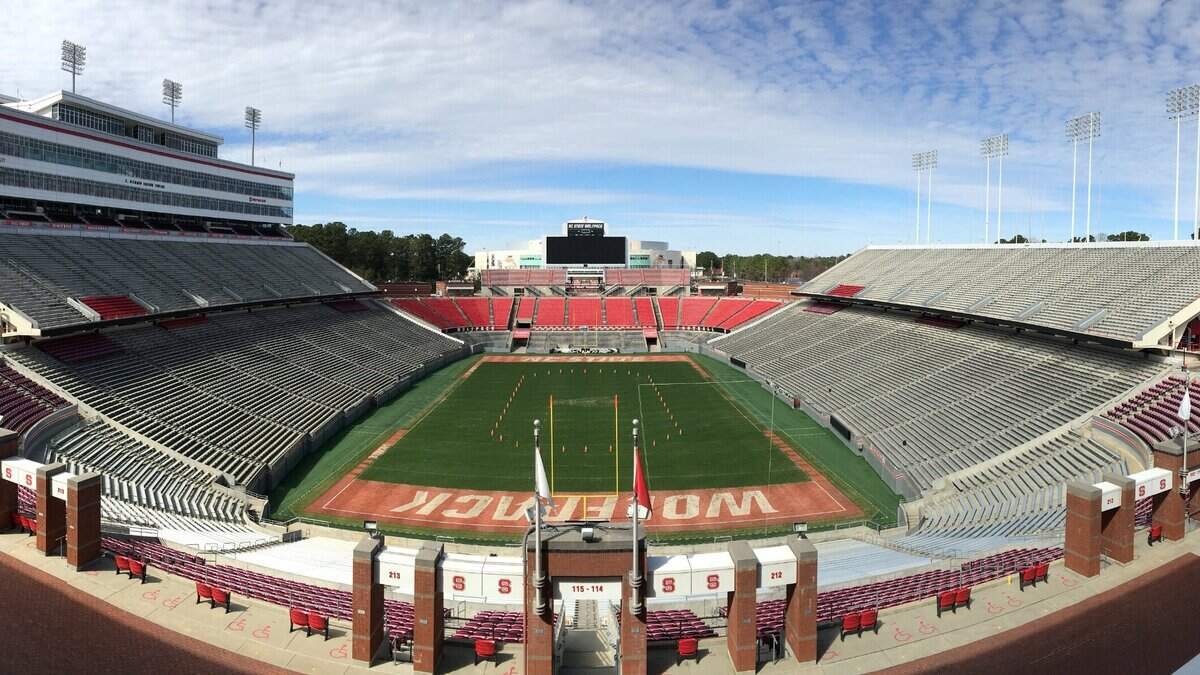
The strength of the fever is clear in that three of the Power Five conferences – including the Atlantic Coast Conference – are still planning to play as of Friday despite a pandemic that will keep fans out of the stands and players and athletic staff in harm’s way. But one sign that the fever is breaking can seen in the decisions by the Big Ten and the Pac 12 not to play. The sight of their massive stadiums empty on Saturdays this fall will be a sign of a major shift. Those stadium gates will have been closed not by athletic directors, but by leaders once thought powerless to control their Frankenstein sport: college presidents.
Richard Vedder, a professor emeritus of economics at Ohio University and a critic of financial excesses in college sports and all of higher education, told me that ever-rising facility costs and coaching salaries – in 2019, 25 head football coaches made more than $4 million a year – were “starting to gnaw at the public, and then COVID-19 comes along.”
As the pandemic has pitted football revenue against the welfare of players, at least two major conferences have had to acknowledge that the latter must come first. That the ACC, SEC and Big 12 haven’t followed suit will only expose them to further indictment as coronavirus outbreaks darken their misbegotten seasons.
Vedder said the pandemic has hit major college football at a time when attendance has been declining, TV networks have less dominance of a digitally splintered media landscape and the NCAA’s authority has been weakened by laws and rulings giving players more rights, including compensation for use of their image and likenesses in ads and video games.
“I think maybe we are in for some accelerated change,” he said. “I don’t think football is going to come to an end. It’s too much fun; I enjoy it. But this is going to accelerate the cracks in the dominance of the NCAA. I’d be interested to see if the NCAA even survives.”
The power of athletics departments and celebrity coaches is also at risk. Football revenue let big athletic departments run themselves independently. But with that revenue drying up, those departments have a new dependence on their universities, which are themselves facing losses of state subsidies, tuition and student housing payments. University presidents will have new leverage. Lavish athletics facilities could be used for new purposes and coaches forced to take cuts in pay.
“I think there will be some long-term ramifications,” Vedder said. “Schools will make adjustments and some of the adjustments may be something that people say, ‘We should keep doing.’ ”
Big-time football will survive, but the days of Taj Mahal facilities and assistant coaches making more than the university president may end as the pandemic strains a system already weakened by excess and challenged by players who want more control over their roles and a share of the revenue long denied them.