
As climate change fuels bigger hurricanes, is North Carolina prepared?
As a coastal and marine geologist and an East Carolina University professor, Stanley Riggs lived on the Outer Banks in the late 60s and 70s where he used the barrier islands as a classroom to teach senior biology and geology majors in a program called “ECU by the Sea.”
Now 83, Riggs no longer teaches, but he is still a distinguished professor, a highly regarded researcher and a consultant on the dynamics of water and land. He has advised the state on managing coastlines, advice that is especially needed as climate change swells sea levels and fuels more powerful storms.
Last week, as Hurricane Laura made landfall in Louisiana, I spoke with Riggs about North Carolina’s growing vulnerability to mega storms powered by warming oceans.
“We lucked out,” he said, noting that a high-pressure system steered Hurricane Laura west instead of having it come up the East Coast.
But that luck likely won’t hold. Big storms are becoming more frequent. Laura was the seventh named storm to hit the U.S. mainland this year, a record for this early in the hurricane season.
“It’s not happening every 20 years anymore. It’s happening every other year. Times are a-changing,” Riggs said. “We stick out there in the ocean and anything that comes up the coast is a North Carolina event.”
And is North Carolina ready? It’s less ready than ever, he said, because of excessive coastal development.
“We have an economy based on unlimited growth and development in this coastal area,” he said. “The houses are bulkheads. If you’re sitting there, you are going to get wiped out.”
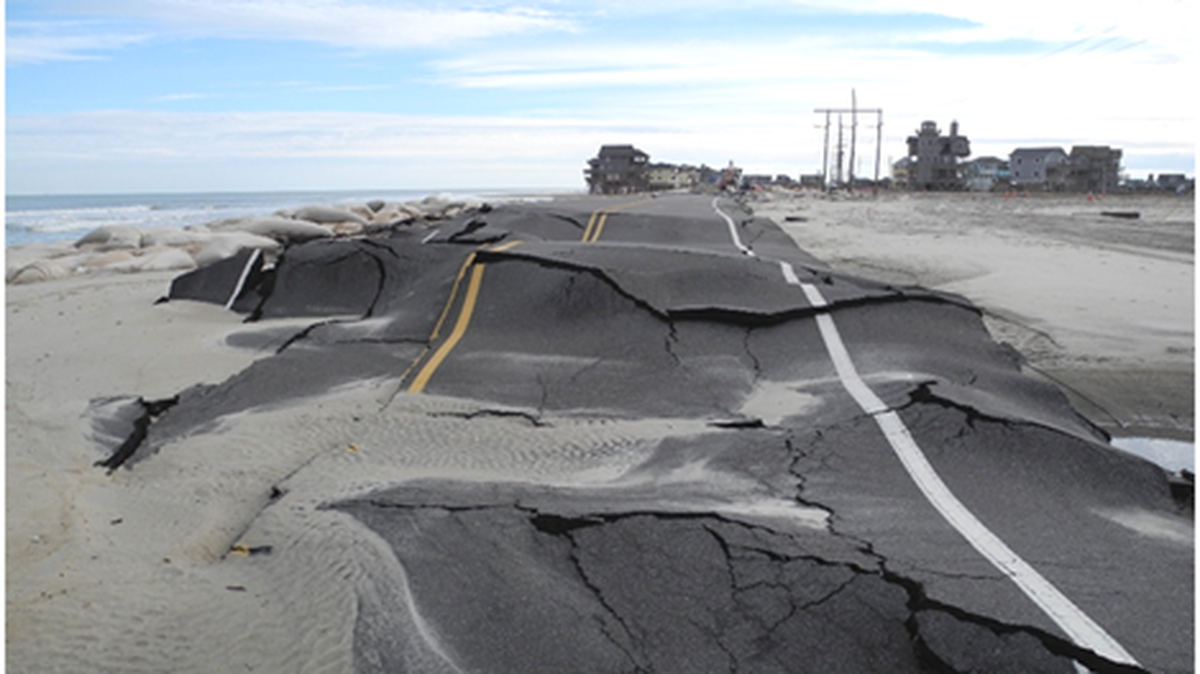
When he talks about the huge oceanfront homes on the Outer Banks and the constant rebuilding of N.C. Hwy. 12, Riggs uses words like “insanity” and “craziest.” He said the development defies nature and before long will fall victim to it.
Building big dunes to hold back the sea doesn’t let the storm surge move back out once it fills the sounds behind the islands, he said: “The storm waters have to go in and go out. You have to let a barrier island breathe.”
Riggs thinks the Outer Banks can endure as a vacation destination, but more development creates a bigger target for storms, and the cost of paying for the damages – plus the annual cost of restoring beaches – is becoming unsustainable.
“You can learn to live with the dynamics of the islands. People have lived out there for a thousand years,” he said. “But this idea of unlimited growth and development on a mobile pile of sand doesn’t make sense.”
North Carolina had strong polices for protecting a natural coast until 2011, he said, when Republicans took control of the General Assembly. “They threw out rules and there was a whole new boom of development,” he said.
Riggs said storms like Laura – the fifth-strongest hurricane on record to hit the U.S. mainland – should awaken North Carolina to the need to have its coast move in sync with nature rather than trying to engineer against it.
“There is a slow retreat that has to begin,” he said. For instance, he said, don’t replace oceanfront homes claimed by the sea and don’t repair parts of Hwy. 12 destroyed by storms; use ferries instead.
For Riggs, the buildup on the Outer Banks ignores the function of the islands. They absorb the ocean’s power and protect the inner coast. He said building small cities on them is like putting up a tent on a railroad track.
With climate change creating more powerful storms, he said, “The train is on the track. It’s time to get off the track.”