
NC should invest to keep coastal storms from blowing off roofs and blowing up budgets
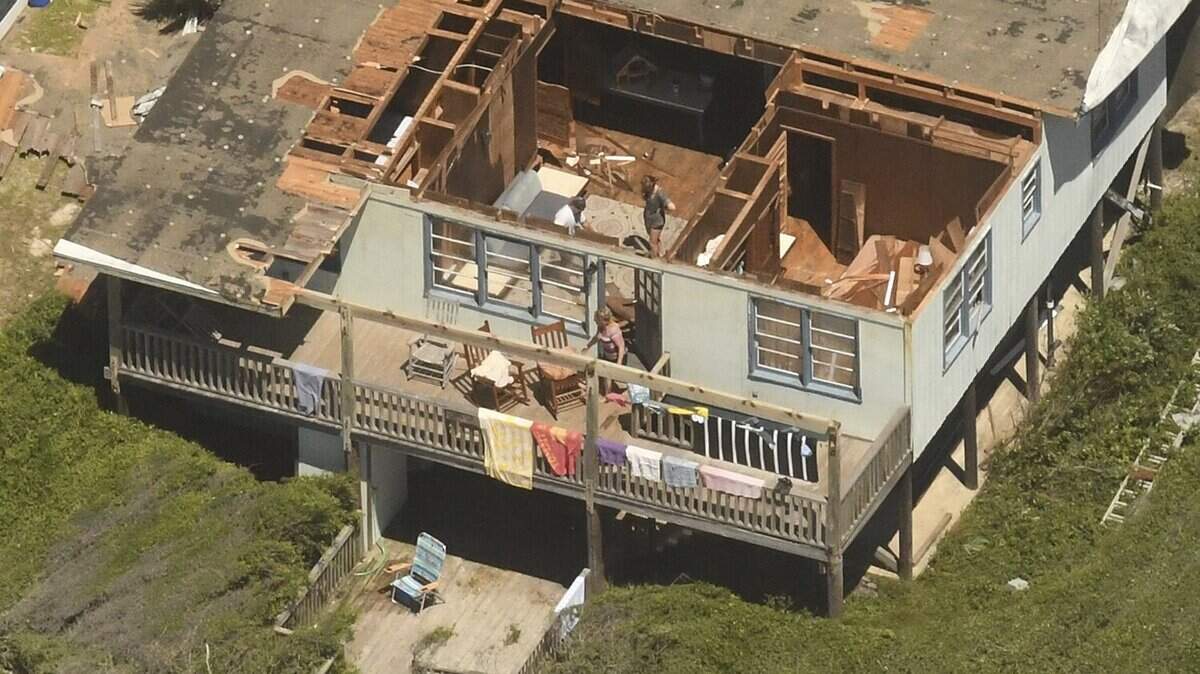
The best time to think about a disaster is before it occurs. The General Assembly reconvened briefly on Sept. 2 and its only notable action involved the ongoing mess that COVID-19 has wrought. If only attention had been spent by elected officials at all levels of government at the very beginning of the year, when there might have been a chance to nip COVID-19 in the bud. Generally speaking, data show that every dollar spent on disaster prevention pays off many times that amount in damages that are prevented.
That is why it’s worth noting that the General Assembly also reconvened in the heart of the 2020 hurricane season, as if anyone needs reminding of this fact after Hurricane Isaias hit North Carolina on Aug. 3 and Hurricane Laura recently slammed into the Gulf Coast with winds rivaling Hurricane Katrina’s. The rest of the 2020 hurricane season is projected to be worse than normal. And, while the nation will one day put COVID-19 in its rear-view mirror, violent storms will hit North Carolina’s coast for decades to come. Hence, the time to think about these future disasters is now.
Which brings me to a glimmer of good news. The largest single insurer at the North Carolina coast last year was thinking ahead when it launched a grant program to strengthen the roofs of its insureds ahead of time – and has already strengthened the roofs of over 1,000 coastal homes. It’s the largest such program in the nation by a single insurer. Many of the new, fortified roofs survived Hurricane Dorian with almost no damage, even when the storm pummeled the roofs of neighboring homes. And, this summer, the same insurer offered an additional $15 million to its most at-risk homeowners on a first-come, first-served basis. These awards, of up to $6,000 per house, are pure grants, not loans. Once used for fortified roofs, the homeowners owe their insurer nothing.
This is what resiliency looks like. Not simply bailing ourselves out with billions (or trillions) of dollars after calamity hits, but investing in ourselves, our properties, and our communities ahead of time so that disasters, whether COVID-19 or the next hurricane, cause less damage. In the case of coastal roofs, it’s just good business. The resilient-roof program is offered by the State’s coastal insurer-of-last-resort, the North Carolina Insurance Underwriters Association (the “NCIUA”). I sit on its board of directors. As you might guess from its name, the NCIUA is a very sober organization. It launched its resilient-roofs project because risk-analytic models projected that, over the next ten years alone, a $50 million investment in resilient roofs would return between $67 - $150 million in savings. From the NCIUA’s point of view, the resilient-roof program isn’t a giveaway. It is an investment with an especially strong rate of return.
Throughout 2020, the NCIUA has made known to our elected officials in Raleigh a very down-to-earth opportunity. In addition to its existing grant program for 2020, the NCIUA Board approved an additional $10 million “challenge” grant which could apply even more broadly to the Association’s insureds across all of North Carolina’s 20 coastal counties. That is, the NCIUA will contribute up to $10 million more, dollar for dollar, for every dollar the state government contributes to its effort.
Why should North Carolina’s elected state officials match these funds? Because it’s a way to leverage millions of dollars of non-governmental funds into a regional coastal economy that can use the investment and because it is the closest thing we have to a “vaccine” against wind damage that will, without question, otherwise occur from future storms. Why else? Because it can be a tangible way to show that the best time to think about disasters is before they occur.
In my academic research as a law professor at UNC-Chapel Hill, I investigate why more insurers aren’t taking the long view, as does the NCIUA, and increase their investments in resilience. After all, insurers are hardly immune to paying the huge losses that disasters cause. Just look at California where many insurers, facing huge fire-insurance losses, are canceling policies and retreating from the front lines. The NCIUA is leading an alternative approach, showing insurers worldwide that investing in prevention is a win-win proposition that can be applied to such other types of disasters as wildfires, floods, earthquakes, and droughts. As we (sort of) like to say in Chapel Hill, the roof is not the ceiling.