
In Raleigh, reckless development could destroy a rare ecological habitat, Azalea Falls
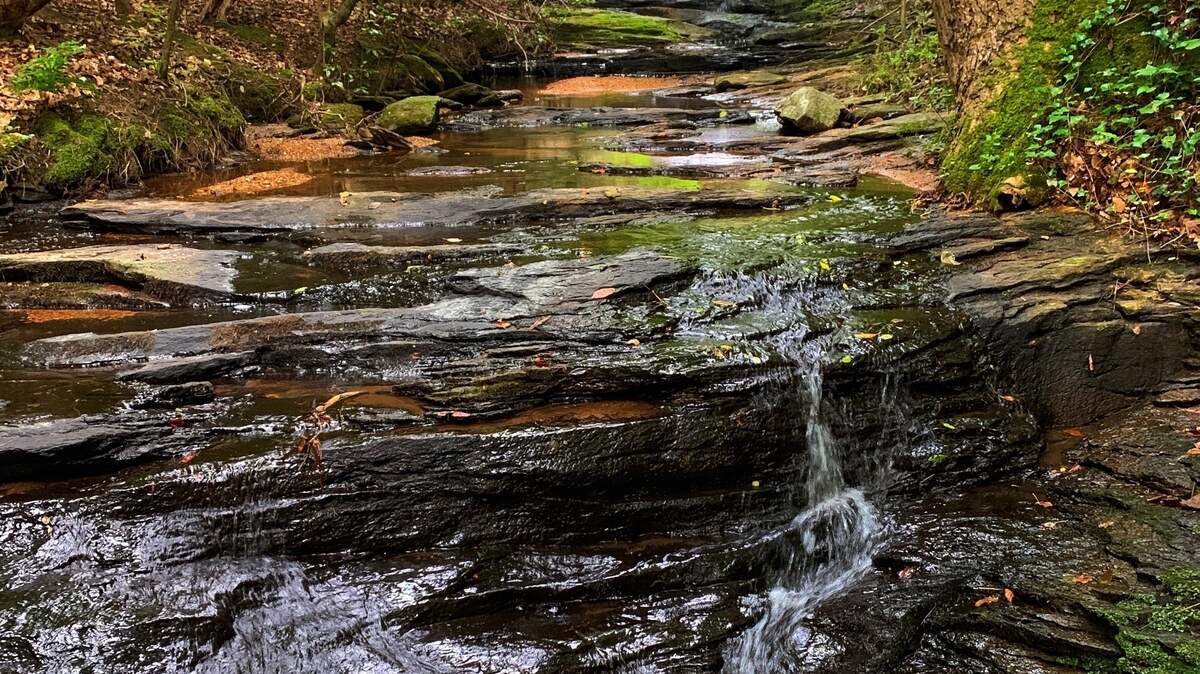
Azalea Falls is a hidden Raleigh gem that has recently been designated by the state Department of Natural and Cultural Resources as being an ecological habitat of statewide significance, possessing “natural values justifying its recognition by the State as an outstanding part of the natural heritage of North Carolina.” It’s importance to Raleigh is increased because of its environmentally sensitive location along Crabtree Creek and along the future Crabtree Creek Greenway that traverses the entire city of Raleigh.
The Azalea Falls property abuts a 200+ acre parcel that will be donated to Raleigh in 2052 to complete the citywide greenway connection to Umstead State Park. The 10-acre Azalea Falls parcel is held in trust for the benefit of future Raleigh generations by the nonprofit City of Oaks Foundation and is the crown jewel of the emerald necklace of Raleigh’s finest natural ecological habitats.
But the destruction of Azalea Falls is actively being planned and could be finalized by the Raleigh City Council at their Oct. 6 meeting, when council is expected to vote on a dense 28-acre development project that would replace the steeply wooded hillsides overlooking the Falls with apartments, parking lots and multi-story retaining walls.
While the developers would have us believe they can safely clear cut the forest and mass grade the steep hillsides overlooking Azalea Falls, the State’s Natural Heritage Designation says the opposite: the Azalea Falls ecosystem depends on protecting the forested and aquatic ecological habitats on the steep hillsides overlooking and sheltering the Falls. No wooded hillsides – no Azalea Falls.
There is simply no way the upzoning applicant can guarantee that every significant rain event during the stripping, mass grading and construction on the steep hillsides will not send torrents of mud washing down the hillsides, killing the forest habitats, aquatic habitats and turning Azalea Falls and its stream bed into a sludge pit and an ecological dead zone.
OK, we have to build to grow, but anywhere and everywhere? This council, except for Councilor David Cox, has simplistically transformed Raleigh’s sustainable growth plan, which recommends density only in locations near downtown, near transit and near walkable community centers, into a blanket justification for more density at practically any location requested.
With a WalksScore.com rating of only 6 on a scale of 0-100, the upzoning site at 4800 Duraleigh Road is one of the worst imaginable locations for density in Raleigh: It is miles from the nearest transit line and miles to the nearest walkable shopping or working destination. The steep hillsides are the most difficult to build on and create the worst stormwater impacts. And then to top it off, the dense development will mean the end of the pristine ecological gem Azalea Falls for all future generations.
This is not the time for the City Council to be motivated by the insignificant short-term profit. Instead, the city should buy the parcel, tax valued at $1.7M, and add it to the 200+ acres that will ultimately be given to the City.
Save Azalea Falls.