
Attacks on social media have turned politics personal and deepened our differences
“Have you no sense of decency, sir, at long last?”
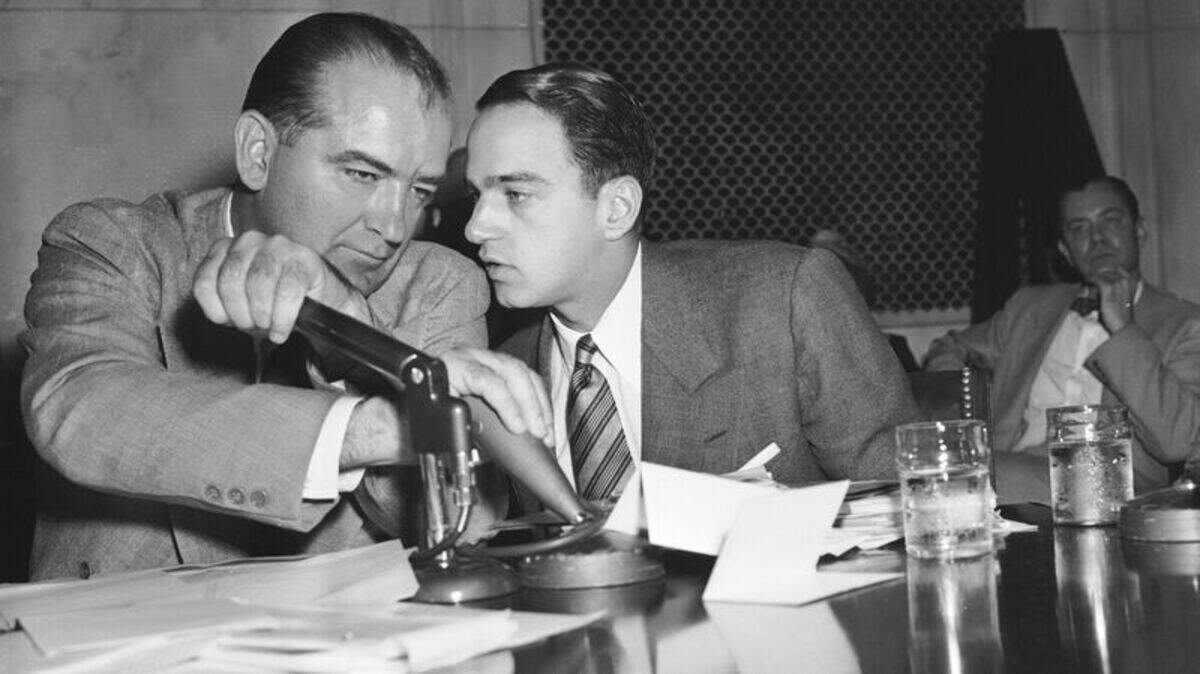
These words uttered over 60 years ago effectively ended the “McCarthyism” of the 1950s. They were spoken by Joseph Welch, lawyer for the U.S. Army, as Senator Joe McCarthy of Wisconsin conducted an unfounded investigation for subversion by Communists. For years, McCarthy had been intimidating politicians with wild, made-up charges about Communists in government. No one stood up to him. Many became afraid to exercise freedom of speech.
Welch was a soft-spoken lawyer with wit and intelligence. McCarthy was represented by Roy Cohn, a New York political fixer and Mafia lawyer. (Cohn later became an adviser and lawyer for developer Donald Trump.) During weeks of hearings, Welch blunted McCarthy’s charges, one after another. McCarthy became increasingly enraged, screaming at witnesses, making baseless charges. Welch stood up to him. In front of McCarthy’s own Senate subcommittee – and on national television – Welch confronted the arrogant, sneering senator. Finally, and simply, he said, “Have you no sense of decency, sir, at long last?”
Fortunately, McCarthy did not have Facebook. Today, as I move up into my 80s, the sheer meanness I see and hear daily is disturbing. We are deluged by a sea of nasty, hateful talk, especially on social media. Facebook has transmuted from being a nice way to keep up with friends into being a purveyor of mean-spirited missives that inflame and poison. Its algorithmic abilities fuel formation and growth of massive clusters of like-minded political thinkers. The constant posting of views of such clusters grow more extreme. The widely dispersed ugly talk gets nastier.
Such talk does not come just from strangers; it also comes from people I have known for years. I never thought even my closest friends always agreed with my politics. But I didn’t think they considered my views part of an evil conspiracy. Alas, that is what they seem to be saying.
This is different from the old days. I started in North Carolina politics in 1960 and fought in campaigns against Beverly Lake and Jesse Helms. Bitter campaigns. But I had cordial relations with both afterwards. I’m not sure about today.
We progressives are depicted as being deluded, deceived, misled, duped, in denial – and worse. We are called all sorts of names – idiots, misfits, radicals. I haven’t seen anyone call me out by name. But, as one who does not support Donald Trump, it surely feels that way. Now, I believe Donald Trump has no business being president. I will be happy to debate that on the merits with anyone – but without the name-calling, please. Name-calling causes tempers to flare. It is hate-mongering and fear-mongering. Hate has a way of consuming those who stoke it. They become what they decry.
After these seething accusations, will we on different sides have anything left to talk about? Will we even want to be around one another? We’re now being told not to accept the election results! Sounds like a permanent separation.
While Harry Truman was President, the Republican Party tolerated McCarthy. Then, a five-star general, Dwight Eisenhower, became president. Eisenhower was not a fan of McCarthy. Following the comment by Welch, the tide turned. North Carolina’s own Sen. Sam Ervin chaired an investigation that led the Senate to censure McCarthy. McCarthy resigned in disgrace.
Today I ask: Have we no sense of decency, at long last?
This story was originally published October 23, 2020 at 12:00 AM.