
Facing prison amid a pandemic, a protester fears for himself and all inmates
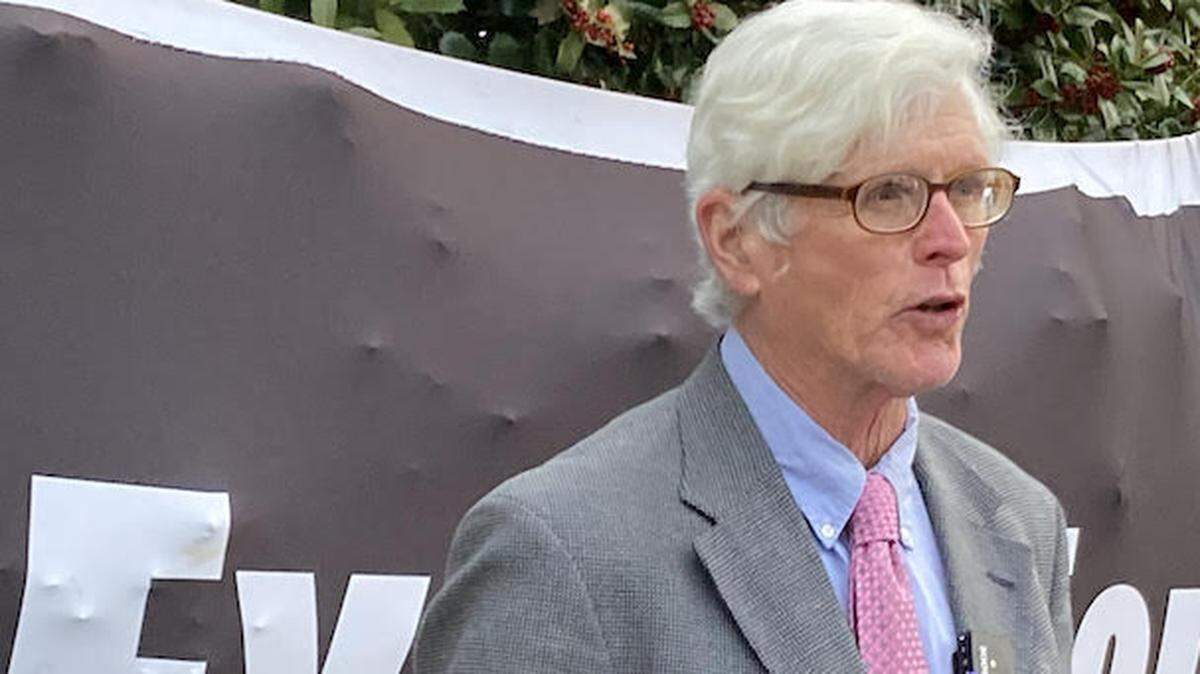
Patrick O’Neill, a longtime Catholic activist, has often demonstrated against the death penalty outside of Central Prison in Raleigh.
But this week when he stood at the prison’s entrance what he was opposing had become personal – his own risk of dying behind bars. The 64-year-old Garner resident is about to start serving a prison term related to his protesting nuclear weapons. He was at Central Prison with other activists on Monday to call attention to the COVID-19 risks faced by inmates in North Carolina and nationwide.
“It’s impossible to socially distance in jail. You can’t play it safe. There’s no way to do it,” he said.
I wrote about O’Neill’s troubles in September. He and six other Catholic activists cut a lock and entered Naval Submarine Base Kings Bay in southeast Georgia on April 4, 2018. They targeted Kings Bay, home to six nuclear-armed Trident submarines, to call attention to what they consider the immorality of nuclear weapons. After spray painting messages and hammering a replica display of missiles, the protesters were detected, arrested and charged with conspiracy, trespassing and damage to government property.
O’Neill, co-founder of the Fr. Charlie Mulholland Catholic Worker House in Garner, was convicted and sentenced to 14 months. On Thursday, he will report to the Elkton Federal Correctional Institution, a low-security prison near Lisbon, Ohio where nine inmates have died from COVID-19.
O’Neill, whose age puts him at higher risk from COVID-19, asked the court to delay his reporting date until he could get a vaccination. The court refused. Now O’Neill, a father of eight who has served several stints behind bars for protest-related arrests, is calling attention to the potentially fatal penalty faced by inmates. “I’m going to prison for a nonviolent crime,” he said. “It is not a capital crime.”
O’Neill doesn’t want to be spared prison, just the virus. What he did in Georgia was foolhardy, but he has chosen to be a fool for Christ. “I see going to prison as redemptive,” he said. “It seems a logical conclusion that you suffer some for your faith. I’m not trying to avoid the consequence.”
Of 37,620 North Carolina’s state prisoners tested as of Wednesday, 8,132 have tested positive for the coronavirus. Thirty nine have died, a number that has more than doubled since the start of November. Nationally, at least 275,000 inmates have tested positive and more than 1,700 have died, according to a December study.
Appearing with O’Neill was C. Daniel Bowes, director of the Fair Chance Criminal Justice Project of the North Carolina Justice Center. He has pushed Gov. Roy Cooper to release more low-risk prisoners and defer more from entering the prison system to allow for social distancing for those who remain in prison.
Given the disproportionate number of Blacks in prison, Bowes said the high rates of infection among inmates represents “a humanitarian and racial justice crisis.”
The COVID-19 outbreaks among inmates reflect a U.S. system that, despite reductions in prison populations, still locks up more people per capita than any other country. There are thousands of U.S. inmates who shouldn’t be in prison during a pandemic: Those near the end of their sentences, those convicted of nonviolent offenses, or those who are elderly.
The cases of O’Neill and the other protesters – four men and three women who range in age from mid-50s to late 70s – illustrate the point. The group, known as the Kings Bay Plowshares 7, collectively will serve more than 100 months in jails and prisons.
Offenders deemed not dangerous should be punished with fines, house arrest and probation, especially during a pandemic. Instead they are being put into prisons and jails with a cellmate named COVID-19. Their punishment should be appropriate, not contagious.
This story was originally published January 14, 2021 at 12:00 AM.