
My father’s Soul City dream didn’t waste money. Its investments still benefit many.
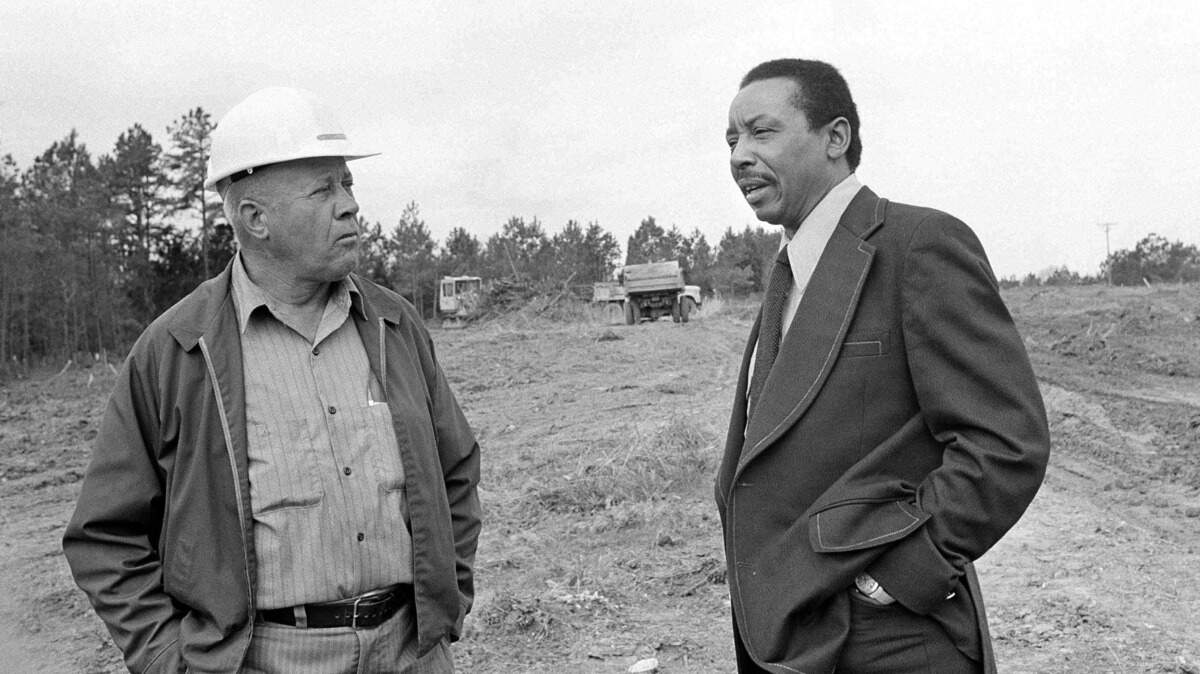
Last week this paper ran an op-ed by Pat Stith in which he defended stories he had written in the News & Observer in the mid- and late-1970s. Many of the stories were critical of my father, Floyd B. McKissick, Sr., and a project which he was developing known as Soul City, NC.
Stith’s reports raised questions about possible fraud, financial mismanagement, and other improprieties relating to the project. The negative coverage fueled objections to the project by then-Sen. Jesse Helms, an opponent of the civil rights movement in which my father was a nationally known leader.
The Soul City project was one of 13 new communities that were established under the Urban Growth and New Community Development Act of 1968. Communities approved under the program administered by the U.S. Department of Housing and Urban Development (HUD) were able to obtain federal loan guarantees that permitted them to sell bonds to investors. The Soul City Co. acquired approximately 3,600 acres of land in Warren County for the site of its new community, the only one of the 13 new communities to be developed by an African American-led company.
Stith started writing articles about Soul City approximately one year after the development company sold its first $5 million in bonds in March of 1974. He reported that the development was behind schedule and that no homes had been built, even though the Soul City Co. was prohibited under its contract with HUD from building homes. The Soul City Co. was a land development company that could only build infrastructure. It was anticipated that the improved land would be sold to others who would build homes and other types of developments.
Stith’s articles prompted an audit by the General Accounting Office (GAO), but the auditors determined that the project was on schedule and the concerns about improprieties were unfounded. An FBI memo relating to an interview with the lead GAO auditor stated, “Except for the lack of documentation in some areas, no discrepancies were found in the GAO audit at all.”
Nonetheless, the audit held up the project’s development for a year and the articles and investigations had a devastating impact upon the public’s perception of Soul City and its ability to attract industries. HUD withdrew its support for the project in June of 1979.
Soul City was not a fly-by-night development company or some type of commune. It was a serious, large-scale development company staffed by Blacks and whites that offered opportunities for people of all races to live in a new community.
The effort fell short, but the push to create Soul City led to investments that continue to benefit the region. The project contributed $8.9 million toward the cost of a $12 million regional water system that provides water from Kerr Lake to Warren, Vance and Granville counties. It spent $3.6 million to improve the sewer treatment plant in Warrenton. The project paid more than half the cost of a new $1.6 million high school for Warren County. It also established an outpatient medical facility that served residents of Warren and Vance counties for three decades. The cost of these and other infrastructure improvements totaled approximately $15.4 million.
This is part of the story that never gets told. There was no waste, fraud or corruption. However, there was bigotry and misperceptions that added burdens to the development of the Soul City project.
I sometimes wonder where Soul City would be today if my father and Soul City had received enthusiastic support that could have assisted the project in attracting industry and jobs, rather than the unwarranted condemnation which he and his project faced. Usually a person would receive an award and recognition for bringing millions of dollars of investment that provided jobs and essential services to a poor, rural area. Instead, my father received the opposite. It’s past time to set the record straight.