
For NC’s low-income, no legal help when they need it most
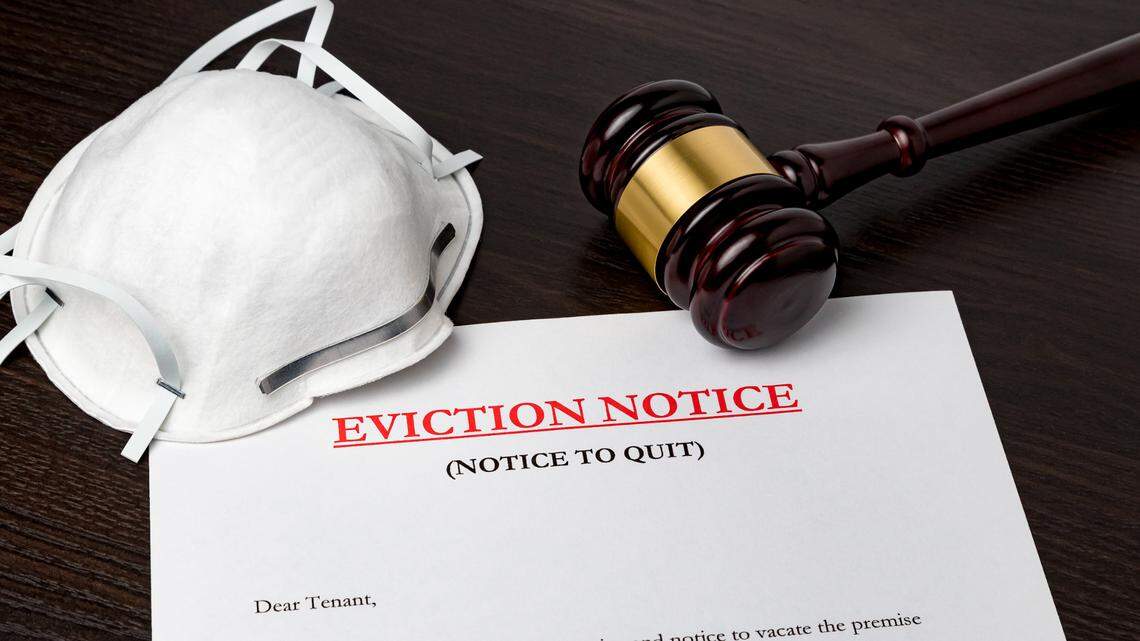
A client of Legal Aid of North Carolina lived with her grown son and teenage daughter. She had always had a job until she got sick, and her doctor advised that continuing to work on her feet was harming her health. Her son worked in manufacturing to support the family, but when the pandemic struck, his plant shut down. The family, which had always paid its rent on time, could not afford to pay rent.
Legal Aid connected this client with a private attorney who volunteers for cases like hers. With a “first-responder” lawyer by her side, her family avoided the eviction action the landlord was intending to file and maintained their clean record as renters in a crowded rental market.
The client and her family were lucky. Thousands of North Carolinians have no access to legal help when they need it most. Although the Sixth Amendment to the Constitution guarantees the right to legal counsel for criminal defendants, there is almost no right to counsel in civil actions, however urgent. People in your church, down your block, or whose children go to school with your children, must navigate complex legal issues without the benefit of any attorney’s advice.
These cases often involve basic human needs such as food, income, or shelter. Every year, thousands of domestic violence victims go through nightmarish situations, without the aid of counsel.
The North Carolina Equal Access to Justice Commission has partnered with the Equal Justice Alliance and the University of North Carolina-Greensboro’s Center for Housing and Community Studies to complete the first statewide legal needs assessment in nearly 20 years. This Civil Legal Needs Assessment (go to nclegalneeds.org) has measured the gap between needs and available resources. Its findings shine a light on much we must see.
More than two million low-income North Carolinians are eligible for the services of a nonprofit legal aid provider. National research shows that 71% of low-income families will experience at least one civil legal problem each year. Yet, 86% of these legal needs go unmet because of legal aid organizations’ scarce resources.
The bottom line: legal aid providers are forced to turn away many eligible callers who have worthy cases. Today, there is one attorney for every 8,000 eligible North Carolina residents, compared to one private lawyer per 367 North Carolinians. Legal Aid of North Carolina, the Charlotte Center for Legal Advocacy, and Pisgah Legal Services — in addition to thousands of volunteer lawyers — cannot keep up.
In 2020 alone, 1,655 attorneys collectively provided 68,078 hours of pro bono service for clients in need. Even with this volunteer turnout, every attorney in North Carolina would have to take 14 eviction cases every year to offer representation to every eligible client — and that does not count those needed to represent clients in other areas: veterans benefits, disability, consumer fraud, Medicaid, and domestic violence.
This is a crisis that merits deeper attention than this introduction provides, one demanding what Abraham Lincoln termed “the better angels of our nature.”
One clear answer is to increase funding for North Carolina’s legal aid programs. Since 2007 the General Assembly has cut its support for legal aid by nearly 90% — from more than $6 million in 2007 to around $700,000 in 2020. The federal government and North Carolina’s philanthropic community continue to increase contributions to this need, but cannot approach meeting it.
Especially now, as we are emerging from the pandemic, our state government should look on meeting this need as a sound investment. If poor citizens can secure legal counsel to protect their needs for food and shelter and safety, the return on that investment is many thousands more productive, taxpaying citizens. Now is the hour for our General Assembly to restore this vital support.
This story was originally published April 29, 2021 at 7:03 AM with the headline "For NC’s low-income, no legal help when they need it most."