
As questions of bias swirl, Justice Phil Berger Jr. helps raise funds for GOP lawmaker
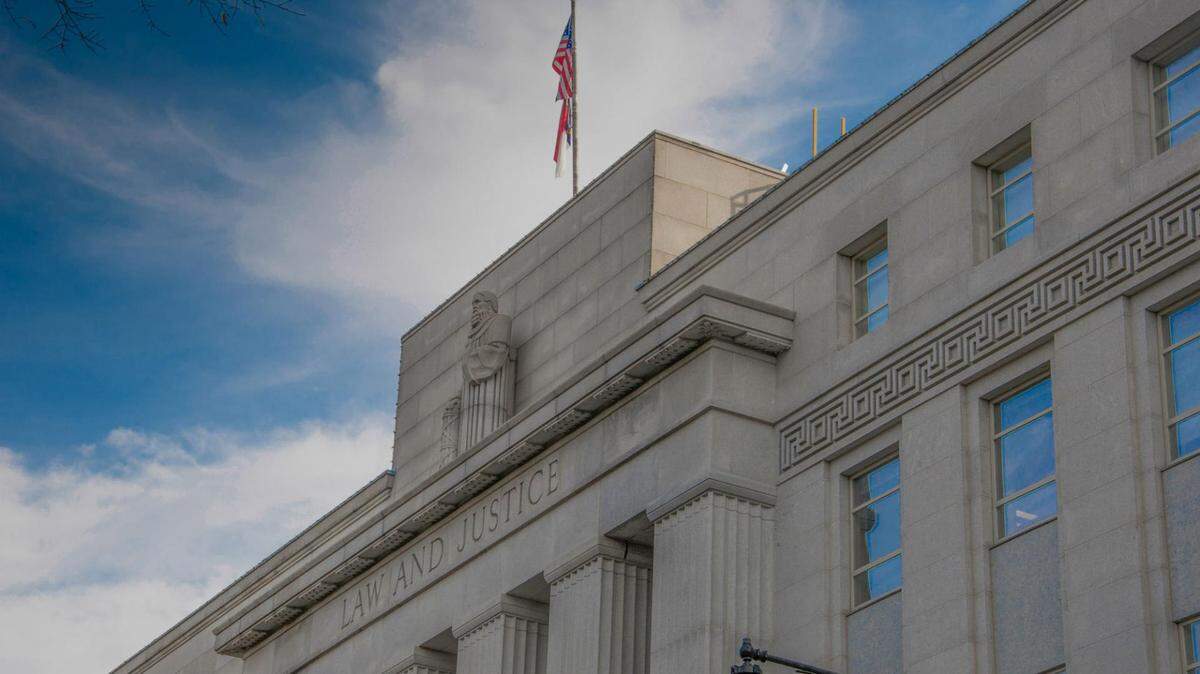
Phil Berger Jr., serving his first term on the North Carolina Supreme Court, has an obvious problem with appearing impartial in cases involving the General Assembly.
The problem, in part, is his name. The new justice, 49, is the son of state Senate leader Phil Berger Sr.
In a major case about the authority of an illegally gerrymandered legislature to propose constitutional amendments — NAACP v. Moore, Berger — the plaintiffs have filed a motion asking for Justice Berger and his fellow justice, former state Sen. Tamara Barringer, to recuse themselves. The plaintiffs argue that the two justices cannot be impartial because one is the Senate leader’s son and the other, as a senator, voted in favor of actions being challenged.
The delay in responding to the motion, filed months ago, seems to indicate the court was waiting for Justice Berger to defuse the issue by stepping aside. But since he hasn’t, the court asked on Tuesday for lawyers on both sides to respond to a host of questions about whether and how a justice might be disqualified from a case.
Our recent editorial said that it’s unfair to expect the two justices to recuse themselves from all cases involving the legislature, including the current one. They were elected to serve and should be allowed to do so. The law and tradition leave recusal decisions largely up to judges themselves. But our reasoning included the expectation that the two justices, particularly Berger, would be aware of a perceived conflict and do all they could to reassure the public that they will not play politics from the bench.
That’s why it’s stunning to see Justice Berger listed among the “special guests” on an invitation to an Oct. 26 fundraiser for the reelection of state Rep. Jimmy Dixon, a Republican representing Duplin and Onslow counties. The other featured guests are Lt. Gov. Mark Robinson and House Speaker Tim Moore, who, in his official capacity, is a defendant in the NAACP case.
“I asked if he would like to attend and he said yes,” said Dixon, the powerful senior chair of the House Agriculture Committee and the Environmental Review Commission. Dixon is a staunch supporter of industrial hog farming.
Dixon said of a Supreme Court Justice lending his name to a political fundraiser, “I’m not aware of any restrictions.”
Unfortunately, there aren’t hard and fast restrictions. But there certainly are standards. The North Carolina Code of Judicial Conduct says: “A judge should respect and comply with the law and should conduct himself/herself at all times in a manner that promotes public confidence in the integrity and impartiality of the judiciary.”
Apparently Justice Berger’s response to concerns about whether he can be impartial is to thumb his nose at the worriers. He’ll do what he pleases, which is help raise funds for the legislative leadership whose actions have repeatedly been challenged in the courts. Any justice who participates in political fundraisers outside of their own campaign crosses the same line.
James Coleman, a Duke Law School professor who wrote in a recent op-ed that Berger should recuse himself in the NAACP v. Moore, Berger case, said judges attending campaign events undermine their independence.
“They are inviting people to assume that their decisions are motivated by their party as opposed to an honest attempt to determine what the law requires,” Coleman said. “When they take the bench, they leave that stuff behind. If they want us to treat them like they are unbiased, then they ought to act like it.”
With the ending of public financing for judicial elections, judicial candidates must raise funds for themselves and they run under partisan labels. But they still have a special responsibility to be – and to appear to be – impartial. That special responsibility means not being a “special guest” at a lawmaker’s campaign fundraiser.
Clearly there is a need for a better way to respond to justices who flaunt their partiality. The court is right to consider whether it has the authority and can construct a method to disqualify Justice Berger in this case.
BEHIND THE STORY
MOREWhat is the Editorial Board?
The Charlotte Observer and Raleigh News & Observer editorial boards combined in 2019 to provide fuller and more diverse North Carolina opinion content to our readers. The editorial board operates independently from the newsrooms in Charlotte and Raleigh and does not influence the work of the reporting and editing staffs. The combined board is led by N.C. Opinion Editor Peter St. Onge, who is joined in Raleigh by deputy Opinion editor Ned Barnett and in Charlotte by deputy Opinion editor Paige Masten. Board members also include Observer editor Rana Cash and News & Observer editor Nicole Stockdale. For questions about the board or our editorials, email pstonge@charlotteobserver.com.
This story was originally published September 29, 2021 at 12:10 PM.