
Make trees a priority as the Triangle spends its infrastructure billions
Thanks, Congress, for the new infrastructure bill. There is plenty of dough for transit, charging stations, and other goodies. But no spending bill would be complete without a hefty slice for our favorite line items — roads and bridges.
In North Carolina, we already spend over $5 billion per year on what we call transportation. But it is really mostly road and highway construction, with mere crumbs going to other modes of travel like rail and bikes. The Feds have made billions more available to the state thanks to the new infrastructure bill approved Nov. 5.
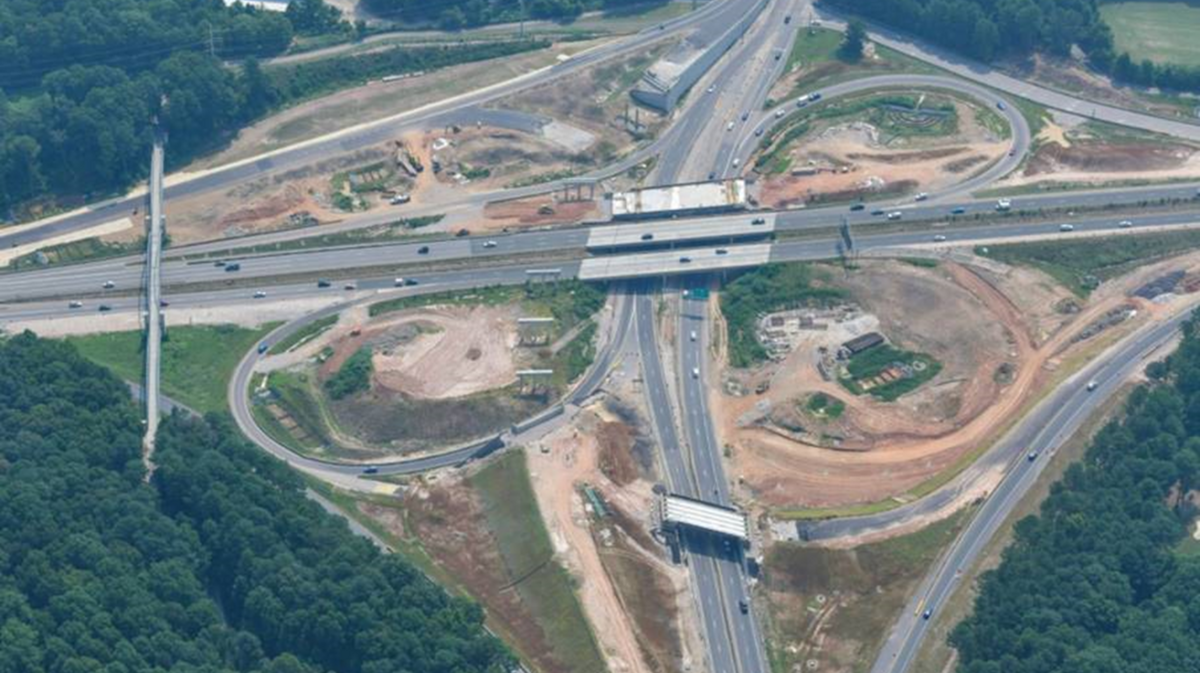
Yes, plenty of repaving, filling potholes, and replacing bridges to be done. But here in the Triangle, we are literally surrounded by massive new highway projects, spending billions in the name of “reduced congestion.” But these projects also mean reduced trees and increased pollution.
It hardly bears repeating, but we seem to lose track of the basics when talking about highways — they hurt air and water quality, raise our local temperatures, and continue our total dependence on an auto-based system. And that’s just the road building. Now, add the cars.
News flash — cars and trucks are also bad, very bad, for both our local environment and our planet. We know that the transportation sector is the largest single contributor of carbon to the warming atmosphere — about 30% of the total.
But somehow, while world leaders meeting in Scotland are chiming in on the urgent need to take action on climate change, and the big wigs in Washington — and, yes, here in Raleigh — bang the gong about their commitment to going green, we are happily deforesting our local landscape and installing miles of asphalt and concrete in its place. Not even a second thought. Go figure.
So, I have a small request of our great leaders: Can we go ahead and declare that trees are part of our infrastructure?
Trees clean the air, — literally take CO2 out and store it. Their respiration also cools the air (no power needed) and releases oxygen. It’s really an almost miraculous piece of hardware. And darn it, trees are also just plain nice to look at.
At the Wade Avenue/Beltline interchange we have witnessed a major scalping of what once was surely one of the loveliest highway entries to any city. How about slicing off some of the manna that is surely forthcoming in the federal infrastructure bill to replant the trees that were lost?
When I contacted NCDOT about this a few months ago, the representative emailed me that there were no plans for replanting, no timeline, and no budget.
But now, here comes the infrastructure money. Let’s grab some for trees! This could be a statewide program. N.C. State’s forestry school could recommend the right varieties. And the program could be added as a component to some of NCDOT’s other deforestation achievements, like the majestic I-540 outer loop.
How about making trees a priority at the new interchange at 40/I-540/70? At some 600 acres, it would be more than two times the size of Raleigh’s Dix Park. Surely there is room for some new flora somewhere in that vast expanse.
It’s our tax dollars at work, after all. Can we get just a little green here?
Someday, we may begin to rethink our transportation approach. It doesn’t seem like that time is now. Global warming, the heat island effect, deteriorating air quality, sprawling development patterns, and plain old no-other-way-to-get-around but a car doesn’t seem to be having any effect on our multi-billion dollar highway dreams.
We know that all of the pleasures of highway building are temporary. Widening never works to “relieve” anything long term. Traffic increases, more lanes are filled, further widening is called for, and on and on. A perfect perpetual motion machine.
Maybe we can’t change it, not yet. But maybe we can green it up, and help make our community a little cooler, a little cleaner, and yes, a little prettier along the way.
This story was originally published November 11, 2021 at 11:15 AM.