
No, Republican redistricting is not a threat to democracy
One of the fashionable things to do in today’s increasingly unserious political conversation is declare anything you disagree with an imminent threat to democracy.
It is especially in vogue this redistricting season. A case in point: two dire predictions I heard recently from national political observers, who said Republican redistricting will make 2022 “the Armageddon of American Democracy” and warned “the American experiment hangs by a thread” because of Republican map drawing.
I wish I could say the rhetoric in North Carolina has been more serious. But since state lawmakers finalized new House, Senate and Congressional districts, activists and lawyers and angry legislators and partisan media and former governors and even Arnold Schwarzenegger have, more or less, forecast democratic doomsday if the maps stand.
I hate to rain on the apocalypse parade, and I understand that redistricting is imperfect, but it is hardly an assault on the American idea. Remember: we’re talking about a longstanding, bipartisan exercise. Politicians in both parties (in 2021, you’ll find some of the nation’s most aggressive and egregious gerrymanders in Democratic-controlled states like Illinois) have been drawing their own maps for decades. And if there’s a better way to do it, I’m not sure anyone has figured it out. The “independent” commissions so many prescribed as the remedy to partisan gerrymandering have often fractured along party lines.
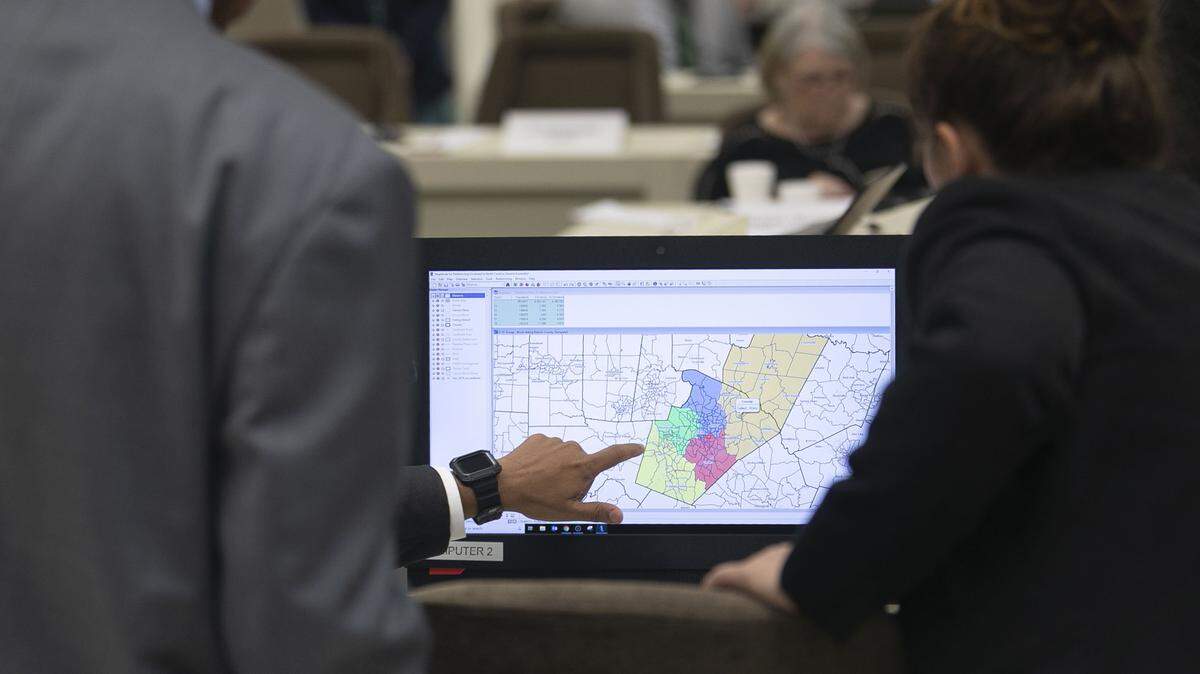
But be encouraged, North Carolinians: In our state, redistricting is fairer and more objective than it ever has been. Twenty years ago, and for decades before that, redistricting was the wild west. Legislators would grab a pen, draw the area they wanted to represent – even if it split six counties and resembled a flying spaghetti monster – and pass it into law. Today, a very specific, court-mandated formula dictates how State House and Senate districts are configured. That formula is designed to keep as many as possible counties whole, in fidelity to the state constitution, and it leaves relatively little up to the map drawers. As they do every 10 years (in North Carolina’s case and depending on your perspective, because of constant judicial intrusion or intercession, it’s more like every two years) the General Assembly just passed districting plans, and most of the State House and Senate boundaries were set in stone before a single lawmaker logged into the mapping software.
This system is, by almost any measure, superior to the process that produced “the snake” Congressional district and the octopus-looking area now-Governor Roy Cooper represented in the State Senate. So why is the outrage over redistricting intensifying? North Carolina Republicans currently enjoy a statewide geographical advantage that translates into more legislative districts. Democrats are competitive statewide in our closely-divided state, of course, but more and more Democratic voters live in fewer and fewer counties and, thanks to court rulings, only so many districts can dip into big urban centers. Geographical concentration of voters in North Carolina’s growing urban areas might ultimately be a good thing for Democrats running statewide but it’s unquestionably a detriment to Democrats’ prospects in districts. It’s easier for political parties these days to lambast the system than to moderate their platforms and appeal to more voters in more communities.
There are plenty of other reasons Republican-drawn maps are not the great meteor of democratic death: our nation is, unfortunately, still undergoing a massive political self-sort, so communities are increasingly homogenous politically and redistricting reflects this political reality. Technology has made redistricting more transparent (anyone can make a map online) and, frankly, so has the legislature (you could watch them draw maps live on YouTube). And our political coalitions are changing rapidly – so rapidly that no red or blue territory is necessarily safe for a decade. Democrats might control the General Assembly and the redistricting process today had they not sued and overturned the 2011 districts, which elected 17 Republicans from now-deep-blue Wake and Mecklenburg counties.
So everyone take a breath. If democracy dies anytime soon, it won’t be because of redistricting.
This story was originally published December 7, 2021 at 12:00 AM with the headline "No, Republican redistricting is not a threat to democracy."