
Toyota battery plant will give a power boost to NC’s high-tech growth
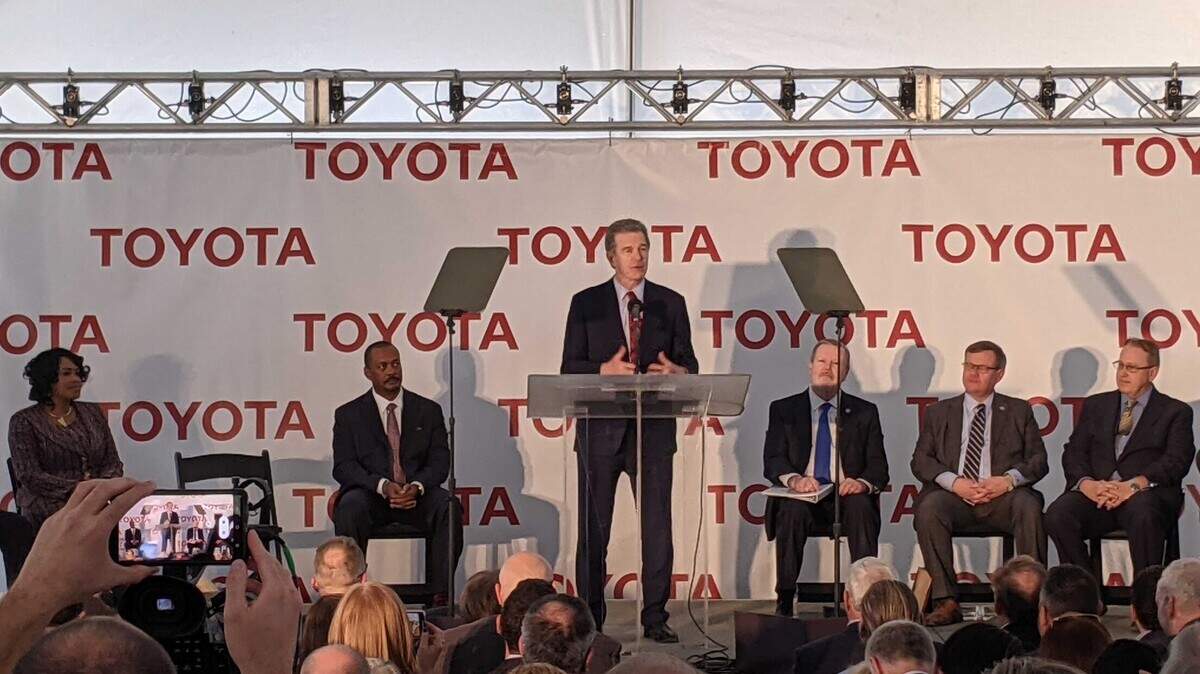
After losing a series of big automotive manufacturing bids, North Carolina won a jackpot this week with the announcement that Toyota has chosen a Randolph County site near Greensboro to open a $1.29 billion battery production plant.
The triumph that will bring the state 1,750 high-paying jobs and the promise of many more is even sweeter than a victory after several frustrating misses. For it looks now that the state benefited from having to wait.
In the years since North Carolina failed to lure automotive plants that went to South Carolina and Alabama, technology has moved toward a shift from gas-powered to electric-powered vehicles.
North Carolina now has a stake in the technology of the future – rapidly evolving battery technology that will power not only cars, but perhaps one day the car-making factories themselves. For example, researchers at N.C. State University are among those working on the frontier of battery technology. They are developing solid-state batteries that will be safer, lighter, faster to recharge and have more capacity than lithium-ion batteries.
Gov. Roy Cooper stressed the link to a rising technology in his statement on the Toyota plant coming to the 1,800-acre Greensboro-Randolph Megasite. “It’s clear the world is beginning to embrace a clean energy future and today’s decision puts North Carolina front and center,” he said.
The scale of the change is clear in Toyota’s investment and in other companies’ performance and goals. One-fourth of Toyota’s cars are electric powered and the Japanese company expects that share to reach 70 percent by 2030. The electric car company Tesla is seeing its sales and profits surge. General Motors and Ford say 40 to 50 percent of their vehicles will be electric-powered by 2030.
Many people deserve credit for this success, though one underappreciated contributor is fate itself. It’s a better fit with North Carolina’s tech industries to have Toyota’s battery manufacturing plant than the more traditional joint Toyota-Mazda manufacturing plant that considered the Greensboro-Randolph site in 2018 before opting for an Alabama location. (Though the Greensboro-Randolph site may yet attract a Toyota vehicle assembly plant.)
Leaders in Greensboro and Randolph County deserve praise for assembling the massive site and sticking to the vision despite setbacks and some local concerns. Cooper and his Department of Commerce helped bring the deal to fruition. And Republican leaders in the General Assembly approved a state budget that includes more than $300 million in funding for the site that helped make North Carolina the final choice.
North Carolina’s Secretary of Commerce Machelle Sanders said, “A world-class company has taken notice of the way we do things. This company could have gone anywhere in the world, but they chose North Carolina.”
Such a success – the record private capital investment in North Carolina – raises questions about what ultimately draws large companies to locate or expand here. Is it the state’s investment in higher education, infrastructure and quality of life? Or is it reduced regulations and low taxes?
John Boyd Jr., a corporate site selection expert with the Boyd Co. based in Boca Raton, Fla., said the answer to both questions is yes.
“Our clients want it all. The lowest taxes, the fewest regulations, the largest incentives and good schools,” he told the Editorial Board. “It’s up to the legislature to perfect the winning formula and so far, from a site selection perspective, the state gets an A-plus. The challenge now is to maintain the infrastructure and public services to keep pace with all the growth.”
The Toyota deal bridged North Carolina’s political differences and its urban-rural divide. The cooperative effort has put the state at the front of an emerging and transforming technological trend.
Now the task is to stay there.
BEHIND THE STORY
MOREWhat is the Editorial Board?
The Charlotte Observer and Raleigh News & Observer editorial boards combined in 2019 to provide fuller and more diverse North Carolina opinion content to our readers. The editorial board operates independently from the newsrooms in Charlotte and Raleigh and does not influence the work of the reporting and editing staffs. The combined board is led by N.C. Opinion Editor Peter St. Onge, who is joined in Raleigh by deputy Opinion editor Ned Barnett and in Charlotte by deputy Opinion editor Paige Masten. Board members also include Observer editor Rana Cash and News & Observer editor Nicole Stockdale. For questions about the board or our editorials, email pstonge@charlotteobserver.com.
This story was originally published December 9, 2021 at 4:00 AM.